
Customer Question: What are the standards for choosing tea? When buying tea at a tea shop, most of them look similar on the outside. How can I pick a really good tea out of dozens of options?
Chang-Hsing Tea: When choosing tea, you can evaluate it by its appearance, tea liquor, and aroma. For tightly rolled oolong teas, the appearance should be tight, round, and plump. There shouldn’t be too many broken leaves, and ideally, the stems should be well-sorted. In addition, because high mountain teas grow slower and receive more organic fertilizer, their leaves are generally thicker. As a result, high mountain teas are rounder and have larger granules than lowland teas. Visually, a good tea should be tight, plump, and intact.
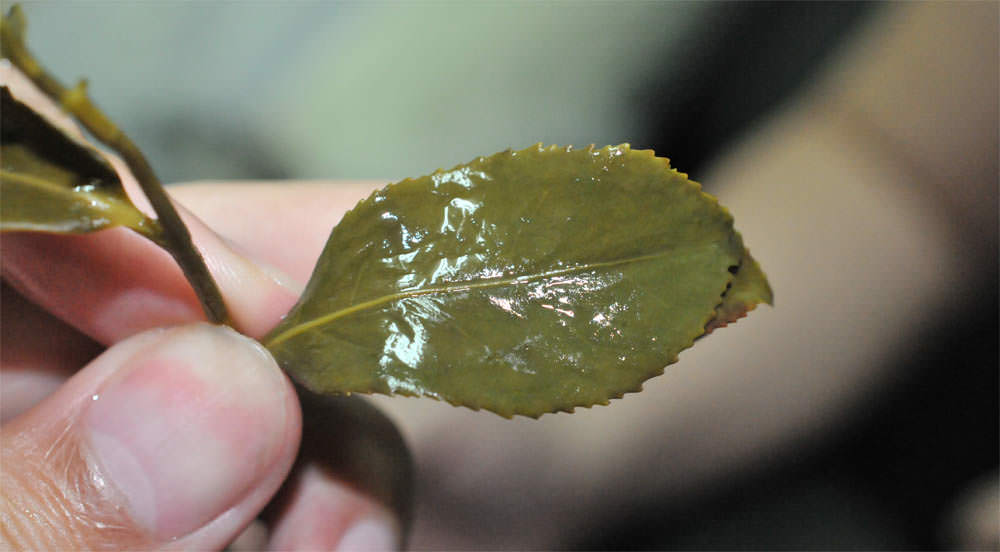
Looking at the tea liquor, it should have a fresh aroma and a golden, glossy appearance. The first brew should offer a clean, lingering aroma even as it cools. By the third brew, you can taste it while it’s hot, and then let it cool down before tasting again. Any flaws in the tea become more pronounced when it cools, making bitterness and astringency very easy to detect. If the cooled third brew has no bitter or astringent taste, there’s a high chance it’s a quality tea. Finally, you can inspect the spent leaves (tea base): if the leaves are intact, still retain their aroma after brewing, and have distinct serrations on the edges, the likelihood of it being a good tea is even higher.
When selecting tea, always be sure to ask in detail about its source, origin, and harvesting season. If the origin is unclear, you need to exercise extra caution. Furthermore, the production cost for hand-picked high mountain tea is around NT$700 per 600 g, while Lishan tea can even reach NT$800 per 600 g. Be cautious if the selling price is suspiciously low.