
Is waiting for spring tea a real test of patience? As winter ends and spring approaches every year, we receive many inquiries from tea lovers. Among them, “Alishan spring tea harvest time” is a hot topic. Here, we’ve gathered and answered all your questions about Alishan spring tea.
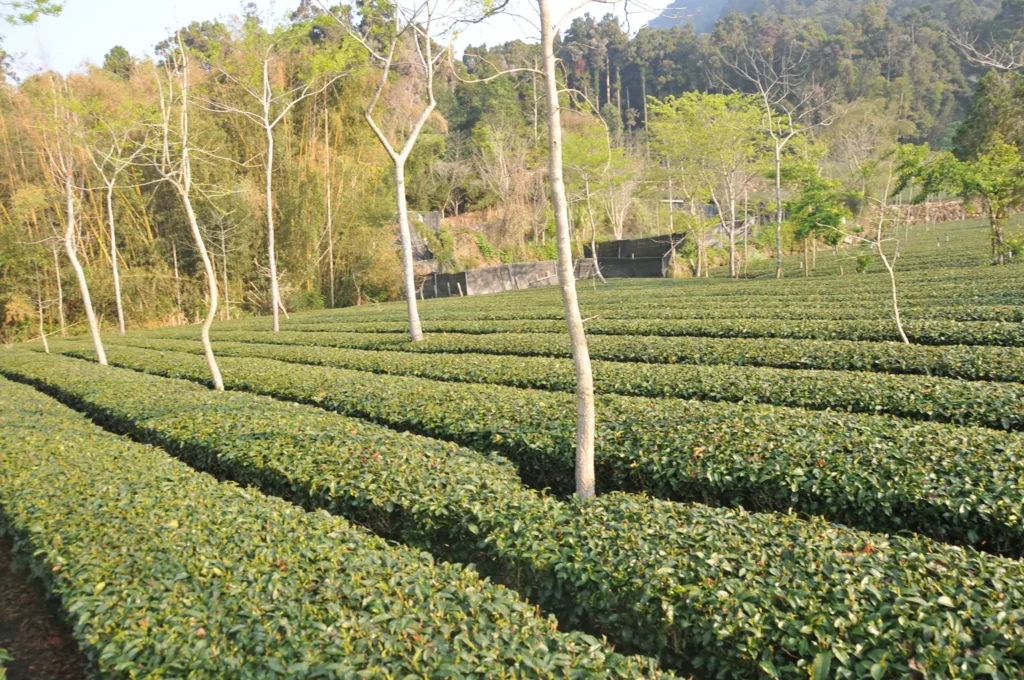
Q1: When is the harvest time for Alishan spring tea?
Customer Support: The peak harvest period for Alishan spring tea runs from early April to late April.
The Alishan tea region spans a wide range of elevations, from 800 meters in Meishan up to 1,600 meters. Following the rule that “higher-elevation spring tea is harvested later,” lower areas like Meishan, Longmei, and Xiding enter peak harvest in early April. Higher areas like Zhangshuhu, Dinghu, and Shizhuo start 1 to 2 weeks later, usually reaching peak harvest by mid-April at the latest. Harvest across these regions usually wraps up by late April.
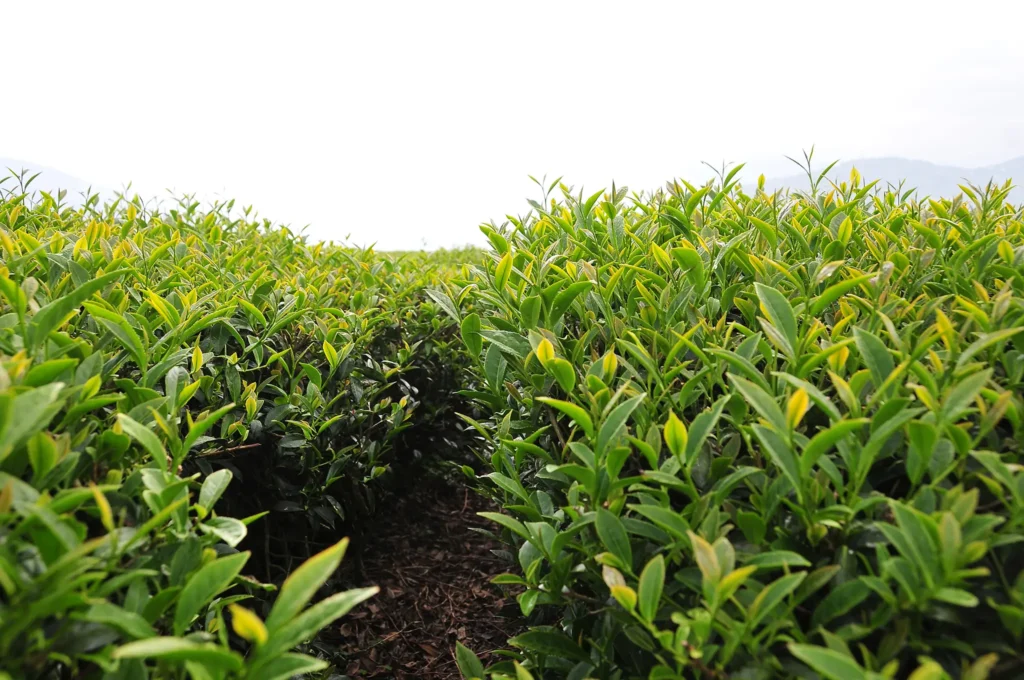
Q2: Why does the harvest time seem to vary every year?
Customer Support: Tea growth and harvest depend heavily on weather conditions. Harvesting time is mainly affected by the following five factors:
- Temperature: If spring temperatures warm up early, tea buds grow faster; if hit by cold fronts or late spring chills, growth slows down.
- Rainfall: Rainfall is crucial! Ample rain makes tea buds plump and promotes fertilizer breakdown, accelerating tree growth; during droughts (such as in 2021 and 2023), harvest is delayed significantly and yield drops.
- Elevation and Slope Aspect: For every 100-meter increase in elevation, temperature drops by about 0.6°C, slowing growth. In addition, sun-facing slopes harvest earlier than shaded slopes.
- Tea Cultivar: Four Seasons Oolong and JinXuan (TTES No. 12) are earlier-budding varieties, usually sprouting and harvested at least a week earlier than Qingxin Oolong.
- Garden Management: Tea farmers manage budding times through pruning, which serves as a key method for regulating labor demands and production schedules.
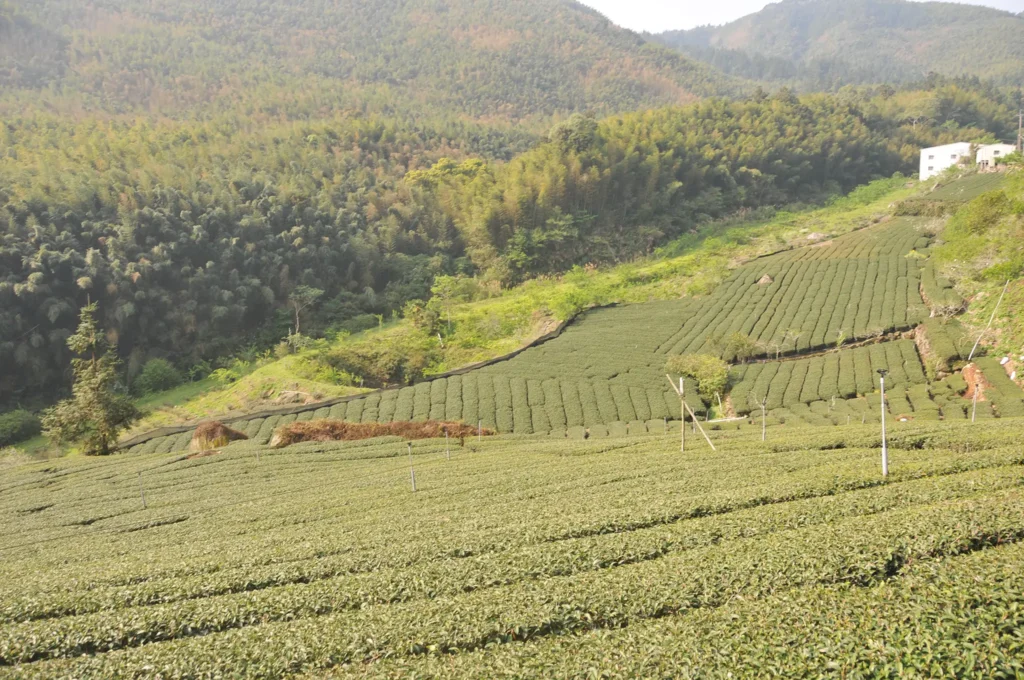
Q3: I want to taste the freshest Alishan spring tea. When should I buy?
Customer Support: If you want to get an early start, new tea cultivars are harvested in late March, but April is the peak harvest window for the full line of Alishan tea.
- Late March: Primarily lower-altitude JinXuan and Four Seasons Oolong cultivars that sprout earlier, along with a few early-budding Qingxin Oolong teas.
- Early April: This is the busiest time in Alishan tea gardens! Mid-altitude regions like Taihe, Xiding, Meishan, and Tefuye enter peak harvest.
- Mid-April: High-altitude Alishan areas (such as Dinghu and Zhangshuhu) make their grand entrance—the perfect time for tea lovers seeking higher-altitude, premium Qingxin Oolong.
Liao Chang-Xing’s Experience: Weather aside, cultivar type and elevation are the main factors driving spring tea harvest timing in Alishan. From late March to early April, JinXuan and Four Seasons Oolong are ready to harvest, producing what is arguably the finest quality JinXuan and Four Seasons Oolong in all of Taiwan during this period.
However, if you are looking for a cool mineral character and a lingering finish, the real highlight starts after April 10th with the Qingxin Oolong cultivar grown above 1,200 meters. Our store manager loves traveling through Zhangshuhu, Shizhuo, Shizilu, and Ruifeng to source teas between April 10th and 20th. This is the prime spring harvest window for Alishan, when Qingxin Oolong achieves its richest, fullest texture.
Final Tip: If you want a fresh, smooth JinXuan, look in late March and early April; if you are looking for top-tier high mountain oolong with a rich lingering sweetness, save your budget for mid-April!