Tea Garden Irrigation Systems: The Key Secret to Crafting Top-Tier Tea 6

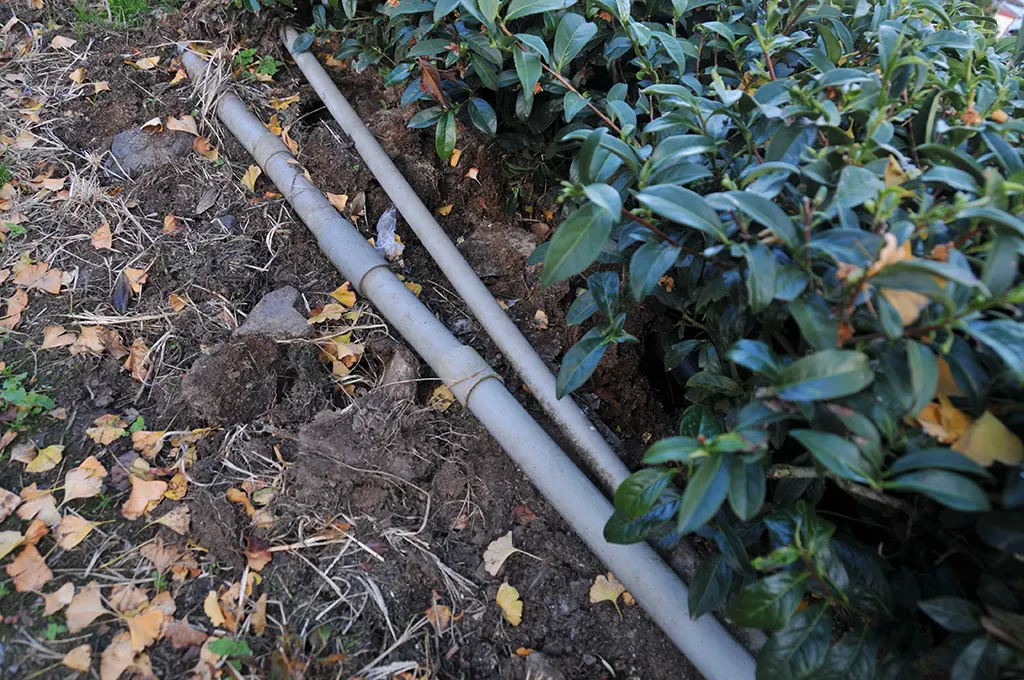
An irrigation system is a crucial part of tea garden management and a facility that our store manager considers an “absolute must” for high-quality tea gardens. In high-mountain tea regions where rainfall can be scarce, tea gardens without an irrigation system have a very low chance of producing top-tier tea leaves.

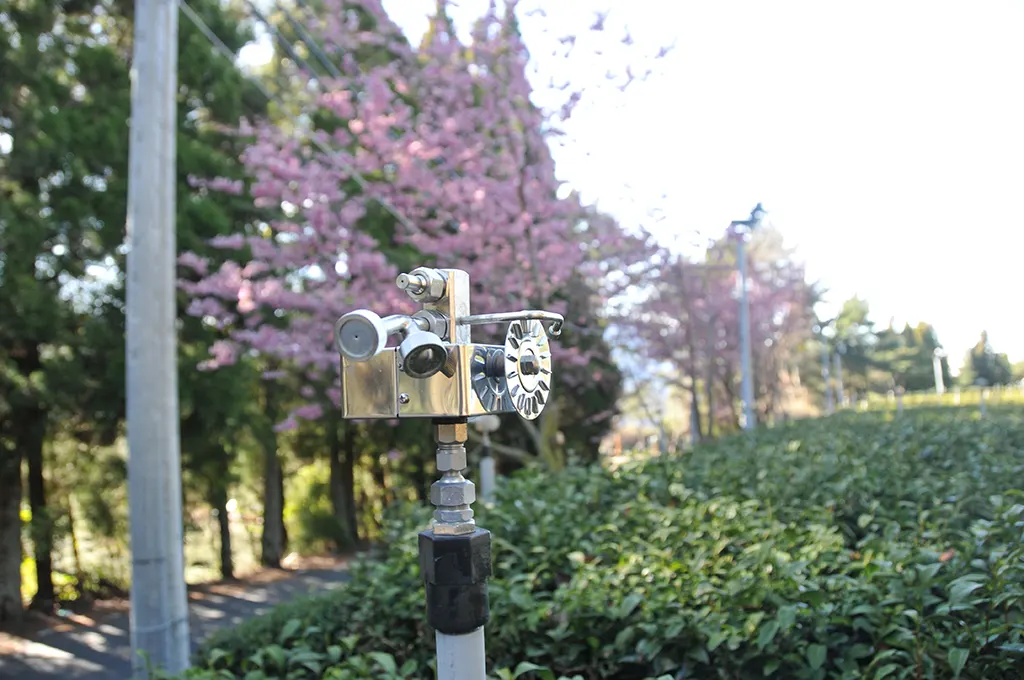
Tea garden irrigation system

Tea plantation irrigation systems are essential for producing high-quality tea

Irrigation systems are vital for high-mountain tea gardens because rainfall in the mountains is highly uneven. Take Lishan for example: rainfall is mainly concentrated between May and September, while the spring tea growing season (March to April) and parts of the winter tea growing season (October) see very little rain. If water is scarce during these growing periods, the quality of the tea leaves will be severely impacted. Therefore, tea garden managers who strive for exceptional quality “definitely” install irrigation systems. A quality irrigation system serves several key functions:

  1. Provides daily hydration for the tea plants.
  2. Delivers an ample water supply during the sprouting stage, which not only helps the leaves sprout smoothly but also allows them to emerge all at once over a short period. This ensures uniform size during harvesting. Evenly sized tea leaves are vital for tea-making quality. If rainfall is inconsistent during the sprouting stage, it leads to uneven sizes and maturity levels, a condition known as uneven “grandfather-grandson” shoots.
  3. Fertilizer absorption relies heavily on water; without a steady and continuous supply of irrigation water, fertilizers cannot break down. Even after the fertilizer breaks down into the soil, a continuous supply of moisture is needed to help the tea plants absorb it, enabling the plants to take up and utilize the nutrients as they drink. Without a consistent and reliable water supply, the tea plants cannot properly absorb fertilizers.
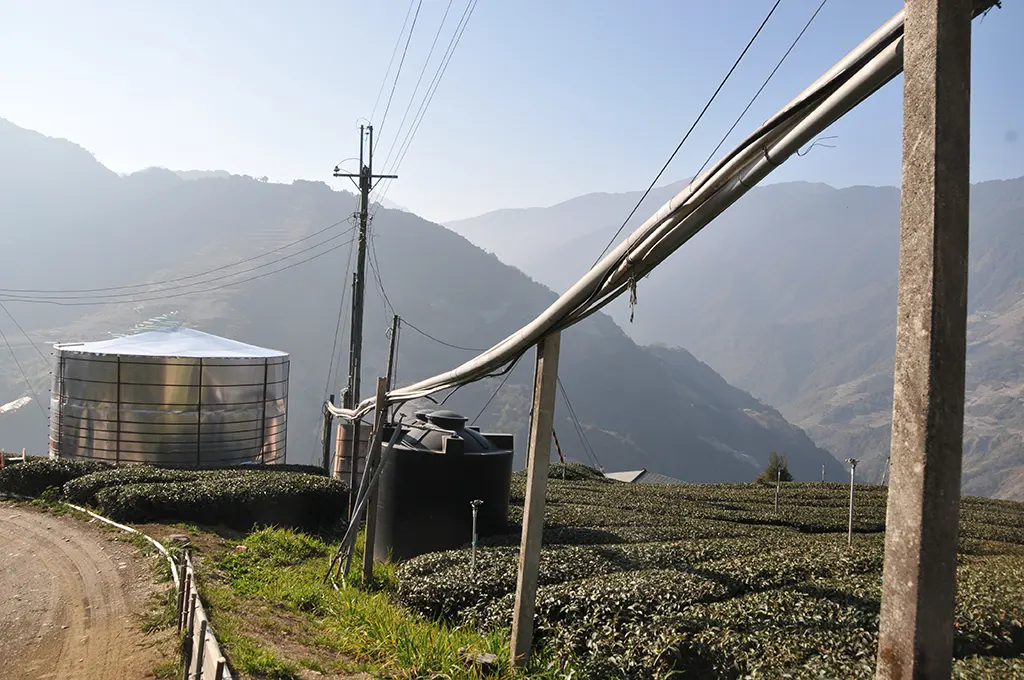
Tea garden irrigation system

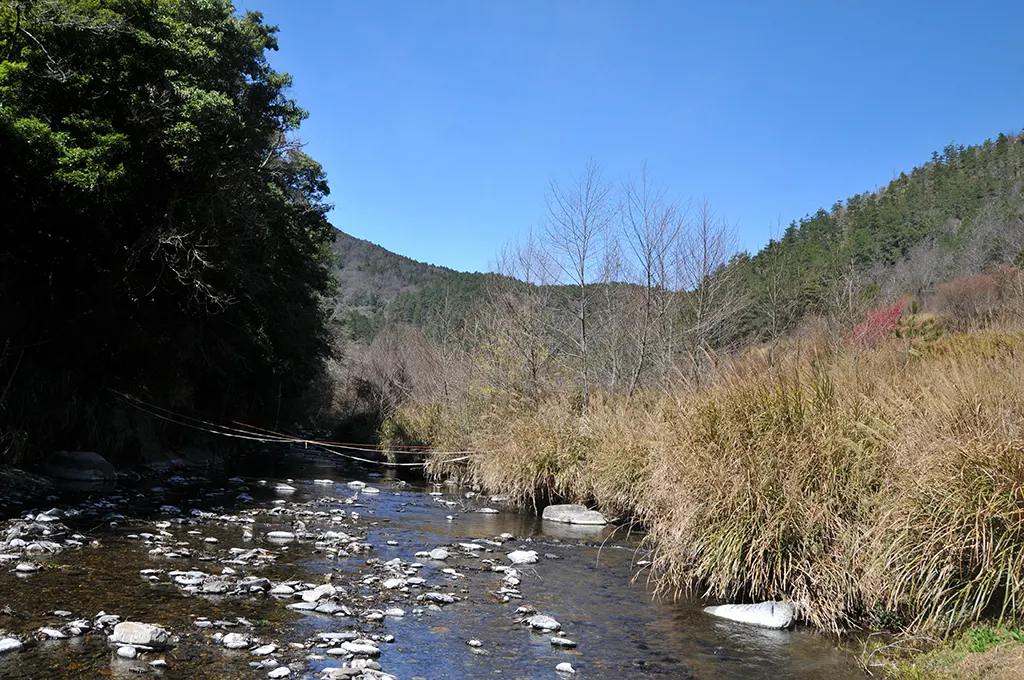
However, installing an irrigation system in high-mountain tea regions is quite troublesome. First, due to the sloping terrain, the installation cost is quite high. Second, water sources are not easily accessible. Even the simplest water storage tank costs upwards of tens of thousands of NT dollars, and when you factor in water pipelines, sprinkling equipment, and installation fees, costs ranging from hundreds of thousands to over a million NT dollars are quite common. Some tea garden owners, unable to bear these expenses or simply finding it too much hassle, choose to forgo irrigation systems altogether and rely entirely on the weather.

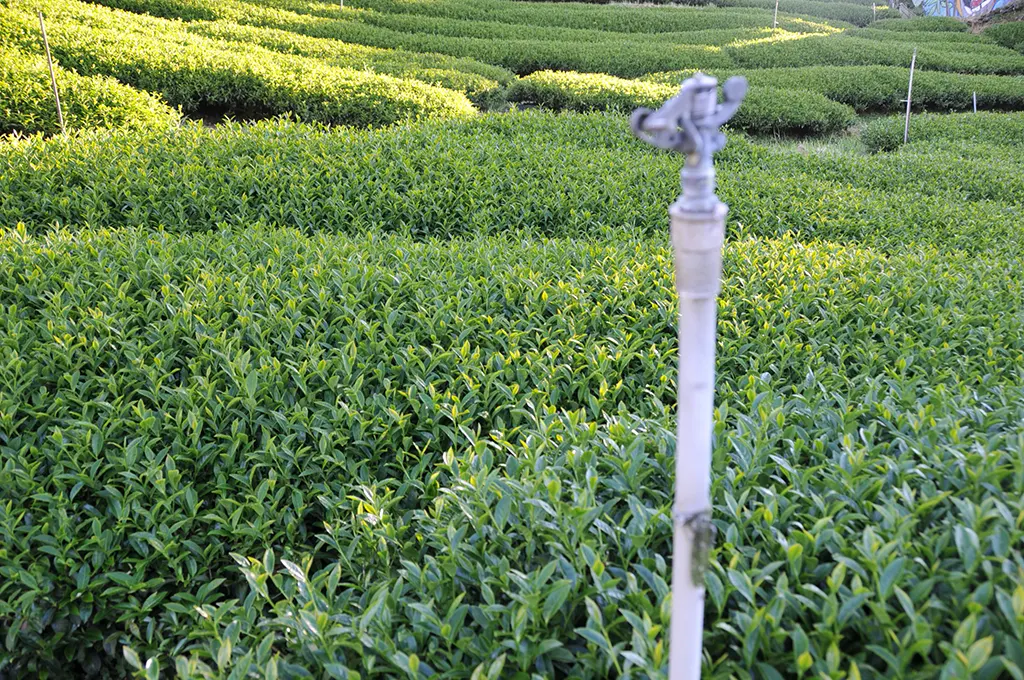
Tea garden irrigation system

From a tea merchant’s perspective, when sourcing high-mountain tea, whether or not a garden has a complete irrigation system is a major consideration. Water-deprived tea plants grow unevenly and struggle to absorb fertilizer nutrients, making it difficult to achieve optimal quality. Unless there happens to be abundant rainfall during the growing season, our store manager will only choose tea from gardens equipped with an irrigation system.

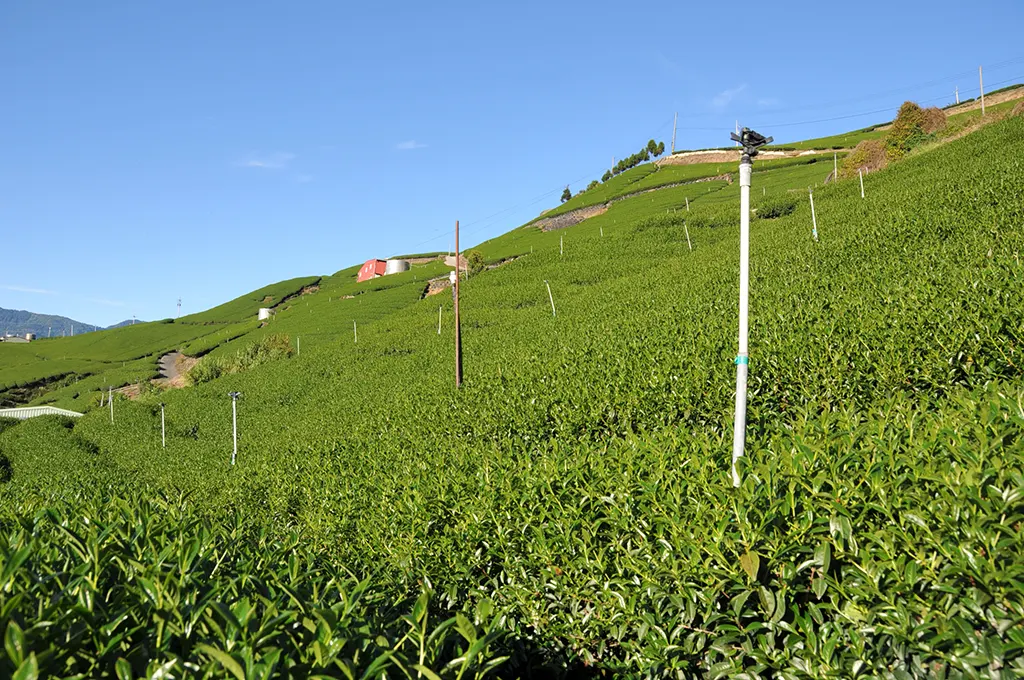
Tea garden irrigation system

You can tell whether a manager truly cares for their tea garden simply by looking at their irrigation system. Some tea factories spare no expense to secure an adequate water supply, piping water in from kilometers away—with the pipeline alone costing over a million NT dollars. This is why, even in the same tea region and under identical harvesting conditions, the quality of tea produced by different managers can vary so drastically.

Shopping Cart