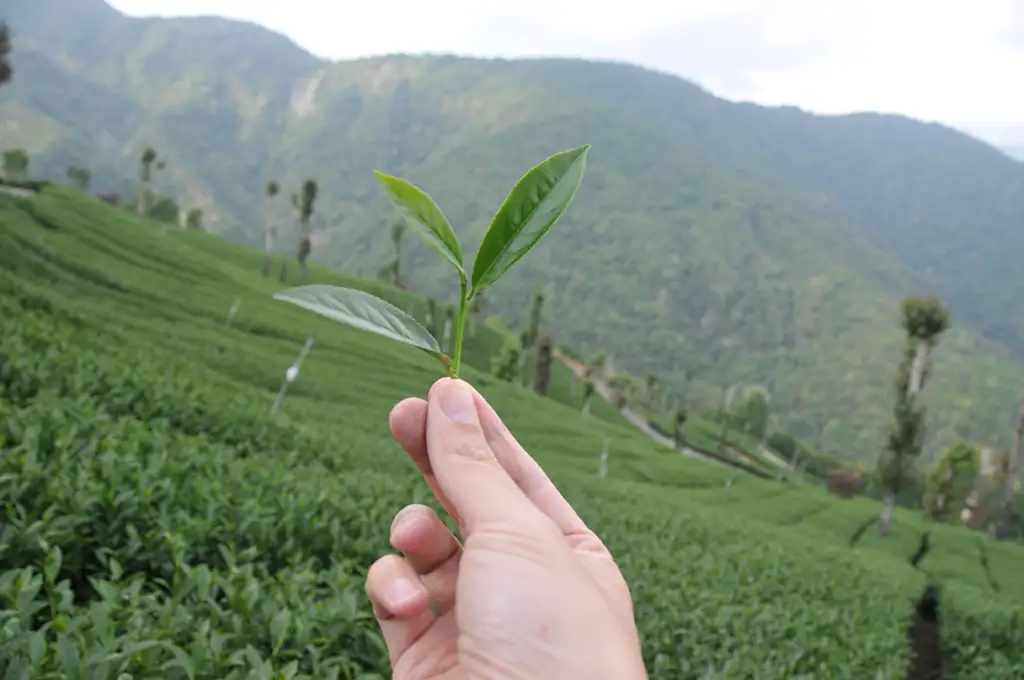
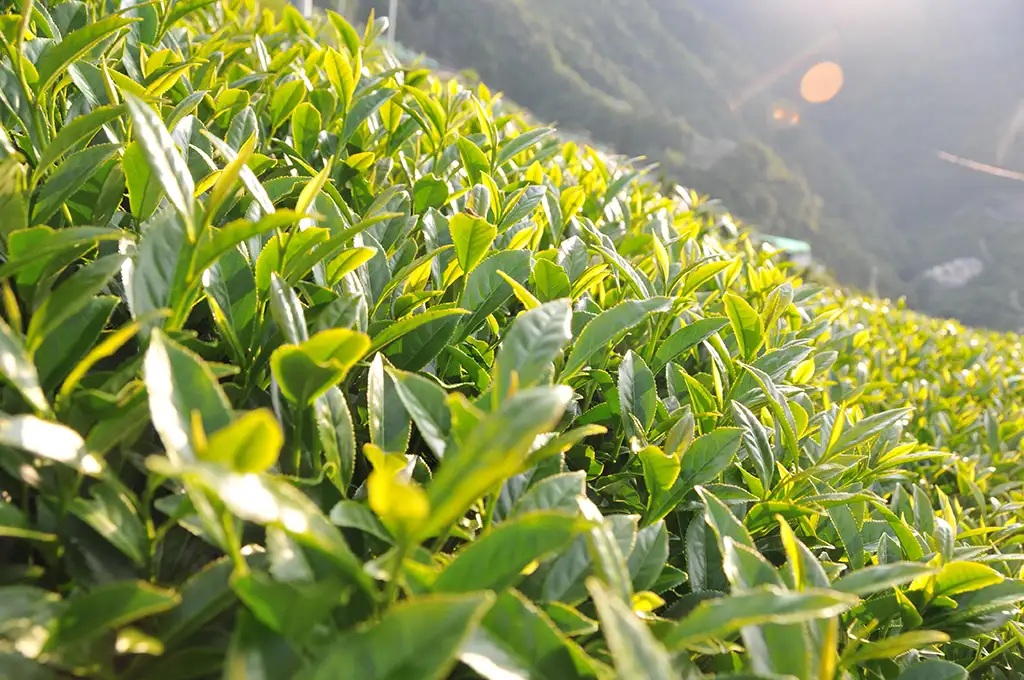
“One bud” refers to the freshly sprouted tea shoot, while “two leaves” refer to the two tender leaves just below it. Because they represent the tenderest part of the tea plant, one bud and two leaves have become the benchmark for crafting high-quality tea, with many specialty teas marketed on this very standard.
Is Picking One Bud and Two Leaves Always Better Than Three?
When it comes to the practical production of lightly fermented oolong teas, picking one bud and two leaves isn’t necessarily better than picking three, regardless of whether the tea garden is at a low or high altitude. Tea quality depends primarily on tenderness rather than leaf count.
For instance, if the tea leaves are overly mature, even a harvest limited to one bud and two leaves will yield poor quality. Conversely, if harvested at the right time while the leaves are still sufficiently tender, the third and even the fourth leaf will maintain exceptional quality. High-quality tea can thus still be made even when harvesting one bud and three or four leaves.
The Reality of High Mountain Tea Harvesting
Taking high mountain tea (such as from Lishan and Ren’ai Township) as an example, tea in these regions is typically harvested as one bud and three leaves because the third leaf remains of high quality under tender picking conditions. Picking three leaves not only improves yields for farmers but also benefits withering and moisture dissipation during processing. Some special, ultra-tender harvesting methods even include one bud and four leaves.
When high mountain tea is harvested strictly as one bud and two leaves, it usually means the leaves have already become too mature, forcing tea pickers to abandon the third or fourth leaf. In most cases, if the third and fourth leaves are already over-mature, the second leaf is likely too old as well. Consequently, high mountain tea picked strictly as one bud and two leaves has a significant chance of actually being of secondary quality.

A Quick Tip for Buying High Mountain Tea
When shopping for high mountain tea, there is no need to overly obsess over the “one bud and two leaves” standard. High mountain tea is commonly harvested with one bud and three leaves; as long as the leaves maintain high tenderness, having three or four leaves won’t affect the overall quality of the tea.