
How can you tell good tea from bad when buying tea? While it is largely subjective, there is still a set of fundamental methods. Beginners can learn these basics and apply them when shopping to ensure they bring home high-quality tea.
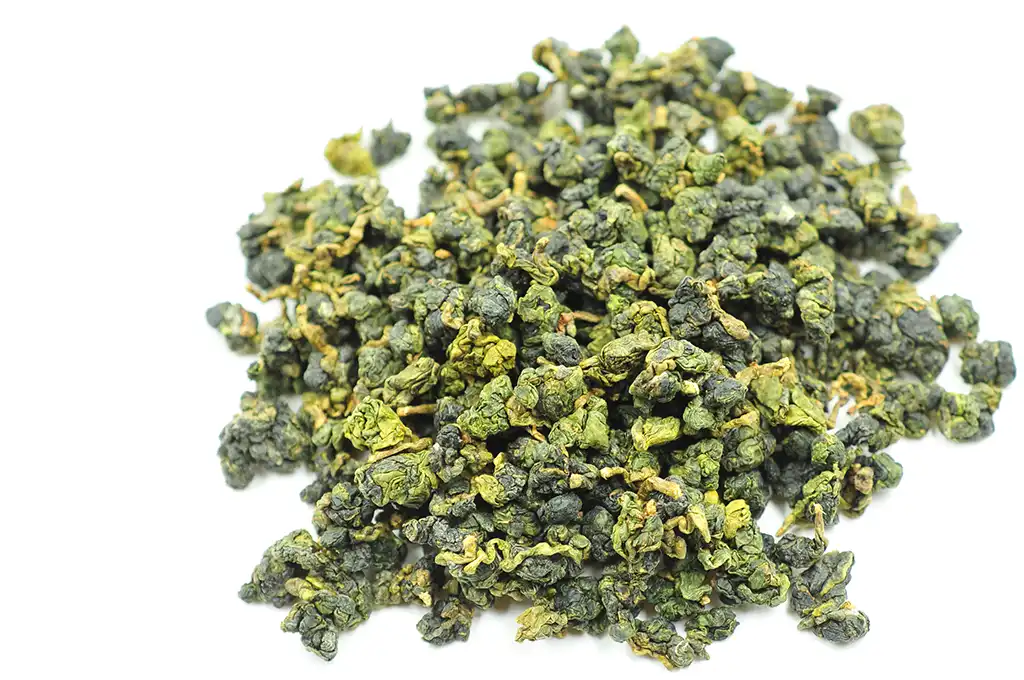
When buying tea, assess its quality by looking at its dryness, appearance, aroma, taste, liquor color, and infused leaf base.
| Dryness | The dryness of tea is crucial as it affects storage and flavor. A simple test is to gently grasp the tea leaves in your hand; if they feel slightly prickly and easily crush between your thumb and index finger, the dryness is good, with a moisture content of less than 5%. If they are still hard to crush with force, the leaves may have absorbed moisture, indicating insufficient dryness. |
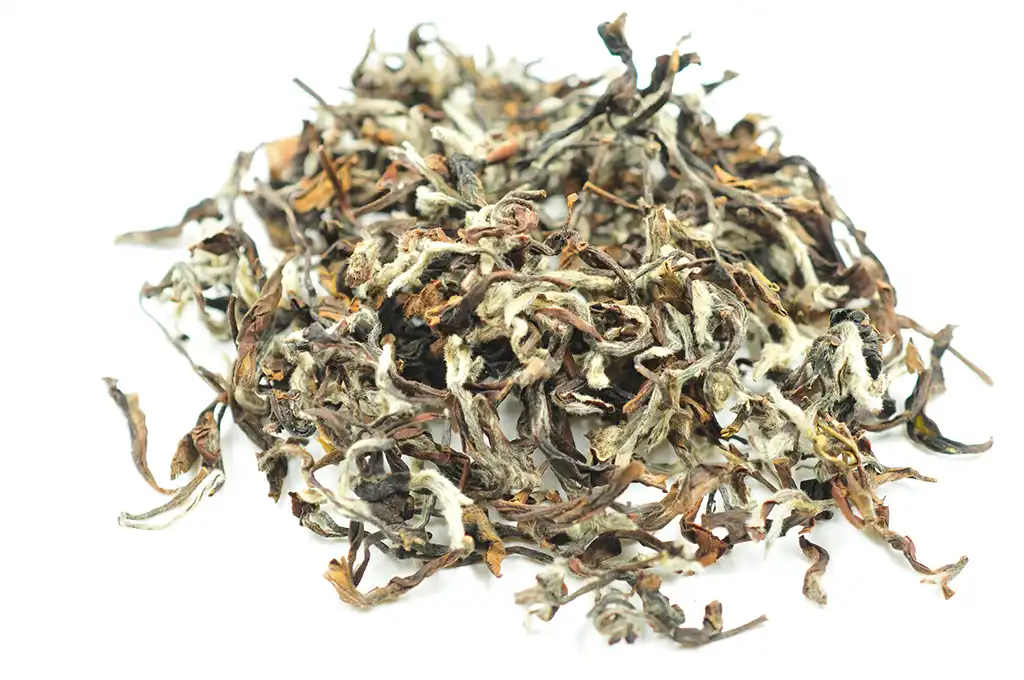
| Appearance | Different types of tea have their standard colors, such as the prominent white tips of Oriental Beauty Tea (bottom image), Pouchong tea should be naturally curled with a glossy, vibrant green color, while High Mountain Oolong features tightly rolled, semi-spherical leaves with a harmonious dark green tone, and black tea typically presents in fine strips. |
| Shape | High-quality tea leaves should be intact, with symmetrical and uniform leaf shapes. Tea leaves with a high content of stems, flakes, tea dust, or impurities will generally affect the quality of the brewed tea, and the proportion of these impurities should be as low as possible. |
| Aroma | Different types of tea have varying aromas due to processing methods and fermentation levels. Green tea should have a fresh aroma, Pouchong tea a floral aroma, roasted oolongs a ripe fruit aroma, and black tea a sweet aroma. If the tea has an oily, burnt, grassy, stale, seaweed-like, or other off-odor, it may be of poor quality or improperly stored. |
| Taste | Good tea should be smooth, sweet, mellow, and leave a lingering aftertaste. Tastes vary by tea type—some emphasize fresh and mellow flavors, while others have a slight bitterness that turns sweet. However, if the brew is overly bitter, lacks dimension, or has a stale or overly scorched taste, it is not a good tea. |
| Liquor Color | The color of the tea liquor is related to its fermentation level. Generally, green tea is honey-green, black tea should be bright red, Oriental Beauty is amber, Dong Ding Oolong is golden yellow, and Pouchong and high mountain teas are honey-yellow or yellowish-green. Good tea liquor should be clear, bright, and glossy; if it is cloudy with excessive sediment, it may be of inferior quality. |
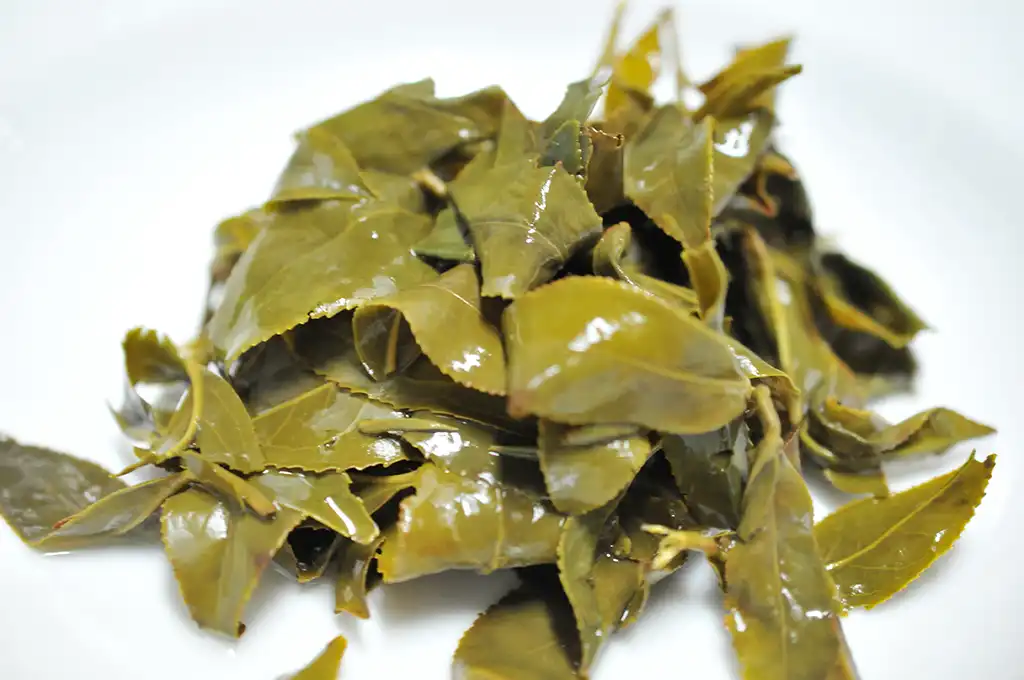
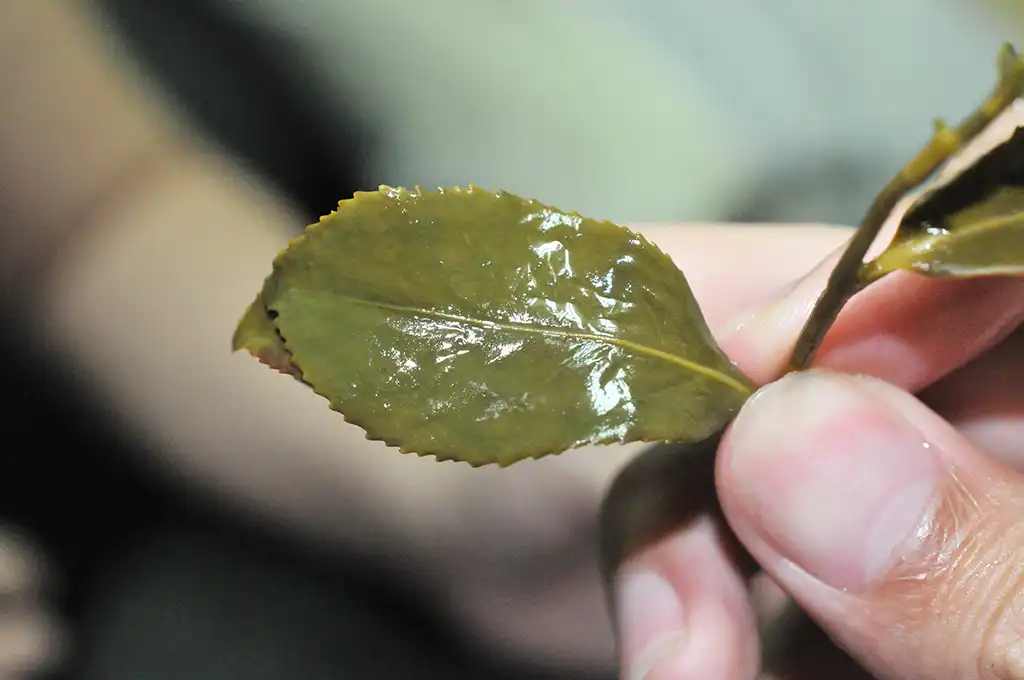
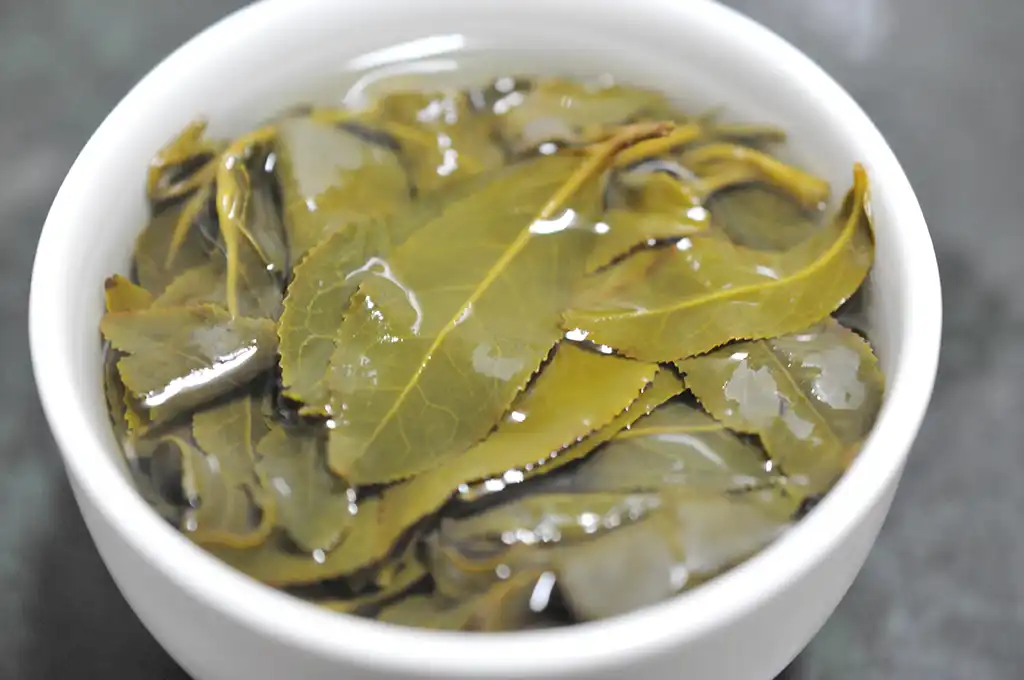
| Infused Leaves (Spent Tea Leaves) | Examining the infused leaves further reflects tea quality and craftsmanship. Evaluation criteria include: 1. Leaf Expansion: Leaves that unfold rapidly after brewing are usually mature and coarse, resulting in a weak brew that doesn’t withstand multiple infusions. Leaves that unfold gradually indicate tender leaves of higher quality, while those that fail to unfold may be the result of a failed withering process. 2. Uniformity and Integrity: Infused leaves with high integrity indicate better quality, while excessive broken leaves usually denote a secondary grade. 3. Leaf Elasticity: Gently pinch the infused leaves with your fingers; if they are springy and soft, it indicates high tenderness of the fresh leaves. If the veins are prominent and stiff, they may be old or aged leaves. (The springy leaves in the image below show sufficient tenderness) 4. Fermentation Level: Black tea should show bright red tones, while oolong tea should have red leaf edges and light green centers. (Image below) |
Beginners buying tea are best guided by someone experienced
When purchasing tea for the first time, beginners can make a preliminary judgment on quality based on dryness, appearance, and aroma, while taste and liquor color require some tasting experience to distinguish. Observing the infused leaves takes long-term experience, so we recommend being guided by experienced tea lovers to learn together how to choose truly great tea.