
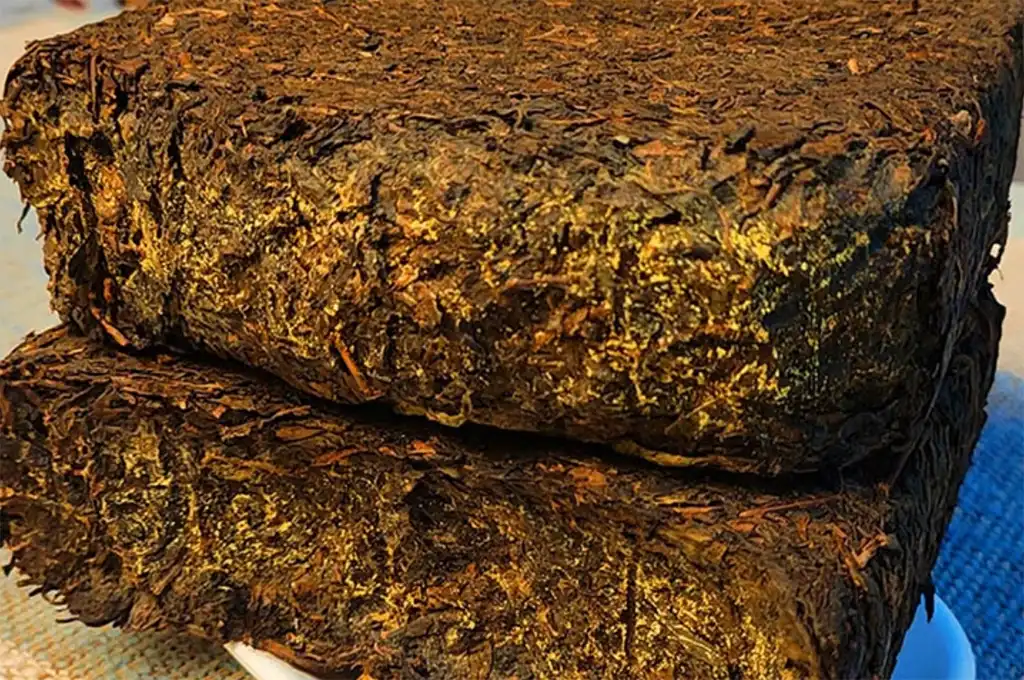
Fuzhuan brick tea is beloved for its distinct “golden flowers” (jin hua). These tiny golden granules are Eurotium cristatum, which greatly enhance the quality of the brick tea. However, are yellow or white spots on a tea brick always beneficial golden flowers, or could the tea simply be moldy?
Difference Between Golden Flowers and Mold
Golden flowers (Eurotium cristatum) are a unique probiotic found in Fuzhuan brick tea. They grow inside the tea leaves, forming small golden granules that adhere firmly to the tea structure. Mold, on the other hand, typically grows on the surface of the tea leaves, appearing as downy, white fungal threads that easily blow away or wipe off.
How to Tell Golden Flowers Apart from Mold
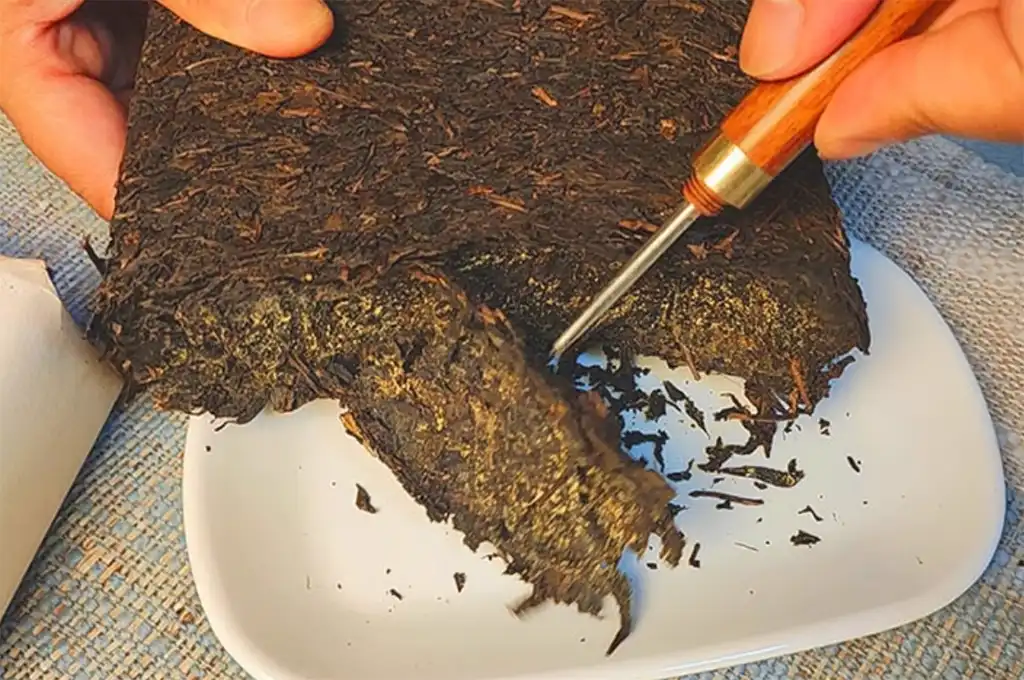
Observe Location and Color: Golden flowers grow inside the tea leaves. When you break open a Fuzhuan tea brick, you can see these golden granules embedded within. If yellow spots appear only on the surface of the tea brick and easily rub off, be cautious—it is likely mold rather than golden flowers.
Smell the Aroma: Fuzhuan brick tea with genuine golden flowers should emit a natural, fresh aroma rather than a pungent, musty smell. If the tea has an unusual musty odor, it has likely absorbed moisture and molded.
Taste the Brew: A proper infusion of golden flower Fuzhuan tea should taste smooth, mellow, and sweet without any harshness. If it feels scratchy in the throat or has an irritating taste, the tea may have spoiled and grown mold.
Risks of Mold and Important Precautions
Moldy tea not only ruins the original flavor but can also have negative health impacts. Long-term consumption of moldy tea may lead to dizziness, diarrhea, and even damage to liver and kidney function. Therefore, whether it is Golden Flower Fuzhuan tea or any other type of tea, once you find that the leaves have grown mold, you should stop drinking them immediately.
How to Tell if Golden Flower Fuzhuan Tea is Moldy
Golden Flower Fuzhuan tea is famous for its unique golden flowers (Eurotium cristatum), but it is essential to carefully distinguish between these beneficial golden flowers and harmful mold when purchasing and storing. Proper storage methods are crucial; keeping the tea in a ventilated and dry environment effectively prevents moisture and spoilage. By observing the appearance, smelling the aroma, and tasting the tea, we can better determine whether the golden flowers in the tea brick are authentic, avoiding health issues caused by mistakenly consuming moldy tea.
Read More:
- Anhua Bai Liang Cha: The scaled-down version of Qian Liang Cha
- Anhua Heizhuan Cha: Tightly pressed dark tea category
- Anhua Huazhuan Cha: Dark tea featuring decorative patterns on the brick
- Anhua Shengjian Cha: A relatively affordable grade of dark tea
- Hunan Dark Tea: Top-tier Chinese dark tea on par with Pu-erh
- Anhua Gongjian Cha: A relatively affordable grade of dark tea