
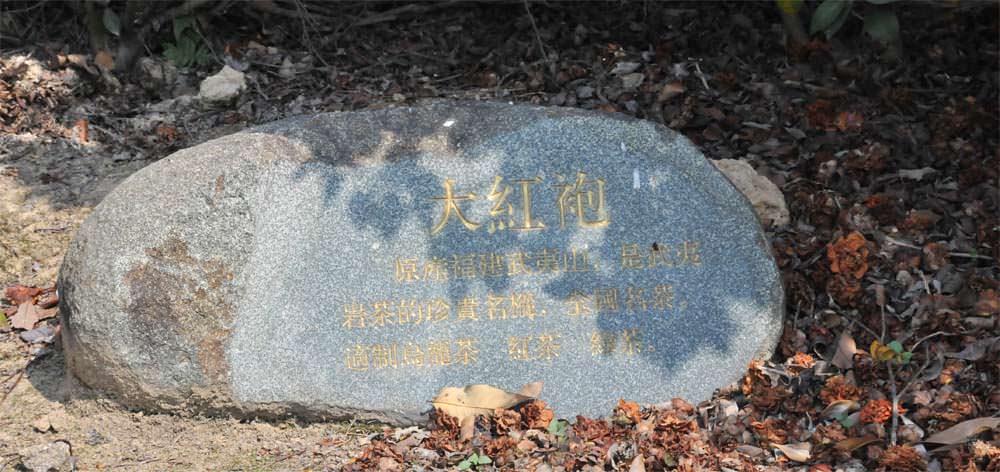
Dahongpao is a tea plant variety originally native to Mount Wuyi in Fujian, and Wuyi Dahongpao is typically crafted as an oolong tea. The original Dahongpao mother trees grow on the sheer cliffs of Tianxin Rock in Mount Wuyi. With only 6 trees remaining, their annual yield is just a few hundred grams. Although propagation via cutting began in 1982 and overall production has since increased, it remains an extremely rare and prestigious tea.
The Foremost of the Four Famous Bushes of Wuyi Rock Tea: Wuyi Dahongpao Tea
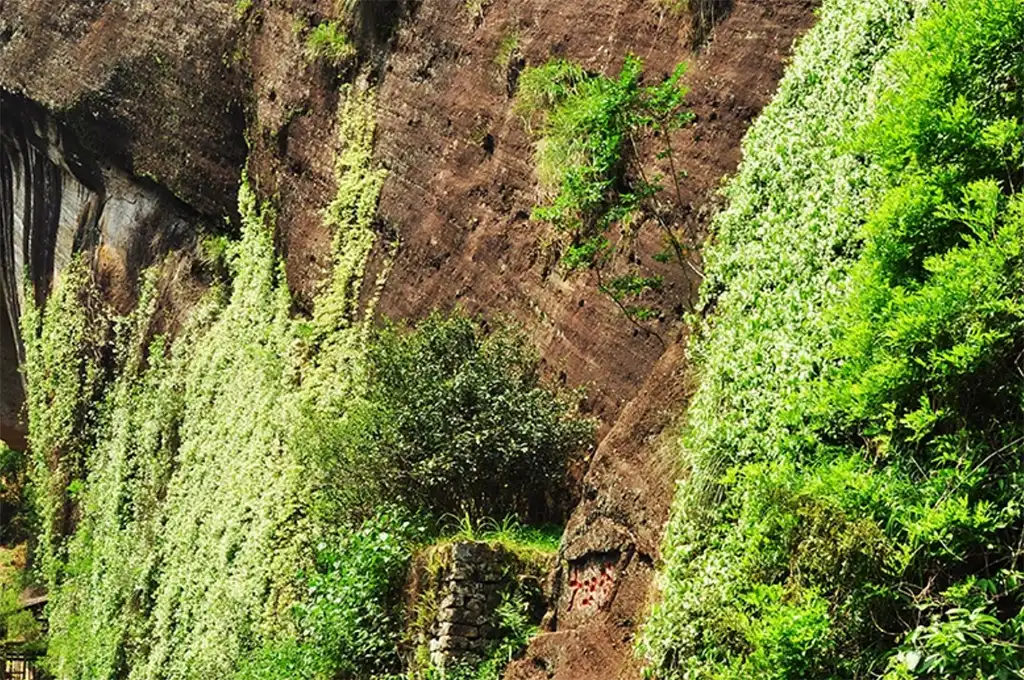
Tea trees were first discovered growing on the sheer cliffs of Jiulongke at Tianxin Rock in Mount Wuyi. While these cliffs are generally inhospitable to plant life, a few pockets along the ledge provide just enough space for tea trees to grow, along with an abundant water source and afternoon shade—creating an ideal natural microclimate.
People noticed that these naturally growing tea trees possessed a uniquely exceptional flavor, but with only 6 mother trees, the annual harvest was limited to a few hundred grams. Later, cultivators used cutting propagation to start tea gardens nearby. Thanks to their outstanding quality, these teas became immensely popular. Following a significant surge in production after 2010, Dahongpao tea has now become the foremost among the Wuyi Rock Tea Four Famous Bushes (Dahongpao, Tieluohan, Baiguan, and Shuijingui).
The Origin of the Name "Dahongpao"
Two widely known legends explain the origin of the name “Dahongpao” (literally meaning “Big Red Robe”). The first legend involves a scholar from ancient times. According to the story, while traveling to the capital for the imperial examinations, the scholar fell ill as he passed through Mount Wuyi. He was rescued and treated by a local elderly monk, who also gifted him a packet of tea. After passing the exams and being appointed as the top scholar (Zhuangyuan), he used this tea to cure the Empress’s illness, earning a generous reward from the Emperor. Out of deep gratitude, the scholar returned to Mount Wuyi and draped the red imperial robe gifted by the Emperor over the mother tea trees. Ever since, these trees have been known as “Dahongpao.”
Another legend suggests that the name “Dahongpao” stems from the appearance of the tea shoots around the Qingming Festival, when the tender buds display a purplish-red hue, as if draped in a tiny red robe. Because monkeys were particularly attracted to these reddish tender buds, they helped humans harvest these precious tea leaves.
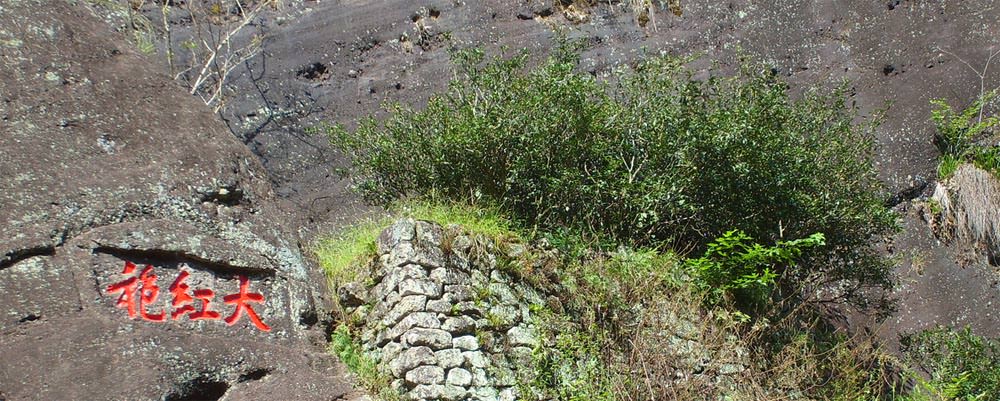
In the 1930s, Wu Shixian, the magistrate of Chong’an County, carved the three large characters for “Dahongpao” directly into the cliffside where the original mother trees grow. From that time on, Dahongpao was officially recognized as the highest-quality variety among Wuyi rock teas.
Quality Characteristics of Wuyi Dahongpao Tea
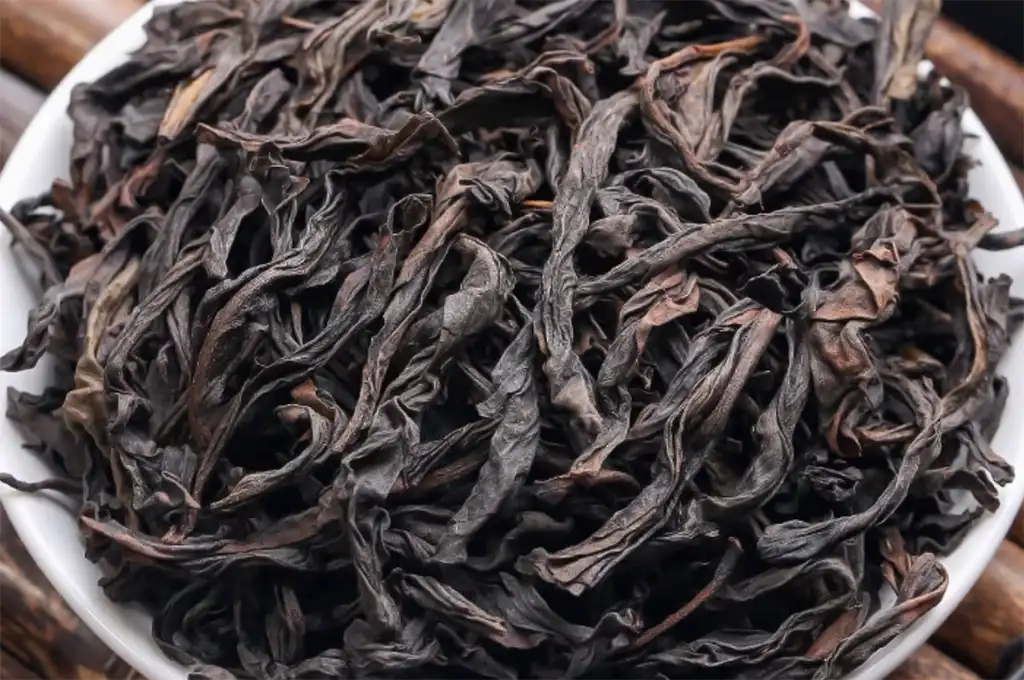
The defining characteristics of Dahongpao include leaves with green centers and reddish edges, and a neatly twisted strip shape. When brewed, the tea liquor is a clear, bright golden-orange with a lingering floral aroma. Its “rock yun” (rock rhyme) is even more pronounced than that of standard Wuyi rock teas. Wuyi rock teas crafted with medium fermentation and medium-to-heavy charcoal roasting yield exceptional quality, with a distinct rock rhyme that has become a signature trait of Dahongpao.
Wuyishan Dahongpao Harvesting and Processing Techniques
The harvesting and processing techniques for Dahongpao are similar to those of other Wuyi rock teas, yet they demand even greater precision and refinement. Every spring, tea farmers harvest the leaves when the new shoots have unfurled 3 to 4 leaves. The production process involves numerous meticulous steps, including sun-withering, indoor withering, zhouqing (making green), fixating, initial rolling, re-fixating, re-rolling, moisture-reducing roasting, winnowing and sorting, cooling, picking, secondary roasting, re-winnowing, and final touch-up roasting. Each step requires precise control over time and temperature to ensure the tea achieves its absolute best quality.
Quality Characteristics of Wuyi Dahongpao Tea
The defining characteristics of Dahongpao include leaves with green centers and reddish edges, and a neatly twisted strip shape. When brewed, the tea liquor is a clear, bright golden-orange with a lingering floral aroma. Its “rock yun” (rock rhyme) is even more pronounced than that of standard Wuyi rock teas. Wuyi rock teas crafted with medium fermentation and medium-to-heavy charcoal roasting yield exceptional quality, with a distinct rock rhyme that has become a signature trait of Dahongpao.
Read more:
- How to Brew Wuyi Rougui Tea: What Are the Key Tips?
- Is Shuixian Tea Green Tea? What Kind of Tea Is Shuixian?
- What Is the Difference Between Shuixian, Rougui, and Da Hong Pao in Wuyi Yancha?
- What Type of Tea Is Da Hong Pao? Is It Black, Green, or Oolong Tea?
- Where to Buy Da Hong Pao Tea? Is Da Hong Pao Produced in Taiwan?
- What Tea Category Does Wuyi Yancha Belong To? Is It Puerh Tea?