
Yuan’an Luyuan Yellow Tea is produced around Luyuan Temple in Yuan’an County, Hubei Province, and is a yellow tea with a long history. It is crafted using a traditional process of prolonged pile-fermentation (menghuang) after rolling, resulting in a golden appearance, rich aroma, bright apricot-yellow liquor, and a mellow, sweet, and refreshing taste.
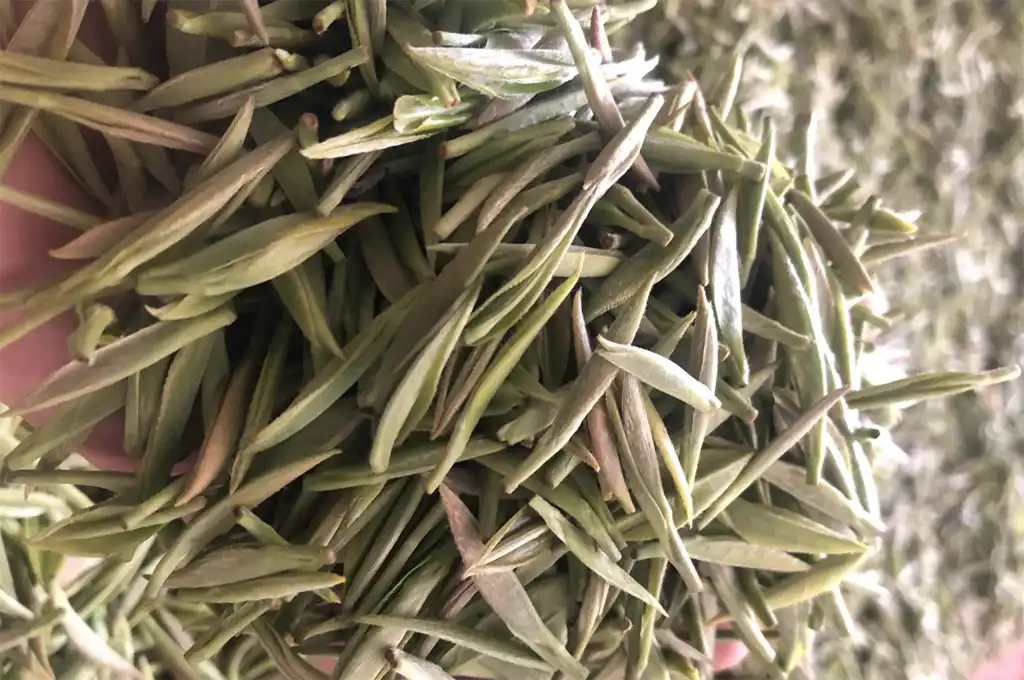
Yuan'an Luyuan Yellow Tea: Origin and Characteristics
Luyuan Yellow Tea is produced in Yuan’an County, Yichang City, Hubei Province, with the area centered around Luyuan Temple being especially famous. This tea is renowned worldwide for its unique ring-shaped strips (known as “ring feet”), prominent pekoe, golden hue with subtle fish-roe-like bubbles, rich and lasting aroma, and a mellow taste with a sweet aftertaste. As early as the Qianlong period of the Qing Dynasty, Luyuan Maojian was selected as a tribute tea and remains one of the representative yellow teas in China today.
As early as the Tang Dynasty, the tea production history of Yuan’an County was recorded in Lu Yu‘s The Classic of Tea (Cha Jing). Luyuan tea was originally cultivated by the monks of Luyuan Temple, grown in small quantities within the temple grounds due to limited yields. Later, local villagers discovered the rich aroma of the leaves and began planting them in their home courtyards and around their mountainside houses, gradually expanding the cultivation area and ultimately making Luyuan tea a representative tea of the Yuan’an region.
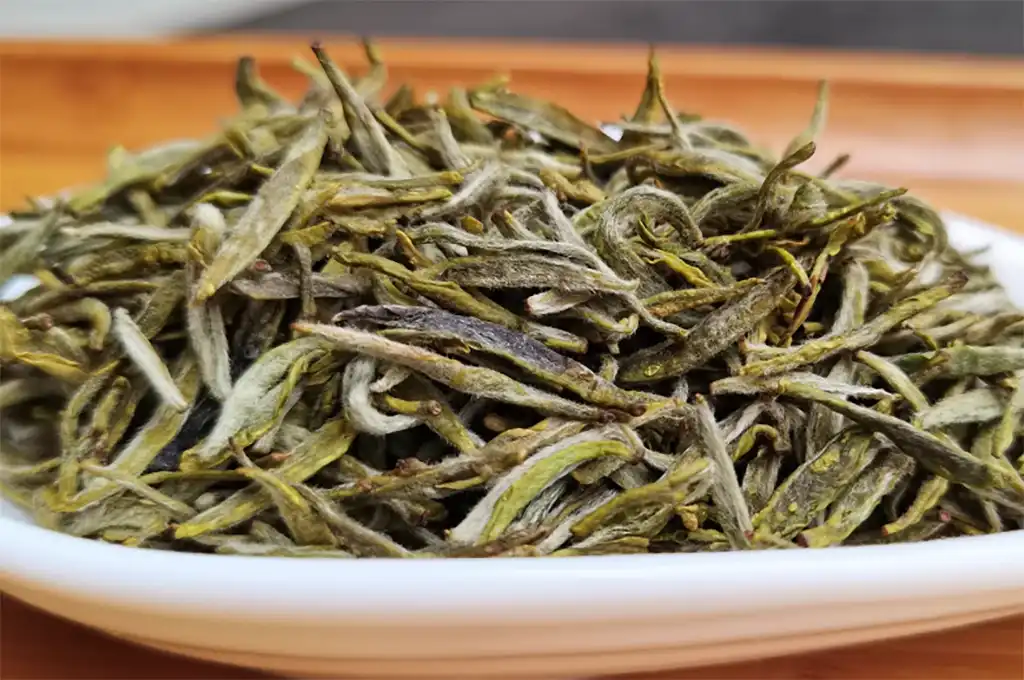
Production Process
The optimal harvesting period for Luyuan Yellow Tea is 15 days before and after Qingming. The plucking standard is one bud and one leaf or one bud and two leaves, requiring fresh and uniform tea leaves without old foliage. After harvesting, the leaves undergo a “shortening” process, which means snapping larger buds and leaves shorter to select one bud and one leaf, while the snapped-off leaves are used separately to make lower-grade products. Harvesting typically takes place in the morning, followed by the shortening process in the afternoon and pan-firing in the evening.
The production process of Luyuan Yellow Tea consists of five steps: fixation (shaqing), secondary fixation (erqing), pile-fermentation (mengdui), sorting (jianqi), and final drying (chao gan):
- Kill-green (Shaqing): The pan temperature needs to reach 160°C for 6 minutes, stir-frying until 50% to 60% dry before removing from the heat. Piling and covering is done while hot for 15 minutes, then spread out to cool.
- Second-stage fixation (Erjing): The pan temperature is lowered to 100°C for shaking and stir-frying to release moisture, while beginning the shaping and strip-rolling process for about 15 minutes.
- Piling and yellowing (Mendui): This is a crucial craft in the development of Luyuan yellow tea’s quality. The tea leaves are piled in bamboo trays, pressed firmly, covered with a damp cloth, and piled for 6 hours to promote the yellowing of the tea leaves.
Sorting: This primarily involves removing flat pieces, clumped tea, and stray leaves to improve the purity and uniformity of the tea leaves. - Pan-drying (Chaogan): Finally, dried at a low temperature of 80°C, after which packaging can take place.
Brewing Method
When brewing Luyuan yellow tea, the first brew can either be discarded or kept. Generally, the aroma is at its best during the second and third brews. Brewing with authentic Zisha (purple clay) teaware will make the flavor even richer; if you don’t have a Zisha teapot, a porcelain gaiwan or cup is also a great choice. The brewing temperature is around 90°C, with a tea-to-water ratio of 1 to 50. Steep for 3 minutes for the first brew, adding 1 minute for each subsequent brew.