
Customer Inquiry: I’ve noticed that Lishan high mountain tea ranges from NT$300 for 300 g to NT$1,500 for 150 g. Why is there such a huge price gap? I want to buy good Lishan high mountain tea, but I don’t know where to start. Could you provide an introduction to Lishan high mountain tea so I can get a basic understanding of its quality and pricing?
Chang Xing Tea: Here is a brief introduction to Lishan high mountain tea: Lishan high mountain tea refers to tea leaves grown and produced in the Lishan region. Lishan is located in Heping District, Taichung City, but the greater Lishan tea region also extends into Ren’ai Township, Nantou County. The tea plantations are situated at altitudes ranging from 1,600 to 2,500 meters, making it the highest-grown high mountain tea in Taiwan.
Major tea-producing areas include Lishan, Tianfu Farm, Fushou Shan Farm, Songmao Tribe, Xinjiyang Tribe, Huanshan Tribe, HuaGung, Cuiluan, Cuifeng, and Hongxiang. Due to the high altitude and the crisp mountain winds, the tea produced here boasts exceptional aroma and sweetness, along with an ethereal “mountain breath” character that makes it incredibly popular. It is beloved not only in Taiwan but also by tea merchants in mainland China, Hong Kong, Macau, Japan, Europe, and the United States.
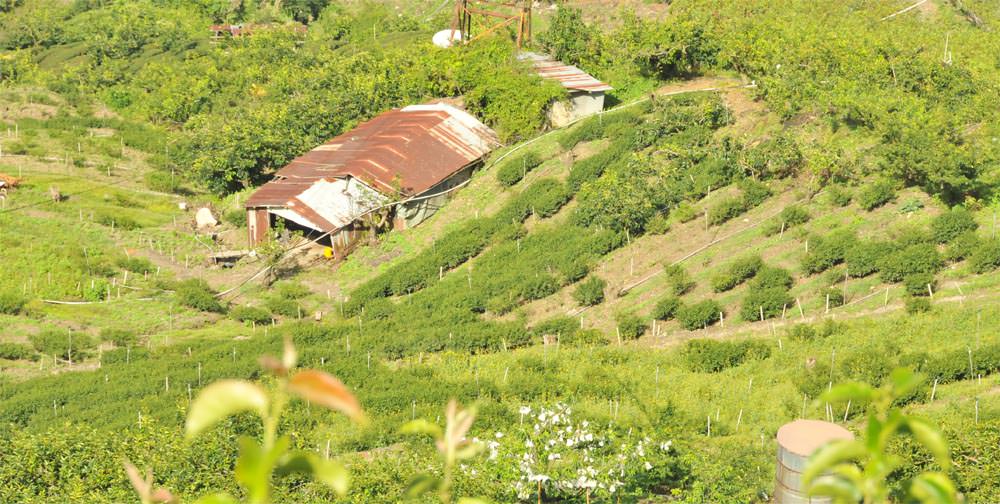
▲ Lishan high mountain tea plantation in the Songmao Tribe.
If you drink tea, you likely already have some familiarity with high mountain tea. Generally speaking, the higher the altitude of the origin, the better the quality and the higher the price. Lishan high mountain tea starts at around 1,600 meters—an altitude difficult for other tea regions to reach—with wholesale prices for local teas starting around NT$1,600. Teas produced by the Lishan high mountain tea production cooperative between 1,700 and 2,100 meters wholesale for around NT$2,000 to NT$2,800. The highest-altitude Tianchi tea grows at roughly 2,500 meters, commanding NT$10,000 per 600 g, and even then, it can be hard to secure.
As for the NT$300 for 300 g option you mentioned, given the current realities of Lishan high mountain tea, it is unlikely to be genuine. At a retail price of NT$600 per 600 g, it wouldn’t even cover the cost of fertilizer. On the other hand, NT$1,500 for 150 g of Lishan high mountain tea is a reasonable price if it comes from an altitude above 2,000 meters, is meticulously crafted, and uses premium tea leaves. While altitude is one of the key factors in evaluating Lishan high mountain tea, it isn’t absolute. Variations in production methods and weather mean that a tea grown at 1,800 meters isn’t necessarily inferior to one grown at 2,000 meters. The best approach is always to taste the tea yourself and choose the one that suits your palate. You are also welcome to shop at Chang Xing Tea, where we offer Lishan high mountain tea across low, medium, and high altitudes.