
Different tea varieties and types involve slightly different harvesting processes. For Taiwan oolong tea, the ideal harvesting stage is one bud with two leaves or one bud with three leaves. Important guidelines for harvesting include avoiding “fish leaves” (the small, low-grade leaves at the base of the shoot) and leaves wet from rain. Tea harvested around noon on a clear, sunny day yields the highest quality, so it’s best to step up harvesting during this window. Here is the tea harvesting process:
Determine tea maturity: Taiwan oolong tea is best harvested at one bud with two leaves or one bud with three leaves, with one bud and two leaves offering the highest quality and economic value. The leaves should be fully unfurled. Avoid harvesting leaves that are too tender, too mature, or have too many fish leaves. Leaves that are too tender can make the oolong tea taste bitter, while overly mature leaves result in a milder flavor.
Harvesting in clear weather: Harvesting during consecutive days of clear weather is ideal, as the tea’s aroma is most fully developed. Generally, Taiwan oolong tea leaves are not harvested in the rain, and often not even on overcast days. If there are too few sunny days, mechanical harvesting may be used to speed up the process.
Conducting the harvest: Harvesting typically takes place from 7:00 AM to 6:00 PM. Morning tea leaves are prone to morning dew, so it’s best to wait until the dew evaporates before harvesting. The optimal time for quality is between 11:00 AM and 2:00 PM. Morning and afternoon harvests differ in quality and moisture content compared to midday harvests, so it is best to process them separately to achieve the highest standards.
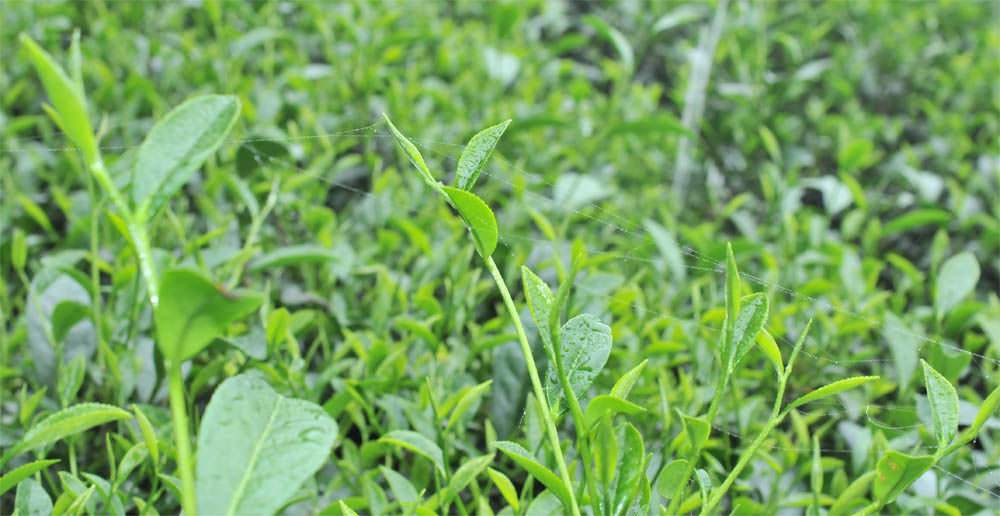
▲ It is not advisable to harvest tea leaves on rainy days or when dew is present.
Harvesting methods are divided into manual hand-picking and machine harvesting, each with its own pros and cons. Hand-picking involves using the thumb and forefinger to gently snap off one bud and two leaves, then placing them into a dedicated bamboo basket. Once the basket reaches an appropriate amount, the leaves must be emptied to prevent crushing damage and sent to the tea factory as quickly as possible. Tea bushes harvested by machine need to be kept flat and evenly grown; otherwise, they tend to pick up too many old leaves and stems, increasing the difficulty of refinement.
Precautions for Tea Harvesting
Harvested tea leaves must be sent to the tea factory as soon as possible to prevent compression, high temperatures, and premature oxidation (reddening), which would result in poor-quality oolong tea.
When picking, some leaves below the plucking surface should be moderately retained to promote subsequent growth. If the tea bushes are not developing well, it is best not to harvest them.
Do not harvest dew-covered or rain-wet leaves to avoid compromising quality. Dew-covered leaves can have their evaporation accelerated by gentle shaking beforehand.
Avoid damaging the tea leaves during plucking to prevent juice from leaking, which affects subsequent tea-making quality.
If there is a significant difference in maturity among the leaves, it is best to harvest them at separate times to facilitate subsequent processing and maintain high quality.