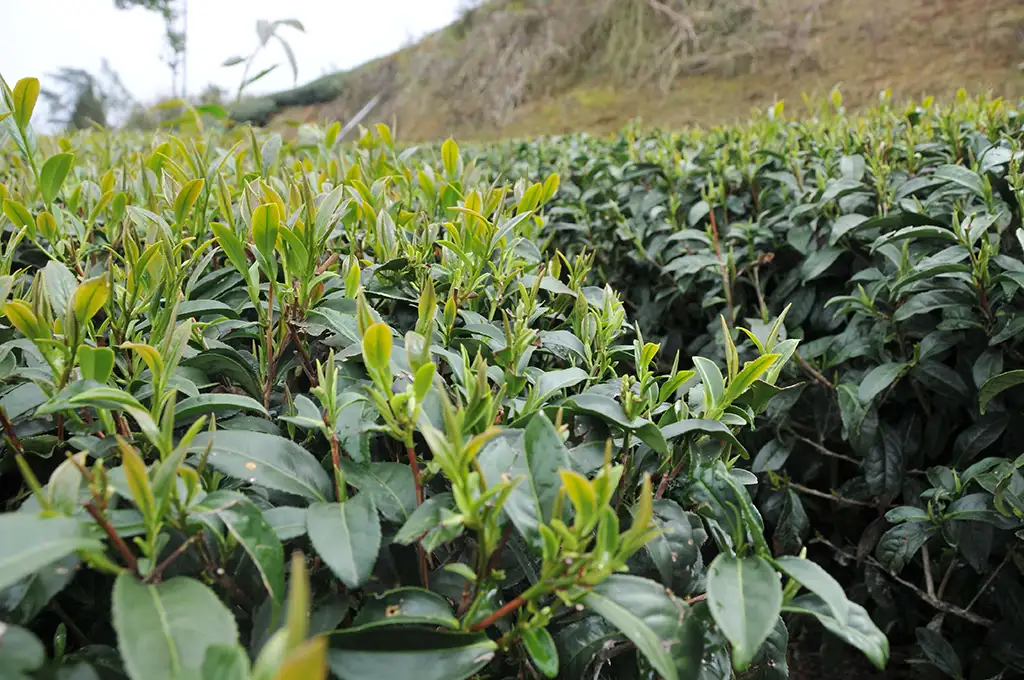
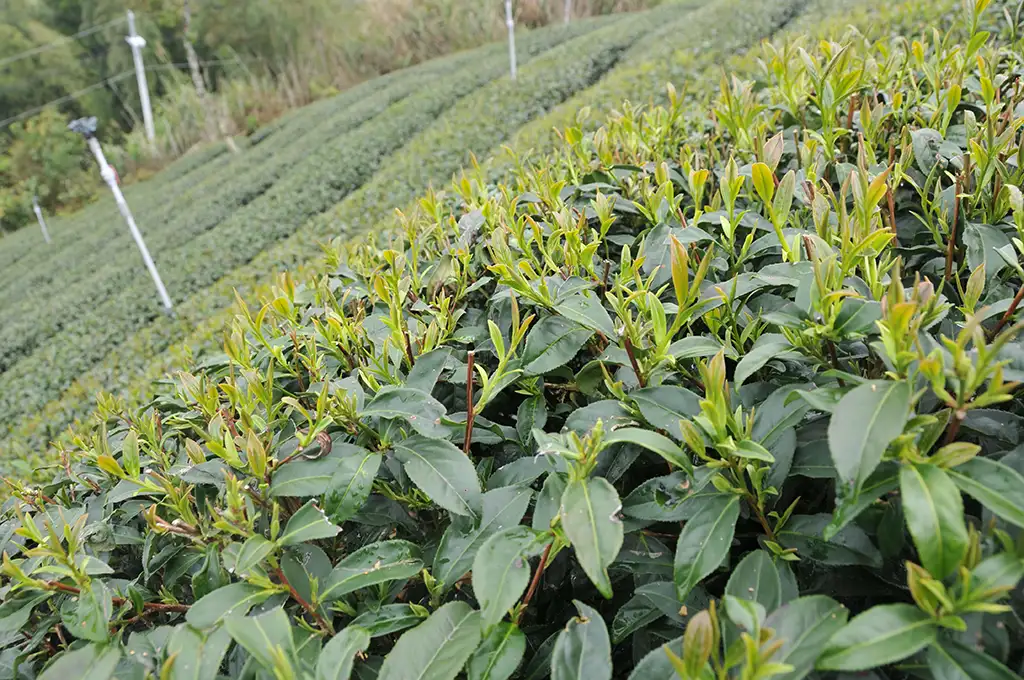
Buzhichun tea generally refers to tea harvested around the “Liqchun” (Beginning of Spring) solar term, typically from February to early March. Because the tea leaves during this period are neither strictly winter tea nor spring tea, they are called “Buzhichun” (literally meaning “not knowing spring”). Also known as “early spring tea,” it is a seasonal tea produced under specific climatic conditions.
The Origins of Buzhichun
Spring tea in general low-altitude areas is usually harvested from late March to early April. However, when the winter climate is relatively warm and the tea buds sprout early, the harvest season shifts earlier to February and early March—tea harvested under these conditions is known as Buzhichun tea.
Many people mistakenly believe that Buzhichun tea exclusively refers to the “Sijichun” (Four Seasons Spring) tea cultivar, but this is actually incorrect. Although most Buzhichun tea is made from Sijichun tea trees, this is simply because Sijichun is an early-maturing cultivar that sprouts earlier than others, making it a more common raw material. Besides Sijichun, cultivars like JinXuan and CuiYu can also produce Buzhichun tea.
Origins of Buzhichun Tea
Buzhichun tea is primarily produced in low-altitude tea regions, commonly found in low-altitude tea gardens in Mingjian Township and Zhushan Township of Nantou County, as well as Zhongpu Township and Meishan Township of Chiayi County. Interestingly, Zhushan Township has a place name called “Buzhichun,” located along the main route to the Fanzitian tea region, and Buzhichun tea is produced here as well.
Additionally, some vendors on the market sell high-altitude Buzhichun tea (from regions like Lishan, Dayuling, and HuaGung). In reality, high-altitude Buzhichun is almost impossible because winter temperatures in these high-altitude areas are too low for tea trees to sprout in large quantities during January and February, meaning there is naturally no early spring tea to harvest. Therefore, most high-altitude Buzhichun tea on the market is not authentic.

Buzhichun tea is the product of specific seasonal and climatic conditions, blending the flavor profiles of both winter and spring teas to offer a unique lingering charm and refreshing crispness. If you haven’t tried it yet, feel free to pick up a 75 g pack to taste—just remember to stick to the low-altitude versions.
Buzhichun Tea Q&A
Does it contain caffeine?
Any tea leaf product contains caffeine. Buzhichun tea is typically crafted as oolong tea, with a caffeine content ranging from 25 to 55 mg per 100 ml.
Is Buzhichun a green tea?
It generally refers to tea harvested around the “Liqchun” solar term. It can be made into green tea, oolong tea, or black tea, but due to its suitability for processing, the vast majority is made into lightly fermented oolong tea.