
High mountain tea generally refers to oolong tea produced in tea regions at altitudes of 1,000 meters or higher. Due to the low average temperatures, large temperature differences between day and night, and limited sunlight in high mountain areas, the tea leaves grow slowly. Combined with the unique “mountain terroir” of each region, the resulting oolong tea features a fresh aroma and a sweet aftertaste, making it immensely popular in Taiwan.
Currently, the main production areas for high mountain tea in Taiwan include ShanLinXi and Ren’ai Township in Nantou, Heping District in Taichung, and the Alishan tea region in 嘉義 (Chiayi). Nantou County accounts for the largest volume of high mountain tea production at over 50%, followed by Alishan. Lishan high mountain tea has the lowest production volume, but because its altitude reaches up to 2,500 meters, the tea it produces is exceptionally smooth and sweet in the finish, making its quality the most beloved.
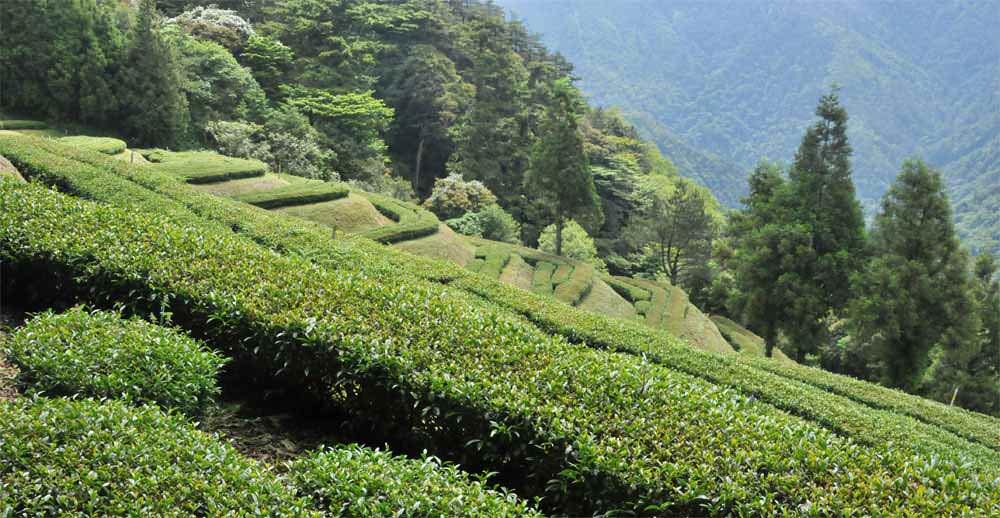
▲ High mountain tea from the Lishan area is low in production and exceptional in quality.
High mountain tea is popular primarily because the lower temperatures and larger temperature variations in high altitudes cause the tea leaves to grow slowly, reducing bitterness and astringency while enhancing the sweet aftertaste of the oolong tea. Additionally, because cultivating tea in high mountains is challenging, tea farmers apply generous amounts of fertilizer, resulting in leaves that are typically thicker and richer in pectin, leading to a much smoother mouthfeel. Aside from the sweet aftertaste and smoothness, the biggest difference from lowland tea is that high mountain tea is mostly lightly roasted or unroasted. This preserves its fresh aroma, allowing drinkers to taste the unique mountain character.
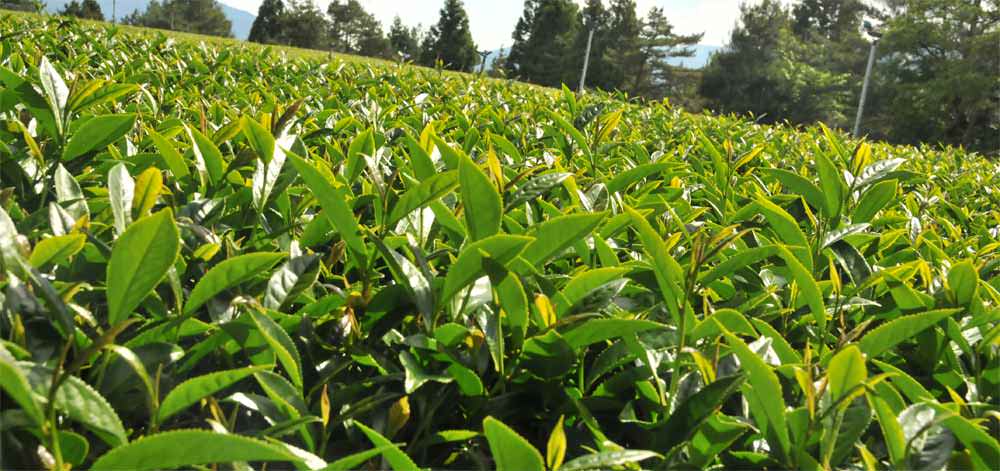
▲ Thick tea leaf growth is a characteristic feature of high mountain tea.
Due to its superior quality and the difficulty of production and manufacturing, high mountain tea generally commands a higher cost. Standard production costs typically exceed NT$800 per 600 g. Teas priced around NT$500 per 600 g found in the market, claimed to be Lishan, Alishan, or ShanLinXi teas, are usually lowland teas or imported teas passed off as authentic. It is best to exercise caution when purchasing high mountain tea.