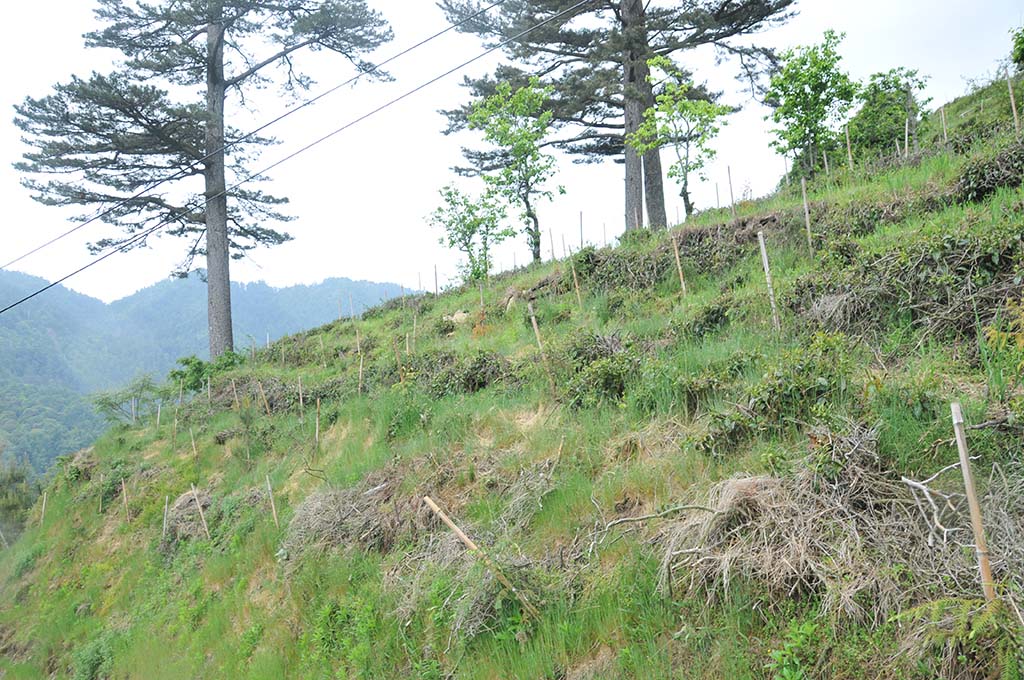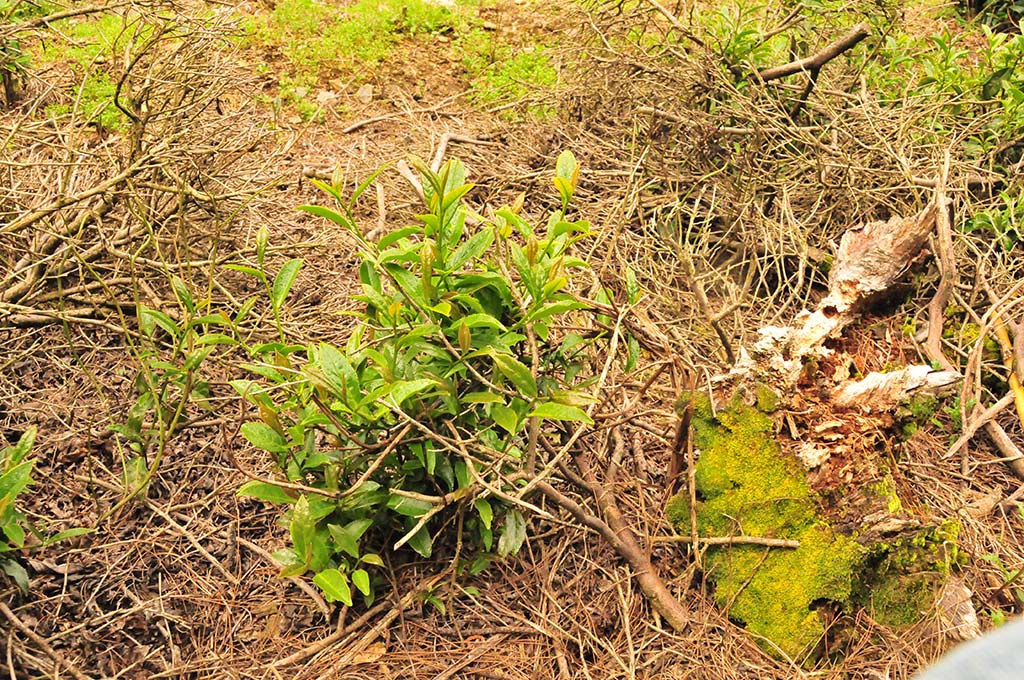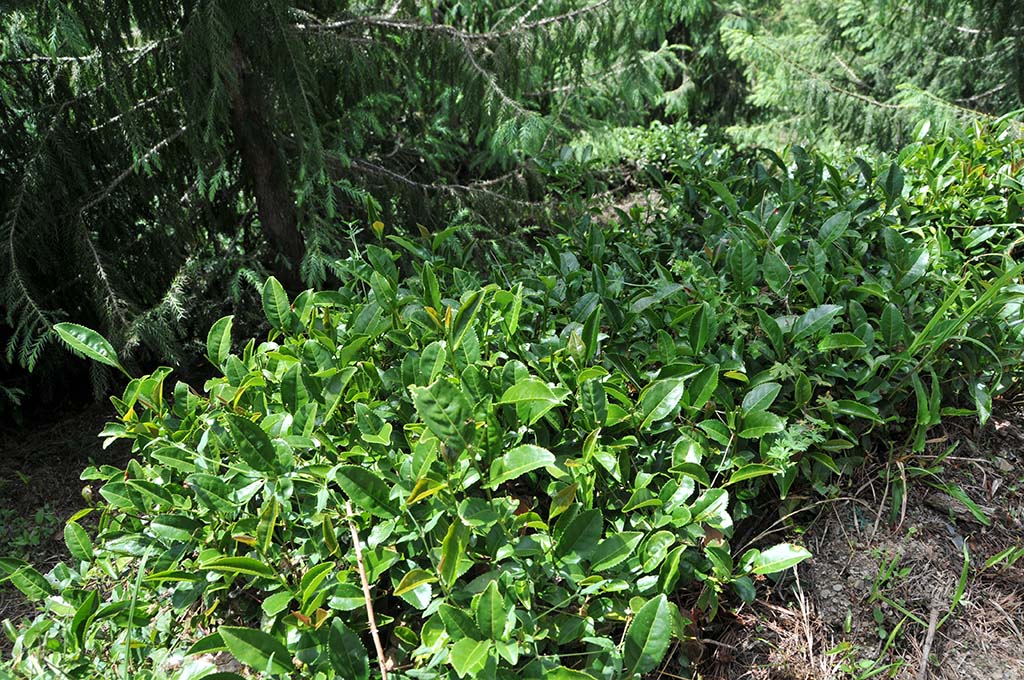
Last week we talked about the gossip surrounding fake tea. Today, let’s look at the aftermath of clearing Dayuling’s two most famous tea plantations: the 104K and 105K plantations.
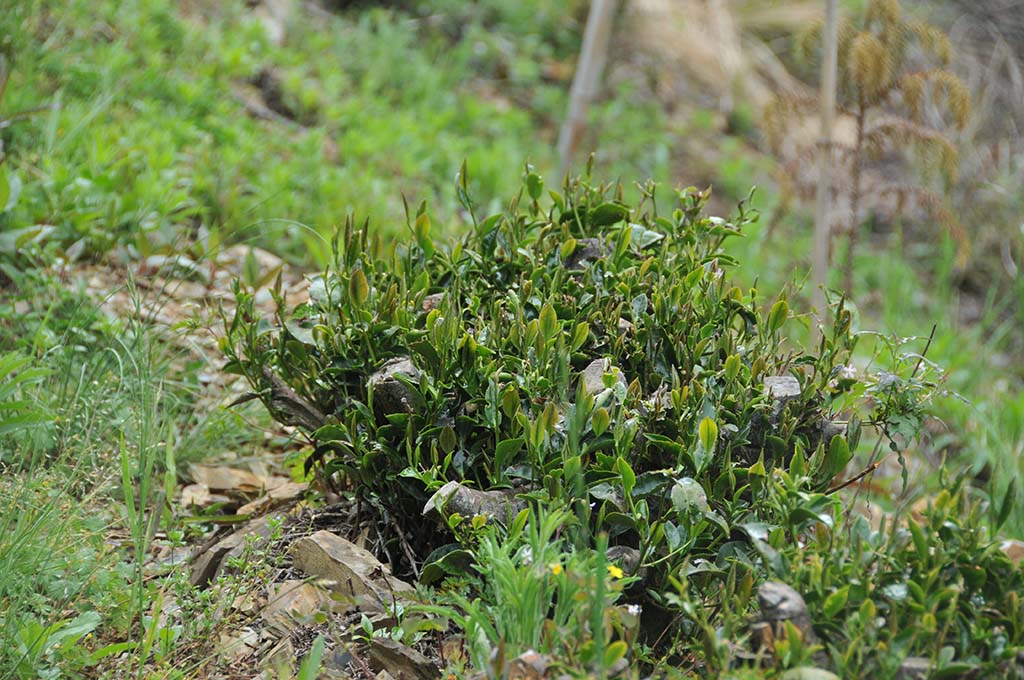
The 104K and 105K tea plantations were cleared at the end of 2015, and their ownership was transferred to the National Property Administration. Logically speaking, 104K and 105K tea should no longer exist, yet people are still selling it these days. Apple Daily previously reported on this; here is a repost by the store manager:
******* Reposted from Apple Daily *******
[Reported by Wang Yi-che and Chang Che-wei from Nantou] Hailed as “closest to the heavens,” Dayuling tea is renowned as “Snow Oolong” due to being covered in frost and snow during the winter. Among them, the “Snow Oolong” produced at the plantation near the 105K marker of Provincial Highway 8 once fetched NT$12,000 per 600 g. However, after the Forestry Bureau repossessed the plantation land last year, “Snow Oolong” has become a thing of the past. Yet, vendors at the Nantou Tea Industry Exposition still peddle high mountain tea under the labels of Dayuling 105K and 104K. An investigation by Apple Daily at Dayuling revealed that the main tea plantations have all been abandoned, with tea farmers bluntly stating: “Any Dayuling 105K and 104K tea on the market is guaranteed to be fake!”
Lawyer Lin Chiung-chia reminds the public that selling low-priced tea as premium tea leaves may constitute fraud, carrying a maximum sentence of 5 years in prison.
Last year, the Forestry Bureau forcibly reclaimed multiple plots of tea plantation land in Dayuling that were in violation of regulations. Not only did the 105K “Snow Oolong” along Provincial Highway 8 disappear, but Dayuling tea grown above an altitude of 2,400 meters is now virtually unbuyable, no matter how much money you have. However, Apple Daily reporters recently witnessed staff from the Nantou County Farmers’ Association boasting at the Nantou Tea Industry Exposition that their Dayuling tea “comes from the famous 105K producing area and the Snow Oolong plantation, but costs only NT$4,800 per 600 g.” Some onlookers chuckled: “It was all cleared out ages ago, yet they still dare to claim it’s from 105K.”
Another vendor selling Dayuling tea at NT$8,800 per 600 g, claiming it was from the 104K marker of Provincial Highway 8, said with a straight face: “These are young leaves that grew back after the 104K tea trees were cut down—secretly harvested and extremely precious!” Another vendor even used the 103K name, asking NT$8,000 per 600 g.
Apple Daily visited Dayuling on the 19th and found that the 105K plantation, which originally produced Snow Oolong, had been abandoned with only tree stumps left behind, and the tea factory on the mountaintop was being dismantled. The abandoned 104K plantation didn’t even have tea trees left.
When Apple Daily contacted a vendor surnamed Lin who sells 104K Dayuling tea yesterday to disclose our identity, she claimed it was old stock. A vendor surnamed Huang, who boasted about selling 103K Dayuling tea, claimed he never said it was 103K tea, nor had anyone ever bought it from him.
Wu Kuo-pao, village chief of Rongsing Village in Nantou County’s Ren’ai Township, said: “Dayuling 105K and 104K tea on the market is definitely fake; the only 103K left is mine!” His sloped farmland, measuring less than one chia (approx. 0.97 hectares), yields less than 1,200 kg of Dayuling tea per year.
Wu Kuo-pao pointed out that Dayuling tea is covered in frost and snow, featuring characteristics such as thick leaves, rich pectin, a strong throat-clearing finish, and distinct frost aromas. It grows slowly and has a limited yield, naturally making it more expensive.
A tea enthusiast surnamed Cho, who traveled all the way from Tainan to Dayuling in search of good tea, said: “Dayuling tea is sweet with multi-layered flavors, making it worlds apart from lowland tea.” After sampling it, he bought about 18 kg of tea leaves for around NT$200,000.
Lan Fang-jen, director of the Department of Tea Industry Business Application at Asia-Pacific Institute of Creativity, noted that Dayuling tea has lower bitterness and an excellent lingering aftertaste. He suggests that when tasting Dayuling tea, one should pay attention to the tea liquor left at the bottom of the cup. Tea with higher pectin content will always leave a residue at the bottom that cannot be completely poured out, and the aroma from the cup bottom continuously rises and permeates the nose, while different aromas emerge as the tea cools, creating an endless aftertaste.
Chen Jui-ching, director of Nantou County’s Agriculture Department, emphasized that they have been actively promoting origin labels and will continue to invite tea farmers to join, coordinating with production-to-sales traceability systems and other supporting measures to prevent adulteration issues.
******* End of Article *******
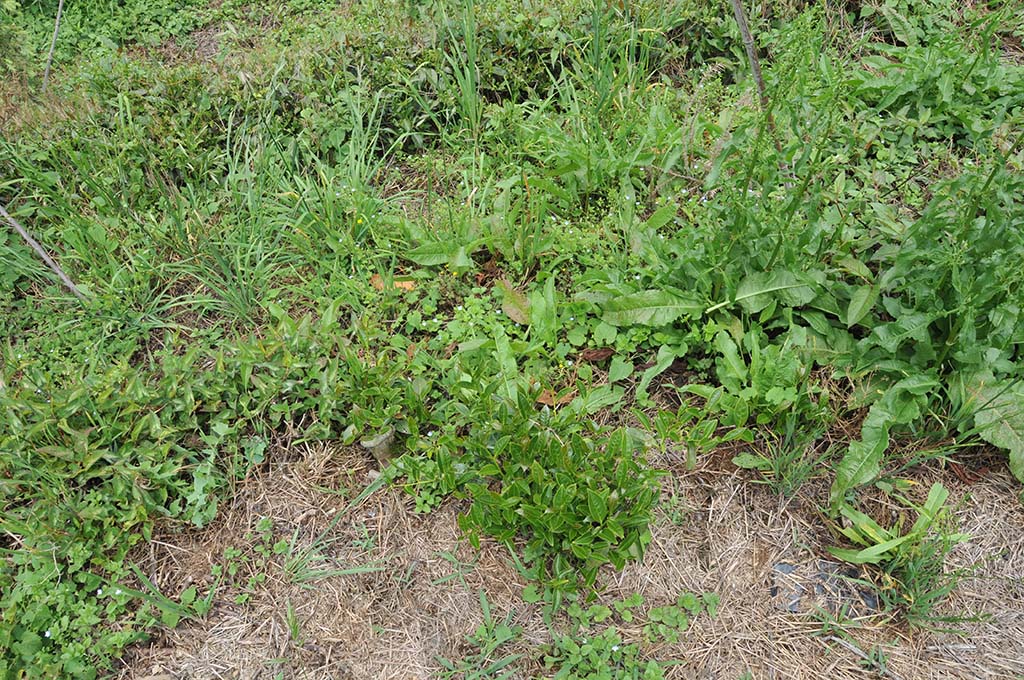
After reading this, everyone probably thinks the producers are really foolish for using the signboard to deceive people when the trees were already chopped down. But the store manager wants to tell you that “there really was illegally harvested tea from the 104k and 105k marks.” That’s because the manager visited the tea gardens in 2016 and 2017 and found that the tea trees had survived and showed signs of being harvested.
To explain first, the situation when the Dayuling tea trees were removed was similar to “hard pruning” (known locally as “cutting off the head”). As long as the tea trees are strong enough, they won’t die and will sprout new shoots the following year. Hard pruning is a common management practice in tea gardens, and proper hard pruning can even improve tea quality.
The tea trees at 104K and 105K were no exception this time; not only did they survive, but they also grew quite well. The manager originally thought policy changes allowed tea planting again and contacted the 104k tea farmer to discuss buying, but the farmer said they weren’t the ones harvesting it. This situation continued for about 3 years, until the 104k tea trees gradually died off after 2018.
The manager hasn’t tasted the illegally harvested tea, but hard-pruned tea has fewer leaves, concentrating nutrients, so the flavor is usually quite good and it surely could fetch a decent price. Assuming the two tea gardens had an annual output of 600 kg (1,000 jin), selling it at NT$4,000 per 600 g would bring in NT$4 million a year—if the manager had known, they would’ve gone and illegally harvested it too (just kidding).
The manager also visited Dayuling in the spring of 2022 and discovered another interesting thing this time, which will be shared with everyone next time~
Note: The photos were taken by the manager during visits to Dayuling in 2016 and 2017. At that time, the tea trees had already been cleared, and it no longer looked like a tea garden.