
Fuzhuan brick tea vs. Pu-erh tea? Does Fuzhuan belong to the Pu-erh tea category? To answer the question directly: Fuzhuan brick tea and Pu-erh tea are different teas. To explain this more clearly, we first need to understand the origins, production processes, and classifications of these two teas.
Differences Between Fuzhuan Brick Tea and Pu-erh Tea
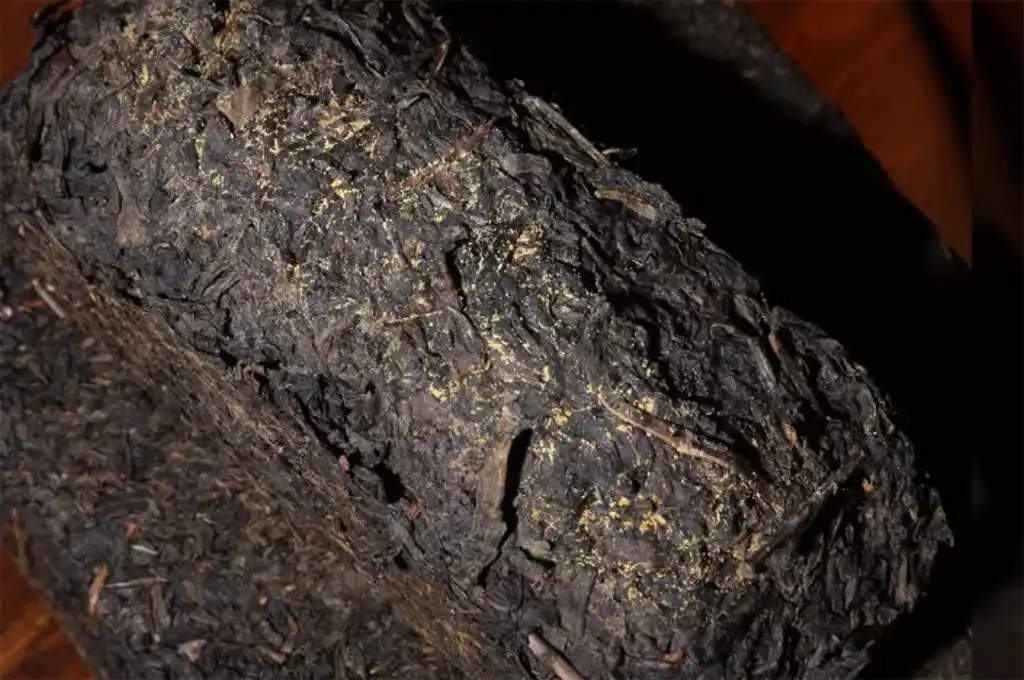
Fuzhuan brick tea originates from Anhua County, Hunan Province, China. It is a variety of Anhua dark tea, belonging to the dark tea category, and gets its name from the “golden flowers” (Eurotium cristatum) that naturally form during the brick production process. The history of Fuzhuan brick tea dates back to the Ming Dynasty, when merchants from Jingyang, Shaanxi, transported loose tea leaves from Hunan to Jingyang, where they were pressed and fermented. Fuzhuan brick tea has a unique flavor profile; in particular, its golden flower fungus plays a vital role in enhancing the mouthfeel and aroma of the tea liquor. It is also well known by names such as Golden Flower Tea and Golden Flower Fu Tea. Fuzhuan brick tea is exclusively produced as compressed brick tea. (Pictured above is Fuzhuan brick tea, showing golden flowers when pried open)
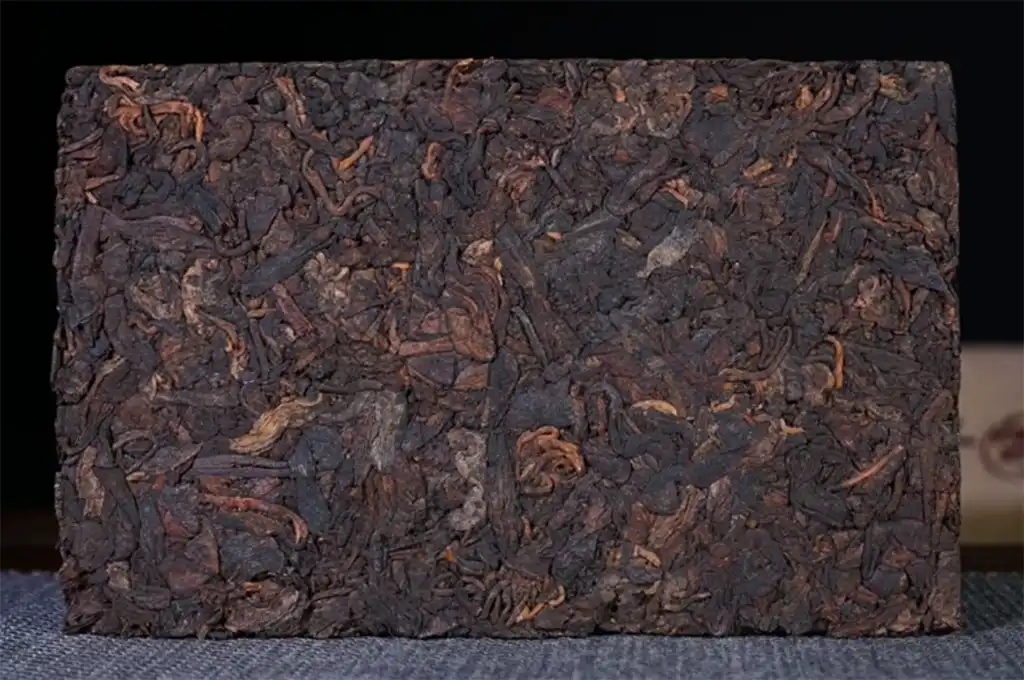
Pu-erh tea is a famous tea category originating from Yunnan Province, China, and also belongs to dark tea. Pu-erh is divided into two main categories, raw (sheng) and ripe (shou), based on different fermentation processes. Raw Pu-erh tea is naturally aged, resulting in a clear liquor and a unique flavor, while ripe Pu-erh undergoes artificial pile-fermentation, yielding a rich liquor and a mellow taste. Pu-erh tea is renowned for its rich aged aroma and the characteristic of improving with age. Pu-erh tea is often made into compressed teas, most commonly tea cakes, bricks, and tuochas, though some are also produced as loose tea. (Pictured below is a Pu-erh tea brick)
Does Fuzhuan Brick Tea Belong to the Pu-erh Tea Category?
Although Fuzhuan brick tea and Pu-erh tea both belong to the dark tea category, the two have distinct differences in origin, production processes, and flavor characteristics. Fuzhuan brick tea is a specialty of Anhua, Hunan, while Pu-erh tea is a representative tea of Yunnan. From the perspective of tea classification, Fuzhuan brick tea does not belong to the Pu-erh tea category, but is instead an independent dark tea apart from Pu-erh.
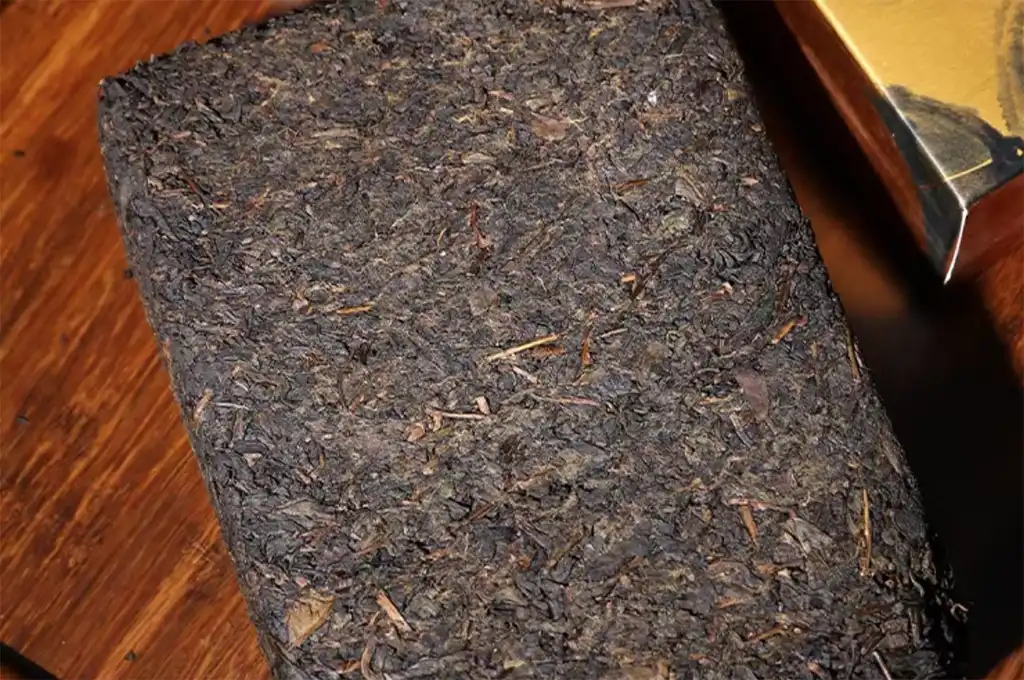
However, both Fuzhuan brick tea and Pu-erh tea undergo prolonged fermentation during production, giving them certain similarities in characteristics. For instance, both Fuzhuan brick tea and ripe Pu-erh tea undergo fermentation treatment, which gives their tea liquor a deep red or brown color, a mellow taste with an aged aroma, and—as post-fermented dark teas—the characteristic of improving with age. (Pictured below is an unopened Fuzhuan brick tea)
Similarities and Differences Between Fuzhuan Brick Tea and Pu-erh Tea
Fuzhuan brick tea does not belong to the Pu-erh tea category; rather, it is a unique branch of Anhua dark tea. It is world-renowned for its characteristic “golden flowers” and intricate production craftsmanship. Although both Fuzhuan brick tea and Pu-erh tea belong to the category of post-fermented dark tea, they have distinct differences in origin, craftsmanship, and flavor profile. In addition, many tea enthusiasts mistake Fuzhuan brick tea for Pu-erh tea likely due to a misunderstanding regarding brick-shaped teas. In fact, brick tea is not exclusive to Pu-erh; black tea, white tea, and oolong tea can all be pressed into bricks, and this misconception simply stems from the higher visibility of Pu-erh tea.
Read more:
- Anhua Hundred-Liang Tea: A Smaller Version of Thousand-Liang Tea
- Anhua Black Brick Tea: Tightly Pressed Dark Tea
- Anhua Patterned Brick Tea: Dark Tea with Designs on the Surface
- Anhua Shengjian Tea: A Relatively Affordable Grade of Dark Tea
- Hunan Dark Tea: Top-Tier Chinese Dark Tea on Par with Pu-erh
- Anhua Gongjian Tea: A Relatively Affordable Dark Tea Item