
Teas are primarily categorized into six major types: Green Tea, White Tea, Yellow Tea, Oolong Tea (Qing Tea), Black Tea, and Dark Tea. Classification is mainly based on the degree of fermentation, leaf appearance, and liquor color. Here are the defining features of each category:
Characteristics of the Six Major Tea Categories
| Green Tea | An unfermented tea that undergoes no oxidation during processing. It preserves the natural fresh leaf flavors, delivering a crisp, refreshing brew while retaining a vibrant green color. Famous green teas include West Lake Longjing, Bi Luochun, Matcha, and Gyokuro. |
| White Tea | Lightly fermented and crafted through natural withering, then dried directly after harvest. It offers a delicate, sweet flavor with an apricot-yellow liqueur and is celebrated for improving in quality with age. Famous white teas include Silver Needle and White Peony. |
| Yellow Tea | A lightly fermented tea defined by a unique sweltering (“yellowing”) process that yields a clear, golden-yellow brew. Famous yellow teas include Junshan Yinzhen and Mengding Huangya. |
| Oolong Tea | A partially fermented tea widely cherished across Taiwan and beyond. Depending on the fermentation level, it ranges from the fresh aroma of green tea to the rich, smooth depth of black tea. Famous varieties include Taiwan High Mountain Tea, Baozhong, Dong Ding Oolong, Tieguanyin, and Wuyi Rock Tea. |
| Black Tea | A fully fermented tea featuring a bright, amber-red liqueur and a sweet, rich, full-bodied taste. Famous black teas include Taiwan SunMoon Lake Black Tea, Keemun, Lapsang Souchong, and Darjeeling. |
| Dark Tea | A post-fermented tea aged using microbial fermentation, making it ideal for long-term storage as it improves over time. It steeps into a deep red or brown brew with a mellow, rich flavor that develops a distinct aged aroma. Famous dark teas include Pu’er, Fu Brick Tea, and Anhua Dark Tea. |
Processing Methods for the Six Major Tea Types
The general processing steps are outlined below, though minor variations exist depending on the region of origin.
| Tea Type | Processing Steps | Key Process Features |
|---|---|---|
| Green Tea | Plucking → Fixation (Kill-Green) → Rolling → Drying | Unfermented |
| White Tea | Plucking → Withering → Drying | No rolling, no fixation |
| Yellow Tea | Plucking → Fixation (Kill-Green) → Rolling → Yellowing (Sweltering) → Drying | Sweltering process |
| Oolong Tea | Plucking → Withering → Tossing (Bruising) → Fixation (Kill-Green) → Rolling → Drying | Degree of withering determines flavor profile |
| Black Tea | Plucking → Withering → Rolling → Fermentation → Drying | No fixation, fully fermented |
| Dark Tea | Plucking → Fixation (Kill-Green) → Rolling → Wet Piling → Drying | Post-fermented |
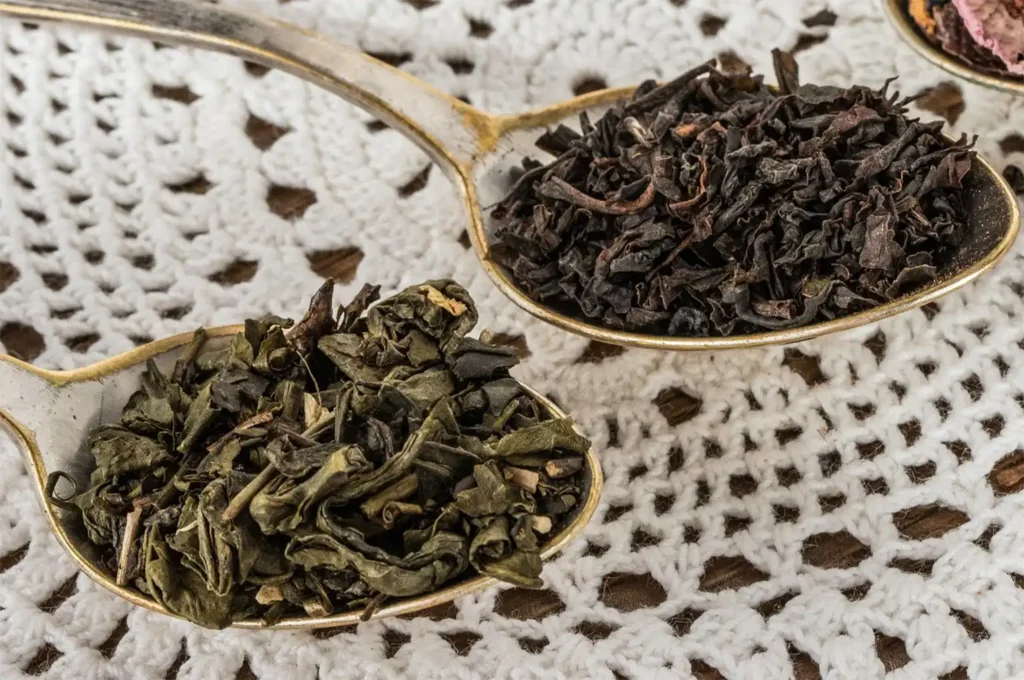
Fermentation Levels of the Six Major Tea Types
| Tea Type | Fermentation Level | Key Features |
|---|---|---|
| Green Tea | Nearly 0% | No deliberate fermentation process, with only minimal natural oxidation. |
| White Tea | 5%–10% | Depends on the duration of natural withering (typically 48 to 72 hours); longer withering results in higher fermentation. |
| Yellow Tea | 10%–20% | Characterized by the yellowing (smothering) process, though unfermented methods exist in some regions. |
| Oolong Tea (Qing Cha) | 7%–80% | Fermentation level varies depending on the specific tea variety and style. |
| Black Tea | 90%–100% | Fully oxidized/fermented tea. |
| Dark Tea | 100% | Post-fermented tea. Undergoes microbial fermentation after primary processing, with flavors evolving significantly over time. |
These are the basic flavor profiles, processing methods, and key features of the six major tea categories. Keep in mind that processing techniques may vary slightly depending on the region and specific variety.