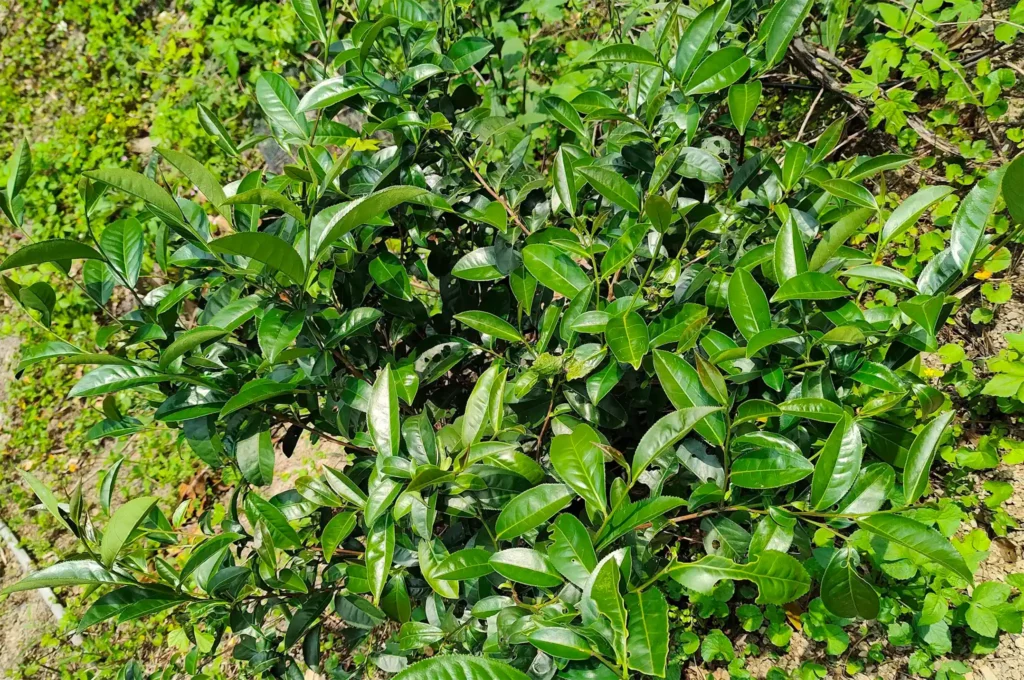
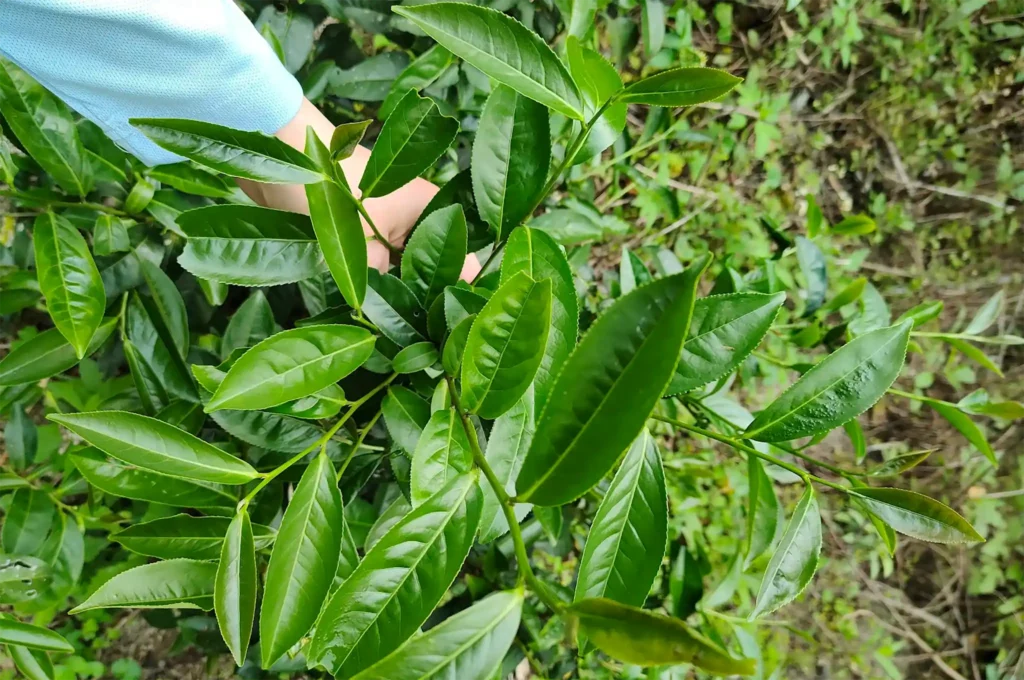
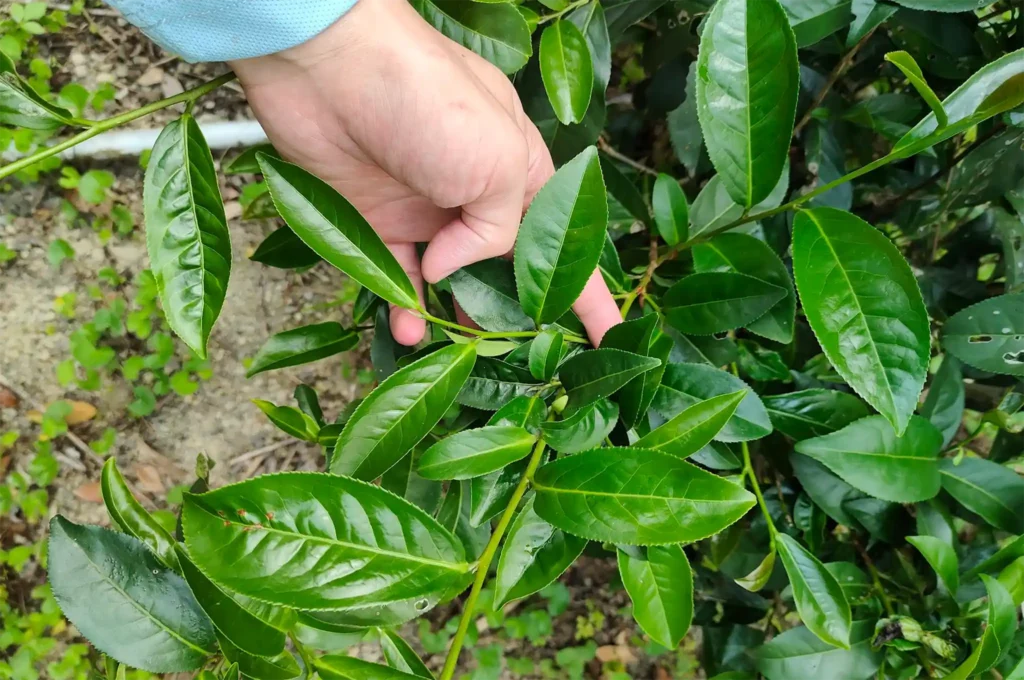
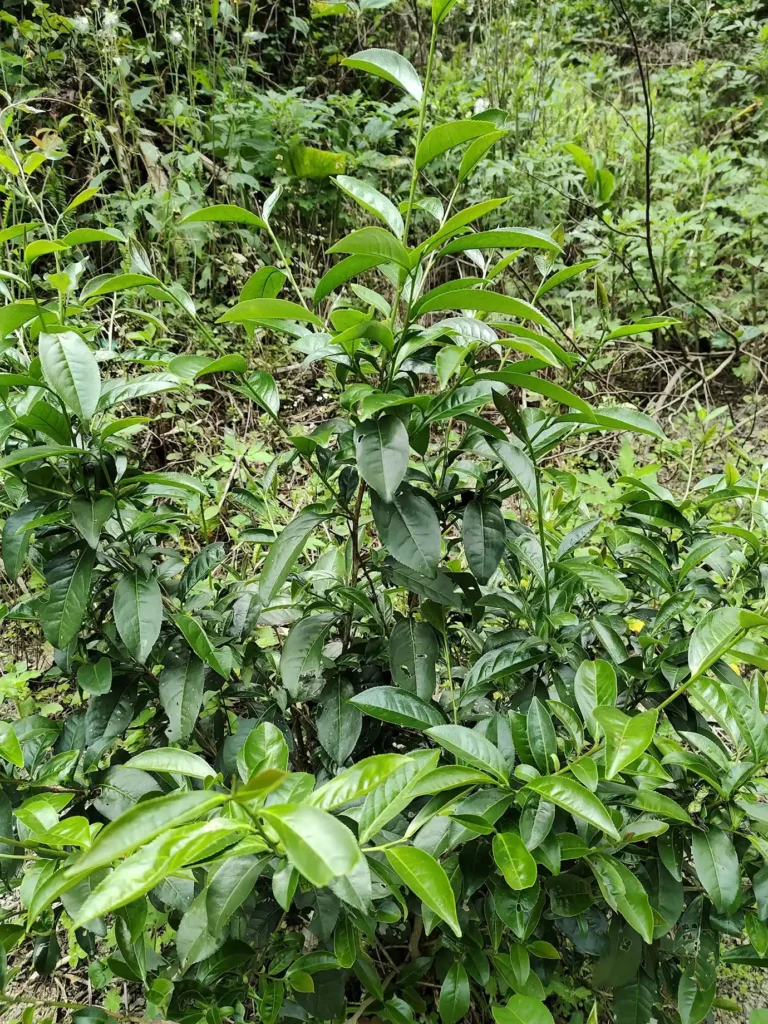
Daye Oolong is a tea cultivar selected during the Japanese era and propagated through vegetative reproduction to become a famous local variety. Together with Qingxin Oolong, Qingxin Damao, and Yingzhi Hongxin, it is known as one of Taiwan’s “Four Major Famous Cultivars.” Despite having “Big Leaf” (Daye) in its name, it actually belongs to the small-leaf tea variety.
Tea Cultivar: Daye Oolong
Locally, Daye Oolong is often called the “Daye cultivar.” Along with Qingxin Oolong, Qingxin Damao, and Yingzhi Hongxin, it is celebrated as one of the “Four Major Famous Cultivars.” Although called “Daye” (Big Leaf), the name simply reflects that its leaves are larger relative to the other three major cultivars—it is still botanically a small-leaf variety.
Its key traits include a vigorous plant habit, sturdy stems, and sparse branching. The leaves are large, oval, thick, and firm, with stout young stems and distinct serrated margins. The young buds are plump, sprout early, and feature abundant white down. While its leaves are 1 to 2 times larger than those of Qingxin Oolong, its sparse branching means overall yield per area isn’t significantly higher. It offers good resistance to pests and diseases and moderate drought tolerance. It yields excellent quality when processed into Baozhong tea or green tea.
Our Observations on Daye Oolong
A famous classic variety of the past, it is well suited for making Baozhong tea and Oriental Beauty. Many tea gardens in the Wenshan region of northern Taiwan still preserve it, though it has significantly declined in central Taiwan. In recent years, it has shown impressive results in Red Oolong and Honey Black Tea production, leading to notable cultivation in Hualien and Taitung, where it has become a signature regional specialty tea.
A famous classic tea cultivar in early years, it has been surpassed in recent decades by newer varieties like JinXuan, CuiYu, and Four Seasons Spring. However, it still holds unique charm when used to craft Honey Black Tea, Oriental Beauty, and Red Oolong. In addition, as a parent cultivar for TTES No. 2, 11, 16, 17, and 20, it holds an important place in Taiwanese tea history. Personally, I find the leaf shape and color of the Daye cultivar absolutely stunning!