The Qingxin Oolong tea tree cultivar has the longest history of cultivation and the widest distribution in Taiwan, found everywhere from north to south and from the plains to high mountains. It is also the highest-yielding and most economically valuable tea tree cultivar.
Origins of the Qingxin Oolong Tea Tree
Legend has it that it was first introduced in the 19th century from Anxi County, Fujian, by Lin Feng-chi and planted in Lugu Township, Nantou. Another account suggests that Fujian immigrants brought tea seeds, planted them in the New Taipei City area, and bred them into this cultivar.
Cultivar Characteristics
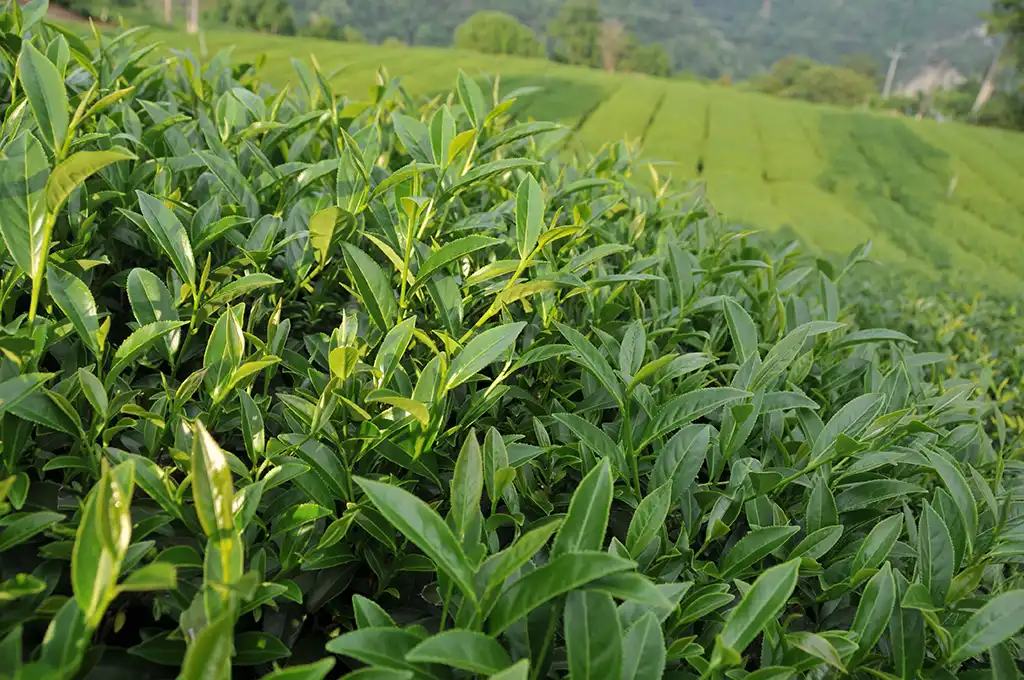
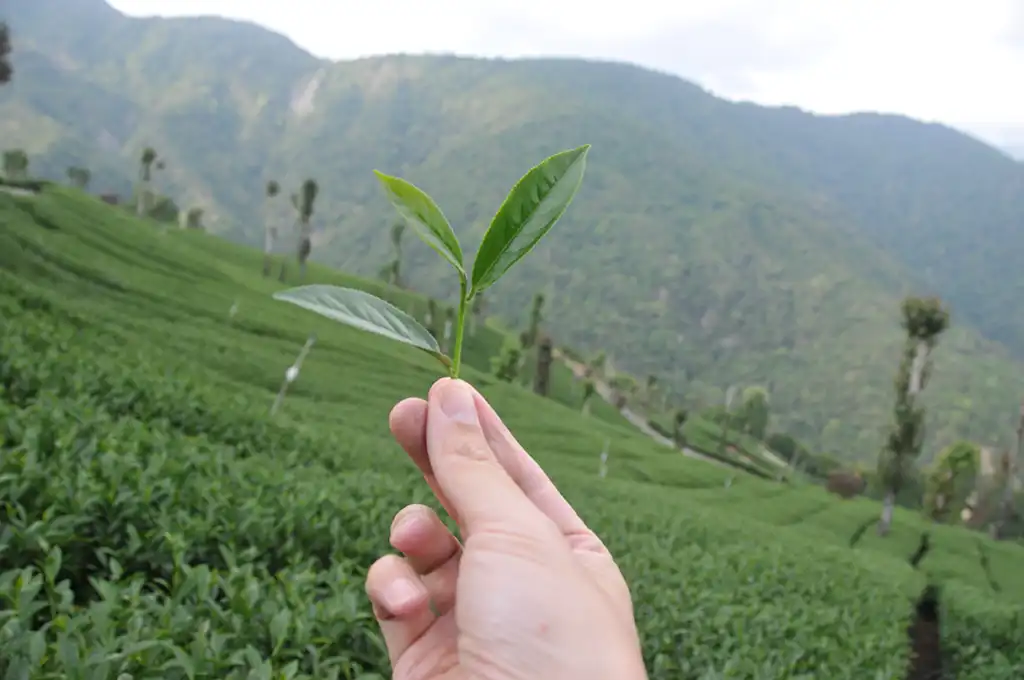
Qingxin Oolong is a late-ripening small-leaf tea cultivar with a spreading bush shape characterized by dense branches and leaves. Its leaves are thick, elliptical or lanceolate, dark green, and glossy. Its young buds are rich in trichomes (pekoe) and exhibit a green-purple hue. This cultivar is well-suited for making oolong and Pouchong tea—especially Pouchong—fully showcasing its refined texture and rich floral aromas.
Pros and Cons
Qingxin Oolong has many advantages, including a refined texture and rich flavor. The tea made from it features distinct floral notes, especially when grown at high altitudes, where exceptionally brilliant aromas emerge. However, it also has drawbacks, such as weaker bush vigor, poor tolerance to cold and drought, and insufficient pest and disease resistance, making it susceptible to termites and twig blight. Tea farmers must practice rigorous tea garden management to achieve stable yields and quality.
Observations on Qingxin Oolong Tea
Without a doubt, it is an exceptional tea tree cultivar. The Pouchong and oolong teas made from it rank among the finest in terms of quality and refinement. However, the downside is equally clear: its weak bush vigor makes it prone to disease, leading to higher unit production costs.
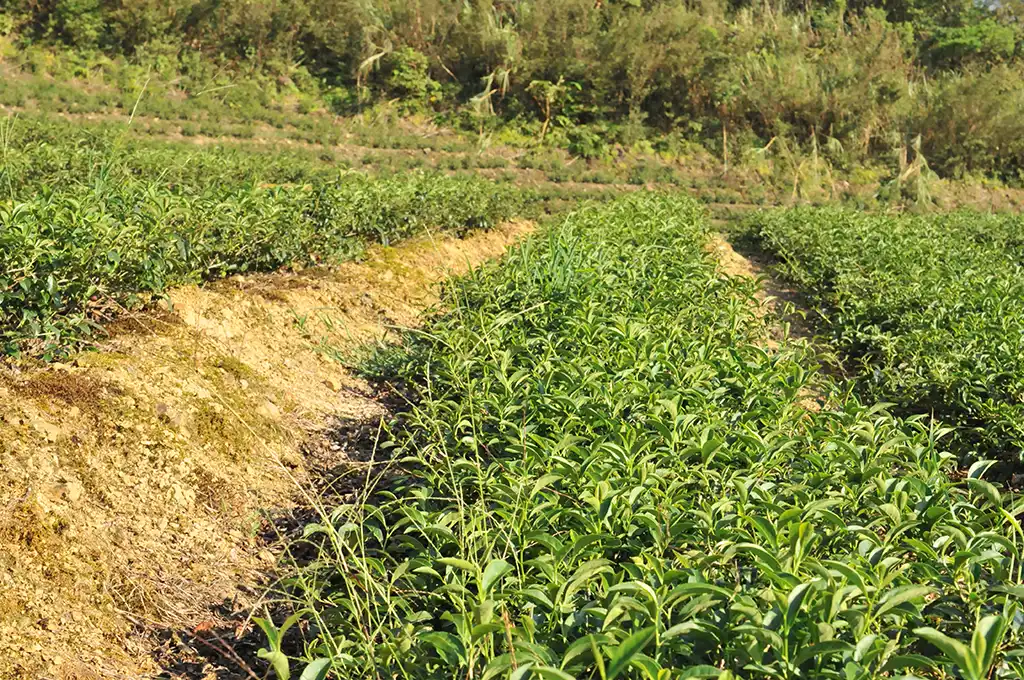
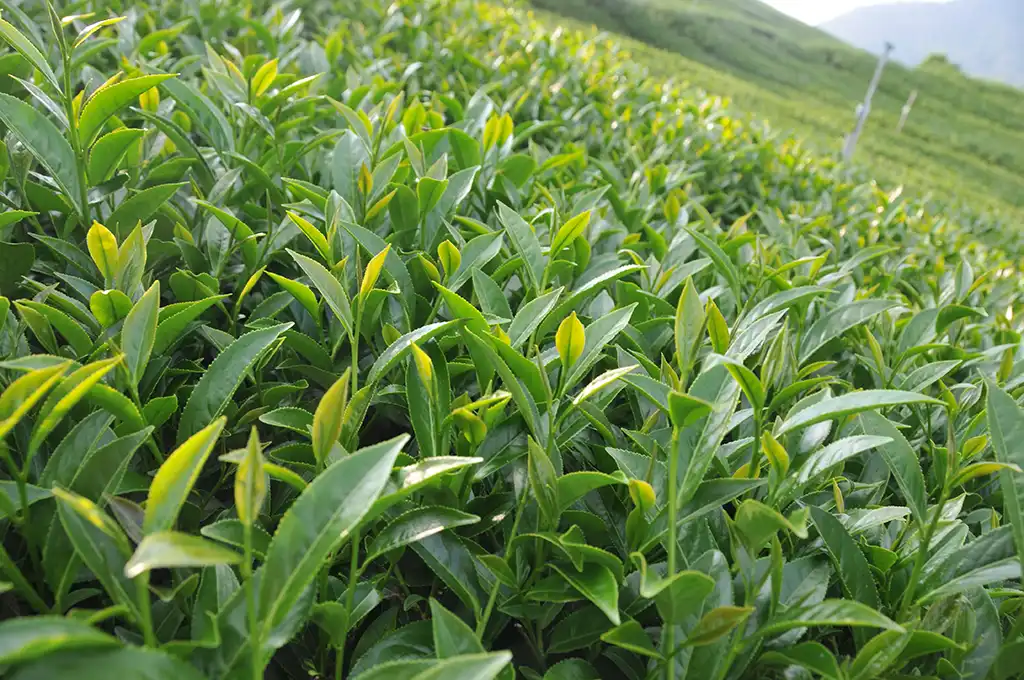
Qingxin Oolong tea trees perform remarkably differently across various altitudes. In low-altitude regions, the bushes are weaker, prone to disease, have thinner leaves, and yield poorly (the image above shows low altitude). In contrast, at high altitudes, Qingxin Oolong displays a completely different growth condition: stronger bush vigor, thicker leaves, and doubled yields, while the resulting oolong tea releases a unique high-mountain fragrance (the image below shows high altitude). Therefore, Qingxin Oolong holds an overwhelming advantage in tea districts above 1,000 meters, with over 95% of high-altitude tea gardens adopting this cultivar as their main planting variety.

Qingxin Oolong Tea Q&A
What is the relationship between Ruanzhi Oolong and Qingxin Oolong?
Ruanzhi Oolong is simply Qingxin Oolong. Aside from Ruanzhi Oolong, it also goes by aliases such as Zhongzai (種仔), Yucung (玉欉), Zhongcha (種茶), and Oolong.
Qingxin Oolong Taste Profile
Rich and full-bodied in texture with a delicate flavor. High-mountain-grown teas also exhibit ripe fruit notes, such as peach, apple, and pineapple aromas.
What is the Taiwan Tea Experiment Station (TTES) number for Qingxin Oolong?
TTES numbers are assigned only to tea tree cultivars officially bred by Taiwan’s agricultural authorities, such as JinXuan, CuiYu, and Yingxiang. Qingxin Oolong was likely brought in by immigrants or selected and bred by private growers, so it does not have an official TTES number.
Health Benefits of Qingxin Oolong
Boosts alertness, freshens breath, and promotes metabolism.