
Customer Inquiry: I’ve been wondering this for a long time: Is Oriental Beauty tea considered raw tea (unroasted/lightly roasted) or ripe tea (heavily roasted)? Dongding oolong comes in raw, medium, and ripe categories. Does Oriental Beauty, which is also an oolong tea, have similar classifications?
Chang-Hsing Tea: After initial processing into rough tea, an additional roasting step is sometimes applied. If the roasting time and temperature are high, it’s called heavy roast; medium roast for moderate levels; and tea with no roasting or light roasting is referred to as raw tea. Oriental Beauty is no different—after initial processing, it may be roasted depending on the batch, but it typically undergoes only light roasting. It’s rare to hear of a heavily roasted Oriental Beauty. Therefore, Oriental Beauty tea is generally classified as raw tea, without semi-ripe or ripe categories.
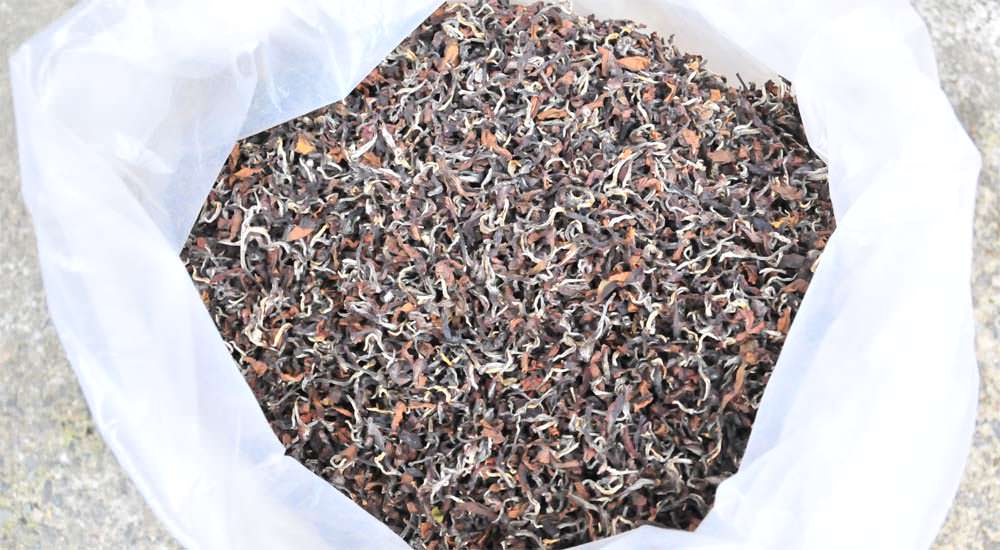
▲ Oriental Beauty tea is typically lightly roasted, placing it in the raw tea category.
The tea liquor and brewed leaves of Oriental Beauty have a reddish hue, yet it is not black tea. Some people also find that Oriental Beauty’s ripe fruit aroma resembles the sweet, fruity notes of heavily roasted oolong, leading many to mistakenly think it is a ripe tea. The reddish color of Oriental Beauty’s liquor and leaves comes from its heavier oxidation level, while its ripe fruit aroma is created by the feeding of the Jacobiasca formosana (formosan green leafhopper) and has nothing to do with roasting.