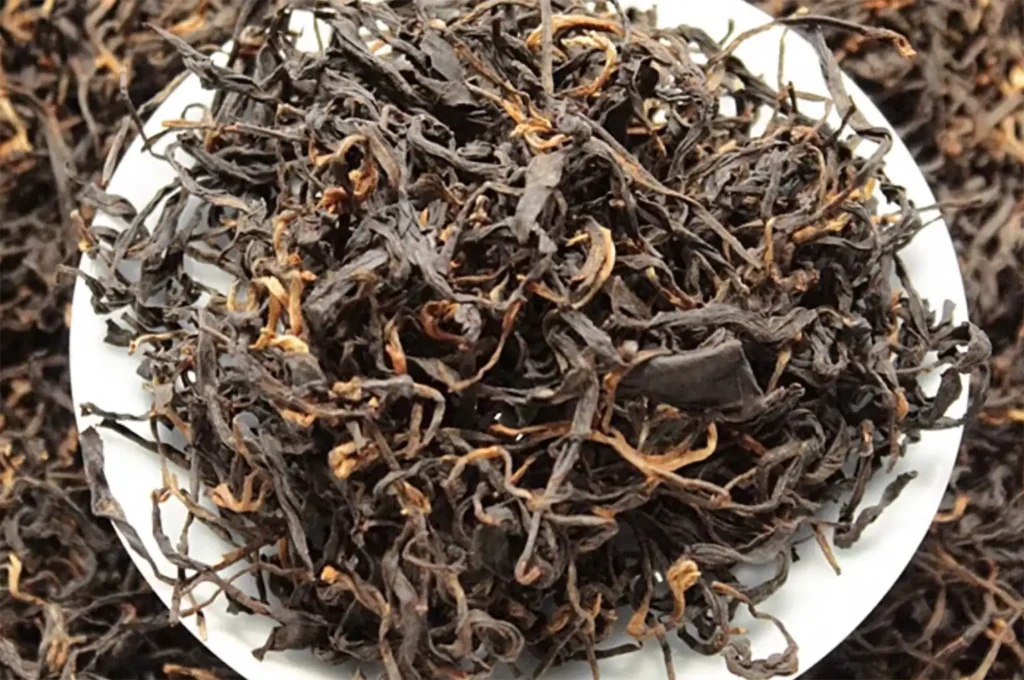
Bailin Gongfu black tea, referred to as Bailin Gongfu, is produced in Bailin, Fuding City, and belongs to the Fujian school of black teas. Bailin Gongfu is commonly made from Fuding Dabaicha or Dahaocha cultivars. Its characteristics are slender and curved, with a yellowish-black color. It tastes mellow and sweet, making it a star among Chinese black teas.
Origin and History of Bailin Gongfu Black Tea
Bailin in Fuding is one of the birthplaces of Gongfu black tea, with a production history of 250 years. Fuding began planting tea in the Tang dynasty. Bailin Gongfu was established in the Qing dynasty and is now a well-known variety of black tea, exported all over China and with many enthusiasts in European and American markets.
Although Bailin Gongfu and Zhenghe Gongfu both belong to the Fujian school, Bailin mostly uses small-leaf variety black tea, and the tea leaves are relatively slender, curved, and tightly rolled. The leaf color is darker, and the pekoe is slightly golden. Bailin also features a mellow and fresh-sweet characteristic, which is quite different from other black teas.
Production Method
The production process includes five steps: plucking, withering, rolling, fermentation, and drying. Harvesting mainly uses Fuding Dabaicha or Dahaocha cultivars, preferably picked tender in the spring, with one bud and one leaf or one bud and two leaves being ideal. After harvesting, indoor withering is carried out until the color turns dark green, followed by rolling.

During rolling, the tea juices are squeezed out and shaped into strips. Then it is left to ferment, and dried after about 2 hours. Drying halts fermentation and reduces moisture, which is beneficial for transportation and storage.
Brewing Method for Bailin Gongfu Black Tea
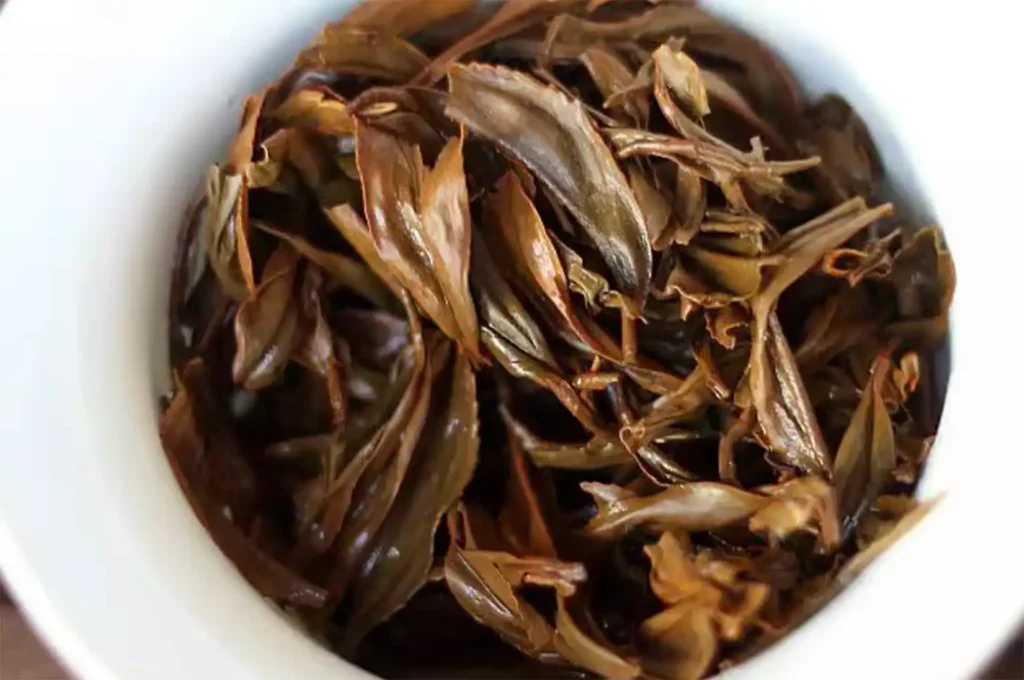
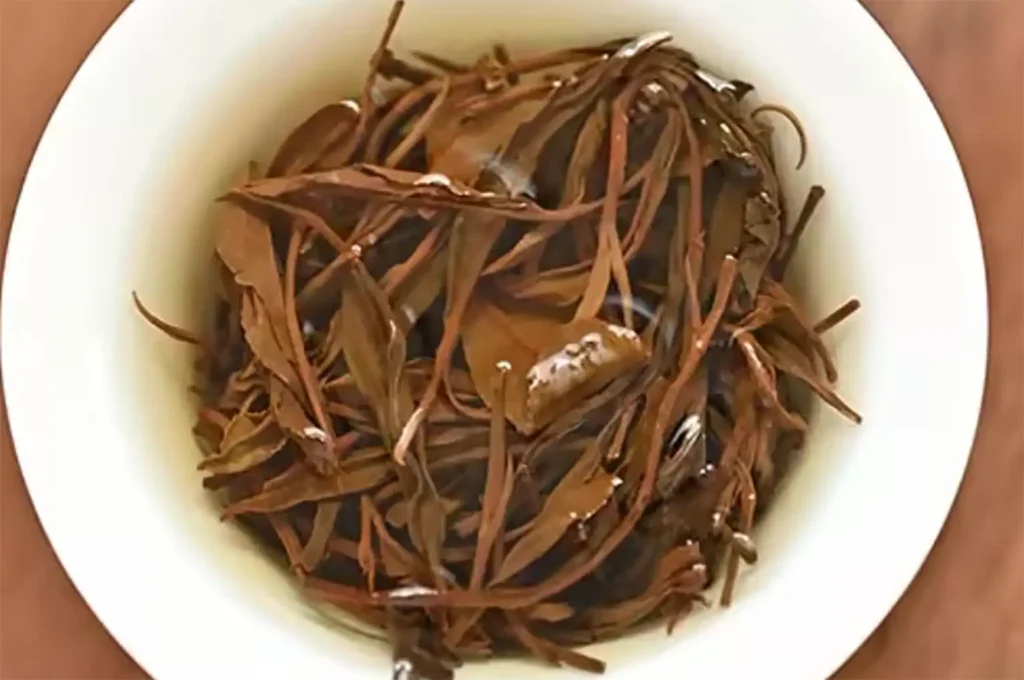
Teaware: Purple clay pots are preferred, and porcelain cups or bowls can be used for tea cups. Water: Spring water, well water, or mineral water is most suitable. Water temperature 95 to 100 degrees. Tea amount: At a ratio of 1 to 50, meaning 2 grams of Bailin Gongfu black tea for a 100ml teapot. Time: 3 minutes for the first steep, and add one minute for each subsequent steep.