
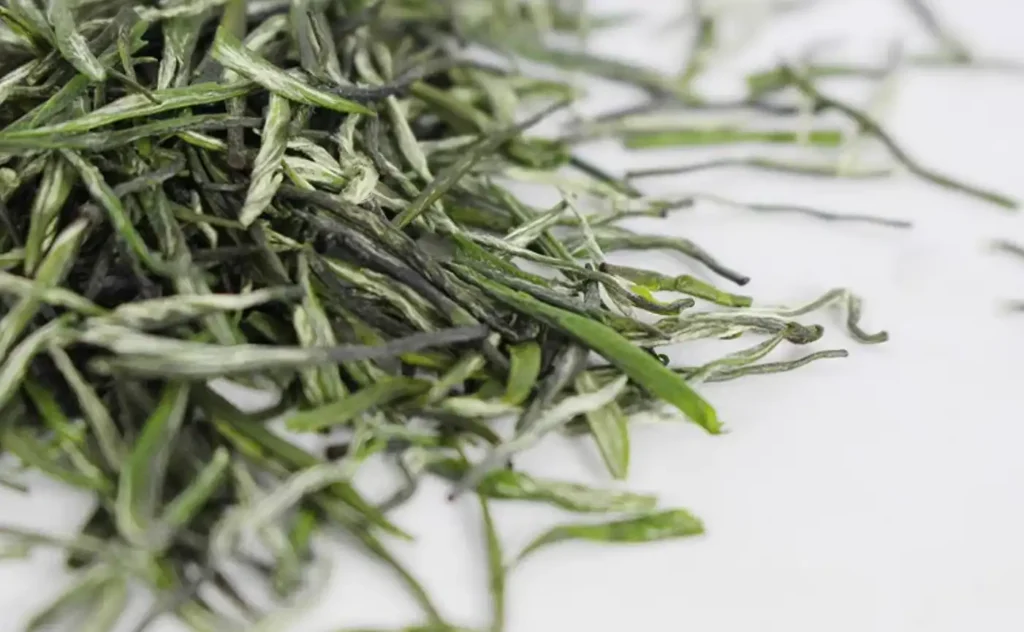
Nanjing Yuhua tea is a green tea that originated in Jiangning County (now Nanjing) in the late Qing Dynasty. It gets its name from Yuhuatai, located outside Zhonghua Gate in Nanjing, its place of origin. Known for its unique pine-needle shape and delicate aroma, this tea has quickly become one of China’s famous teas due to its exceptional quality, despite its relatively short history of development.
Nanjing Yuhua Tea: Origins and History
The history of Yuhua tea dates back to 1907, when Zheng Shihuang, a Qing Dynasty circuit intendant in Jiangsu, established the Jiangnan Tea Planting Bureau near Zhongshan in Jiangning County. This was China’s first official tea research institution and is considered the beginning of modern Chinese tea science. Following the founding of the People’s Republic of China, the local government restored and maintained 47 mu of tea gardens left over from the Republican era during the 1950s.
Production Environment
The acidic yellow-brown soil of the Nanjing region, with an average annual temperature of about 15.5°C and annual rainfall of roughly 1,000 mm, provides an ideal environment for growing Yuhua tea. Major tea-producing areas include the Yuhuatai Scenic Area, Qixia, Pukou, Jiangning, Jiangpu, Liuhe, Lishui, and Gaochun. Yuhua tea produced in these regions is rich in tea polyphenols, offering a sweet, smooth, and refreshingly pleasant taste when enjoyed.
Craftsmanship
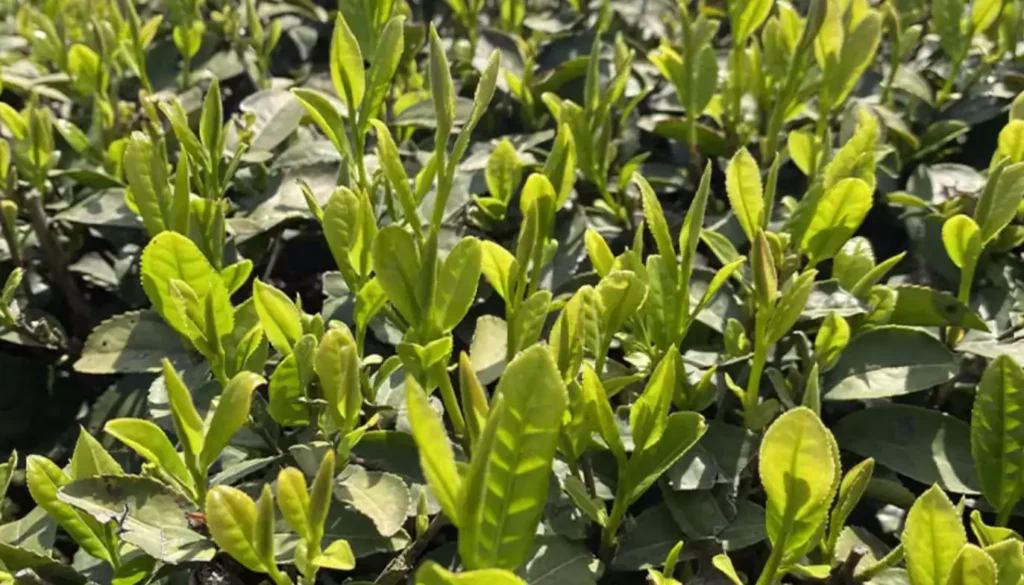
The production process of Yuhua tea is extremely meticulous, using one bud and one leaf harvested 10 days before the Qingming Festival as the prime raw material. The process involves multiple steps, including fixing (kill-green), rolling, shaping, and hand-frying. Only about 250 g can be stir-fried at a time to ensure the characteristic needle shape and ideal flavor of the tea. This makes production quite labor-intensive, which is why Yuhua tea commands a higher price.
How to Brew Nanjing Yuhua Tea
Brewing Yuhua tea requires delicate care to fully bring out its aroma and flavor. Here is the recommended brewing method:
- Choose your ware: Use a clear glass or white porcelain tea set to observe the tea leaves unfurling in the water and the color of the liquor.
- Water temperature control: Brew with water at 80°C–85°C to prevent high temperatures from destroying the nutrients and aroma of the tea leaves.
- Tea-to-water ratio: Take 3–5 g of Yuhua tea each time and place it in the cup.
- First, moisten the tea leaves with a small amount of hot water, gently swirl the cup so the leaves fully absorb the moisture, and then discard the water. This step is known as “rinsing the tea”.
- Pour in hot water again, filling about one-third of the cup to a depth of around 2 cm, allowing the tea leaves to slowly unfurl.
- Once the leaves have slightly expanded, continue adding water until the cup is two-thirds full, wait 2–3 minutes, and it is ready to enjoy.
Characteristics and Flavor Profile
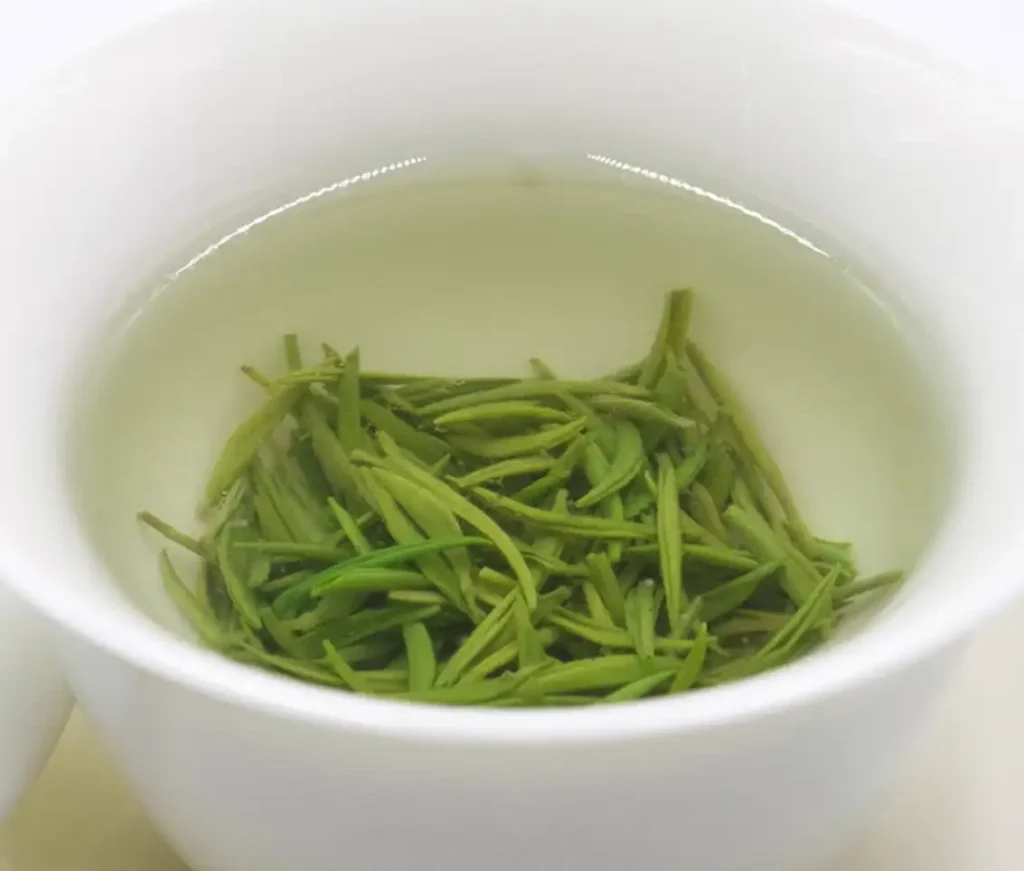
High-quality Yuhua tea features tight, straight, and round green leaves resembling pine needles, with prominent tips, a vibrant green color, and visible white down. When brewed, the liquor is clear and bright, with an elegant aroma and a fresh, cool taste that leaves a lasting impression. Its unique shape and aroma make it a high-grade green tea of great visual and tasting value.
Good Yuhua tea tastes fresh and cool, with a fragrant aroma and a clear hue. Whether you are a tea enthusiast or trying green tea for the first time, Yuhua tea offers an extraordinary tea-drinking experience.