
When exploring Taiwanese high mountain tea for the first time, many tea lovers are puzzled by tea labels featuring a number followed by ‘K’, such as “Dayuling 100K”, “Biluxi 90K”, or “Lishan 83K”. What do these “number + K” combinations actually mean? What does ‘K’ stand for, and what do the numbers represent?
The True Meaning of "K": Highway Milestones
For example, Dayuling 105K means the tea comes from a garden at the 105 km mark on the Central Cross-Island Highway, while Biluxi 90K refers to a tea garden around the 90 km marker.
Why Are Labels Like "Dayuling 90K" and "Lishan 90K" Used Interchangeably?
For tea gardens located around the 90K mark on the Central Cross-Island Highway, some refer to them as “Dayuling 90K” while others call them “Lishan 90K”. In reality, both refer to the exact same place. Tea merchants often use “Dayuling” because the name carries stronger market appeal, allowing the tea to sell at a higher price. Strictly speaking, the 90K stretch is not considered part of the traditional Dayuling tea region.
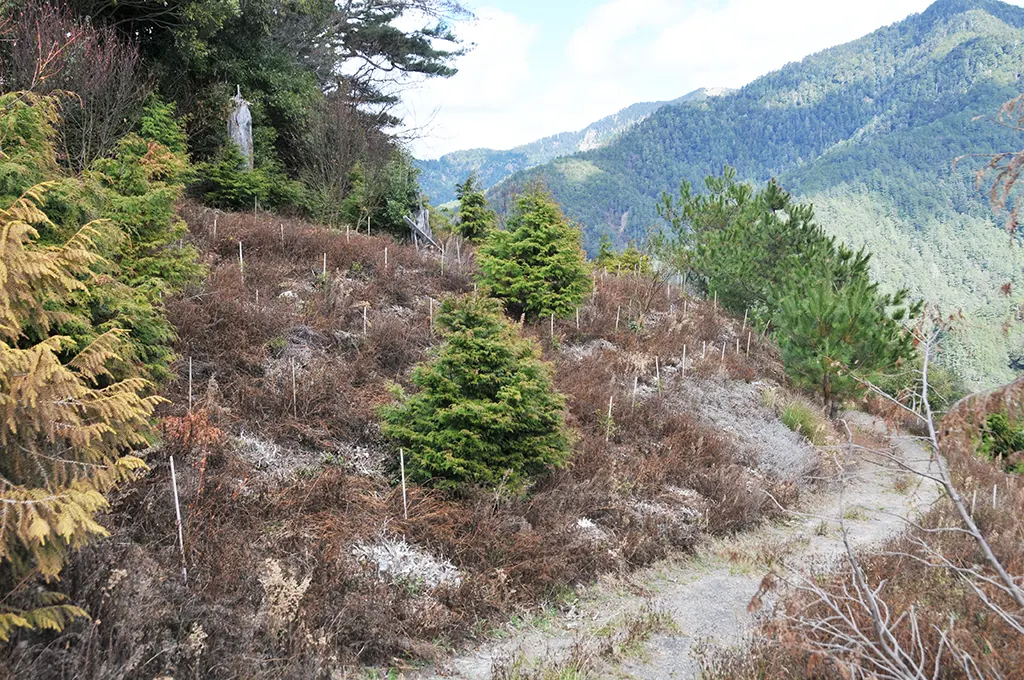
Pictured above is the now-cleared Dayuling 105K tea garden, which once commanded up to NT$12,000 per 600g.
"Higher K-Number = Higher Quality"? A Common Misconception
Many beginners assume that the “K-number” represents tea grade or quality, believing that a higher K means a more premium tea. However, this is a misconception.
In addition to distance, the K-number also reflects elevation. As the Central Cross-Island Highway climbs uphill from Lishan through Biluxi and Dayuling, eventually approaching Wuling, the altitude increases steadily. Therefore, a higher K-number generally indicates a higher tea garden elevation, and teas from higher altitudes typically command higher prices in the market.
For example, tea from around 70K in Lishan usually sells for under NT$4,000, while Dayuling tea above 100K typically ranges between NT$8,000 and NT$12,000. These price differences reflect altitude, yield, and rarity—not necessarily superior quality. A tea’s actual quality ultimately depends on farm management, weather conditions, and craftsmanship during processing.
Understanding the Meaning of "K" Makes Tea Drinking Even More Fun
In summary, the “K” on a tea label isn’t a grade of quality—it simply refers to the highway kilometer mark, indicating that the tea comes from a farm near a specific kilometer post. This naming convention is mostly seen along the Central Cross-Island Highway from Lishan to Dayuling, and occasionally along Route 14 or the Lixing Industrial Road. Next time you see labels like “100K” or “90K,” you’ll know exactly what they mean. Congratulations—you’re now thinking like a high-mountain tea connoisseur!