
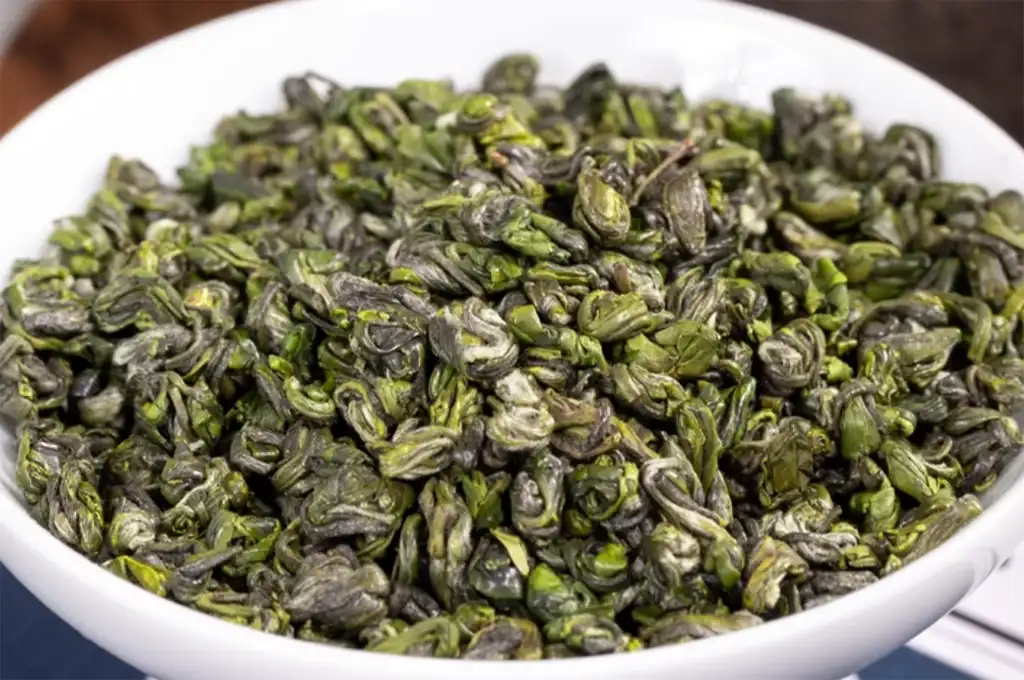
Yongxi Huoqing tea is produced in Yongxi Mountain, Jing County, Anhui Province, and belongs to the green tea category. Developed and improved from Pingshui gunpowder green tea, the finished product resembles pearls, making it a very rare pearl-shaped green tea. It has a production history spanning 400 years.
Origin and Legend of Yongxi Huoqing Tea
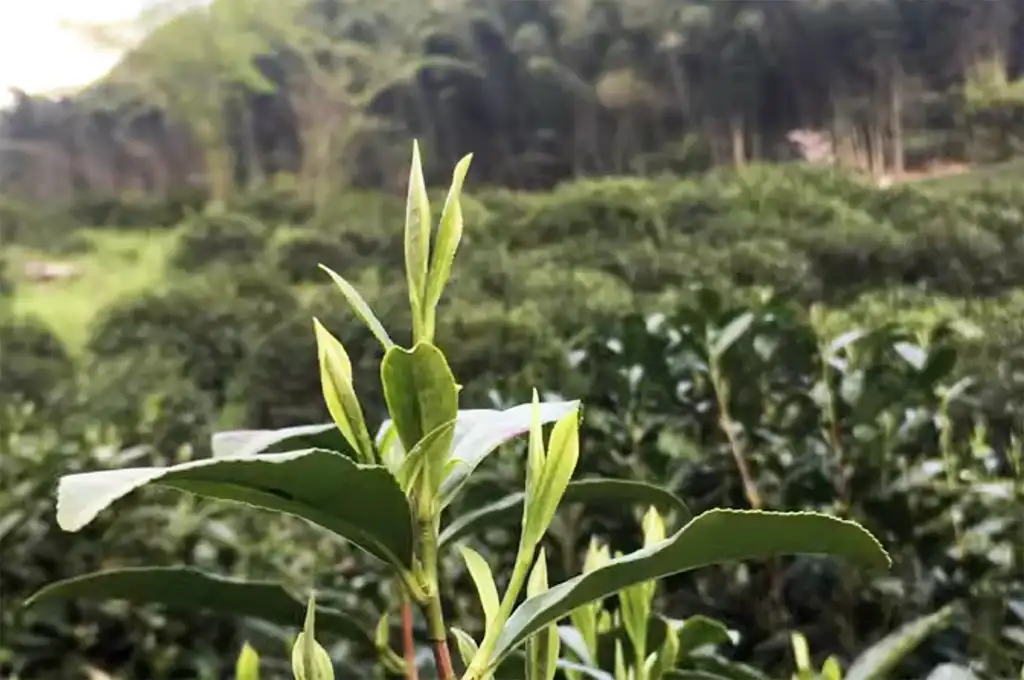
Located in Yongxi Mountain, Jing County, Anhui Province, this area features dense mountain forests and is shrouded in mist and clouds, with an annual rainfall of about 1,800 mm and an average sunshine duration of about 40%. In spring, the sunshine percentage drops to just 26%. In this environment, the tea trees grow slowly, resulting in exceptionally high quality. Local farmers incorporated the production techniques of gunpowder green tea to develop Yongxi Huoqing.
A local legend tells that in ancient times, a scholar named Liu Jin in Yongxi discovered a tea tree on Wantou Mountain with leaves that were half yellow and half white. Lacking proper pan-firing tools at the time, Liu put the leaves into a rice cooker and stir-fired and rolled them over high heat. The resulting tea leaves were shaped like pearls and snowballs, with a dark green color, prominent white hairs, and made a distinct sound when dropped onto a plate. When tossed into a teapot, the tea leaves immediately sank to the bottom. Because high heat was used during processing, Liu called it “Huoqing” (Fire Green), and because of how quickly it sank to the bottom, people also referred to it as “Lengshui Chen” (Cold Water Sinking). It was later presented as a tribute to the emperor, making Huoqing widely famous. Yongxi Huoqing originated in the Ming Dynasty and reached the height of its fame during the Qing Dynasty. At that time, Yongxi tea farmers emulated the pan-firing methods of Huizhou while referencing the characteristics of Zhejiang’s Pingshui gunpowder tea to create Yongxi Huoqing, known for its unique appearance and superior quality.
Crafting Characteristics
Yongxi Huoqing was created by adopting and evolving the production techniques of Tunxi green tea and pearl tea, and it already enjoyed great renown 400 years ago. Production was later discontinued and only resumed in 1956. The most unique aspect of its production is the Huoqing method, which differs greatly from other green teas. Tea harvested between Qingming and Guyu is preferred, ideally with one bud and one leaf. After harvesting, the leaves are withered for 6 hours before processing begins.
The processing steps include fixation (shaching), rolling, pan-firing, re-rolling, and sorting. The fixation pan temperature is 140–160°C, and the duration is 6–7 minutes. The level of fixation should be slightly on the tender side; the fixation leaves must not show blisters or burnt edges. After removing from the pan, shake off the moisture and proceed promptly to rolling.
During rolling, gently shape the leaves with both hands without applying excessive force, just enough to form initial strips and squeeze out a portion of the tea juices. For pan-firing, use a barrel-shaped pan at 100°C, stir-fry quickly to release moisture until the tea leaves no longer feel sticky to the touch. Remove from the pan, re-roll, and slowly shape them until the tea leaves curve and curl into a shrimp-like form.
Brewing Guide for Yongxi Huoqing Tea
First, choose hot water at around 85°C. Avoid using boiling water to prevent damaging the nutrients and aroma of the tea leaves. Prepare a transparent glass cup of moderate capacity so you can admire the tea leaves unfurling in the water.
Take about 3 g of Yongxi Huoqing tea leaves and place them in the cup. Pour in a small amount of hot water, let steep briefly, and quickly pour it out to rinse the leaves and awaken their aroma. Next, refill with hot water until the cup is about one-third full, and gently swirl the cup so the tea leaves make full contact with the water. Then add the remaining hot water and let the tea leaves settle naturally.
Wait 1 to 2 minutes before enjoying your tea. Yongxi Huoqing produces a clear, bright liquor with an elegant, lingering aroma and a fresh, sweet aftertaste. The interval between infusions can be adjusted to personal preference; it can generally be steeped 3 to 4 times, with each infusion offering different layers of flavor.