
Lishan tea boasts low yields, exceptional quality, and high renown, making it one of Taiwan’s most popular teas. Because of this, Lishan tea doesn’t come cheap. Its popularity and scarcity mean the market is flooded with counterfeits selling for just a few hundred NT dollars per 600 g to fool consumers. In reality, cultivating high-mountain tea in Lishan is no easy task; the production cost of Lishan tea alone exceeds NT$1,000, so how could it possibly retail for just a few hundred?
Looking at lower-altitude Lishan teas, spring tea from the Huanshan Tribe tea region at 1,600 to 1,700 meters runs around NT$1,600, and that’s just the wholesale price. Going a bit higher, wholesale prices for Lishan tea from the Songmao Tribe range between NT$1,800 and NT$2,500. The priciest is tea from Fushoushan Farm, starting at NT$6,000 per 600 g and reaching up to NT$10,000—and even then, it’s not always guaranteed to be in stock.
Lower-altitude Lishan tea has a wholesale price of around NT$1,600. After purchasing, tea merchants still need to go through refining, stem picking, and packaging. Factoring in a 25% profit margin, the retail price simply cannot be under NT$2,000. A reasonable retail price should start at NT$2,500 or above. For teas grown above 2,000 meters, the retail price certainly won’t be lower than NT$3,500. Before making a purchase, consumers are best advised to inquire thoroughly about the origin and harvest season to avoid buying fakes.
If you’re having trouble finding good tea, you are welcome to browse our selection at Chang-Hsing Tea. You won’t find any hundred-dollar Lishan teas here, but we guarantee authenticity—grown in Lishan, crafted in Lishan.
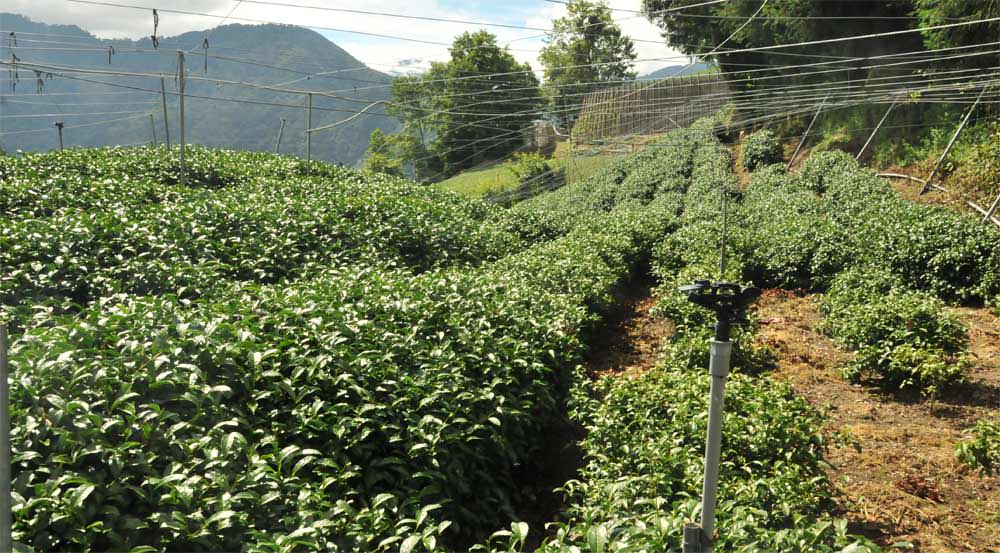
▲The tea plantation at Lishan Fushoushan Farm features the highest altitude and the most expensive Lishan tea.