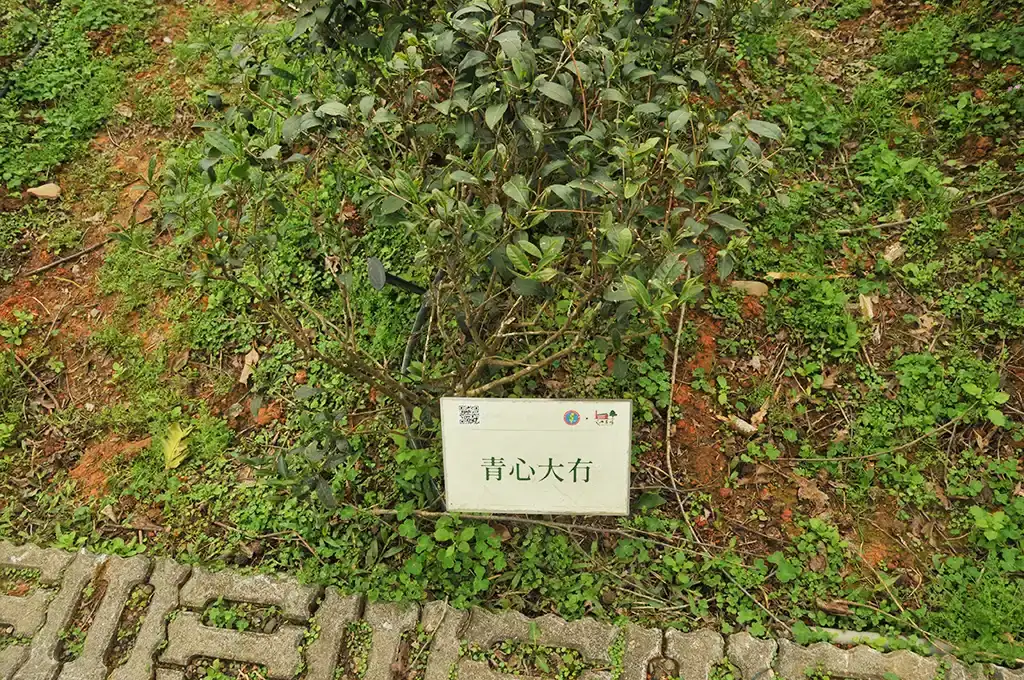
When talking about Qingxin Damao, many people wonder how to pronounce the character “冇” (mǒu).
In Mandarin, “冇” shares the same pronunciation as “某” (mǒu), while in Taiwanese Hokkien, it is pronounced “phànn.” It is often casually referred to as “Damao.” Now that we know how to pronounce its name, let’s explore the unique characteristics of this cultivar.
Qingxin Damao Tea Cultivar
Qingxin Damao is generally believed to originate from small-leaf tea plants in the Wuyi Mountains of Fujian. Introduced to Taiwan during the Japanese colonial period, it was developed into today’s cultivar through selective breeding. For a long time, Qingxin Damao was one of Taiwan’s top three tea cultivars. Although later overtaken by newer cultivars like JinXuan and Four Seasons Spring, it still remains firmly in the top five. It is the flagship cultivar used to produce Oriental Beauty Tea in the Hsinchu and Miaoli regions.
Characteristics of Qingxin Damao (Source: Tea Research and Extension Station)
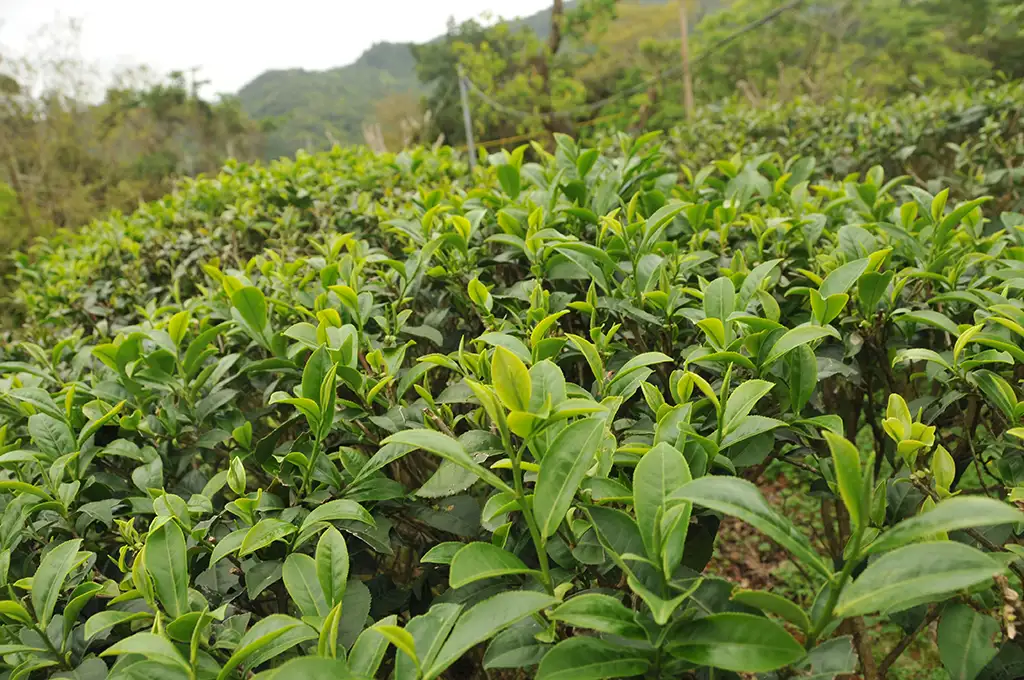
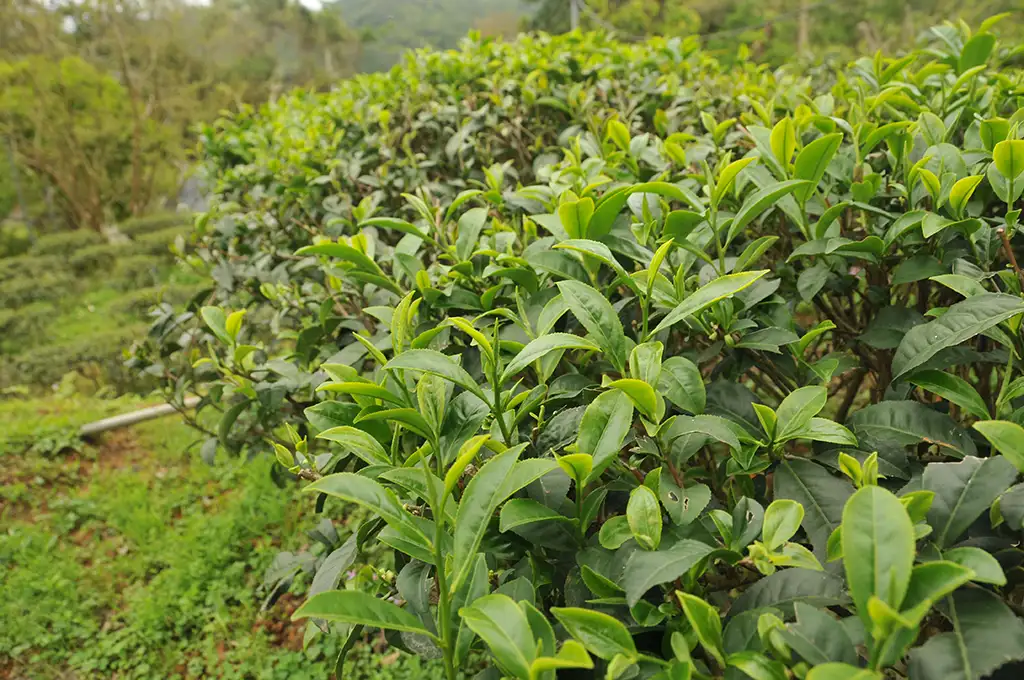
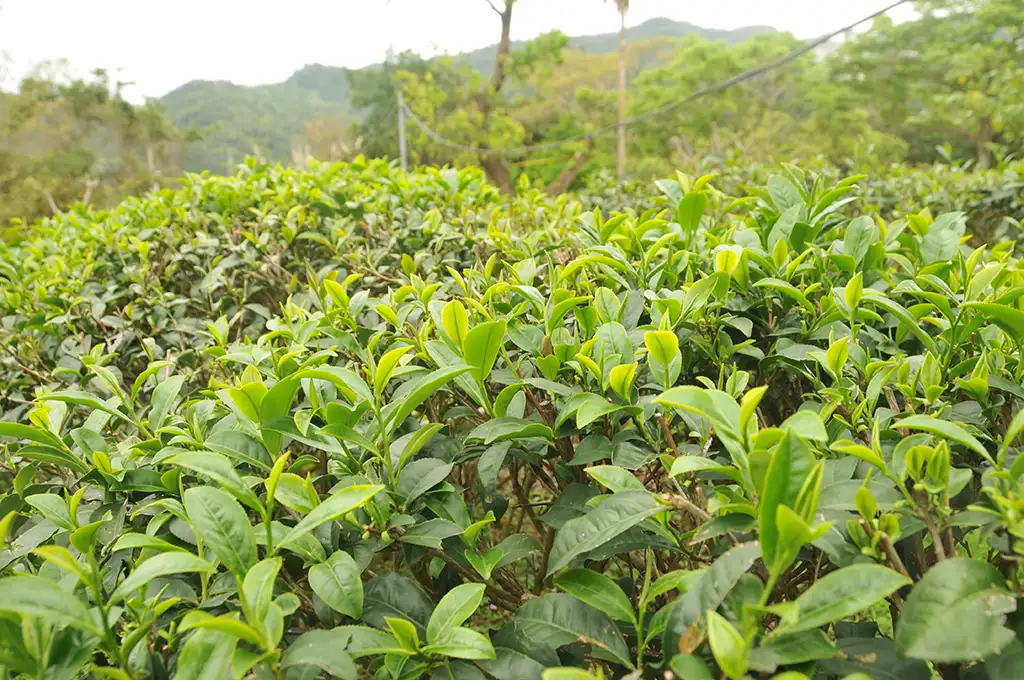
A local variety, also known as Qingxin or Damao. Main growing regions include Beipu, Zhudong, Zhunan, Wenshan, and Emei. The bush has a slightly tall growth habit with a medium, somewhat spreading shape. Branches are mostly curved with relatively sparse branch and leaf density. Leaves are slightly larger than those of Qingxin Oolong, oblong or round-lanceolate in shape, widest in the middle, with a dull base, sharp tip, and a notch at the extreme tip. The leaf base is entire, while the upper margin has small, somewhat blunt serrations. Leaf veins are distinctly raised, forming a 55º–65º angle between the main and side veins. Side veins have little curvature, curving inward along the main vein into a semicircle. Leaf flesh is thick, firm, and dark green, while young leaves are green with a purplish tint. Young buds are plump and densely covered with white hairs, giving processed teas prominent white pekoe. Flowers are medium-sized with 5 sepals, 6–7 petals, long stamens, and a stigma split into three at 1/2 of its length, with strong reflexing and inward curvature. It has a medium budding period, strong disease resistance, weak drought tolerance, robust bush vigor, long lifespan, and high yield. Broadly suitable for processing, it yields the highest quality when made into Pong Phong tea and Oolong tea, followed by green tea.

Our Observations
Qingxin Damao was once one of Taiwan’s top three tea cultivars. However, with the rise of high-yielding cultivars with novel flavor profiles like JinXuan and Four Seasons Spring, its planted area has decreased year by year. Its performance in crafting Baozhong tea or rolled oolong tea is inferior to that of Qingxin Oolong, and its yield per unit area falls behind JinXuan and Four Seasons Spring. It is also less suited for mechanical harvesting than these cultivars, leading to its gradual replacement in the market.
However, Qingxin Damao excels when crafted into heavily oxidized Oriental Beauty tea. Its rich cultivar aroma and elegant flavor profile make it the ideal raw material for Pong Phong tea. Today, it remains the primary tea cultivar grown in the Hsinchu and Miaoli regions.