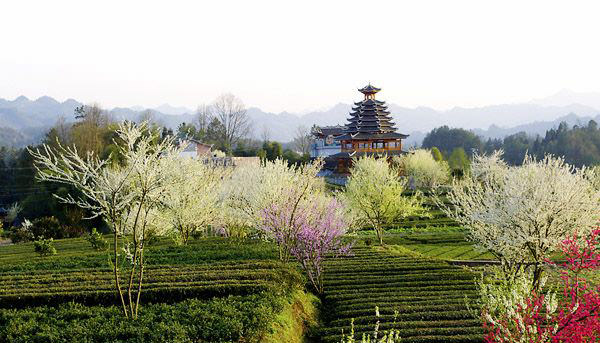
Origin of Enshi Yulu: Enshi Yulu is produced in Bajiao Township in the southern part of Enshi City, Hubei Province, and Wufeng Mountain in the eastern suburbs.
Characteristics of Enshi Yulu: Enshi Yulu features tight, slender, round, and straight tea strips with prominent white pekoe. Its color is a deep, vibrant, and lush green, resembling pine needles. The liquor is clear and bright, with a fresh aroma, a mellow and refreshing taste, and a tender, even, and green brewed leaf base.
Craftsmanship of Enshi Yulu: Enshi Yulu is a rare traditional steamed green tea. It is crafted from fresh leaves with a rich green color, consisting of one bud and one leaf or one bud and two leaves, using steam fixation. The harvesting and processing requirements for Enshi Yulu are extremely strict, demanding tender and uniform buds and leaves. Ever since tea seeds and production methods were introduced from China to Japan during the Tang Dynasty, Japan has continued to primarily use steaming methods to produce green tea. While its Gyokuro production method shares similarities with Enshi Yulu, each possesses its own distinct qualities.
Benefits of Enshi Yulu: Enshi Yulu contains a moderate amount of selenium. According to an analysis by the Tea Research Institute of the Chinese Academy of Agricultural Sciences, the dry tea contains 3.47 mg/kg of selenium, and the tea liquor contains 0.01–0.52 mg/kg, which meets the human consumption requirements for selenium-enriched tea (0.3–5.0 ppm) and may help prevent tumor development to a certain extent. On the other hand, excessive selenium intake can lead to selenosis, including skin discoloration, nail and finger deformation, anemia, and neurological changes.
Tea Culture of Enshi Yulu: Enshi Yulu is a traditional renowned Chinese tea. Records of “Shi Southern Tea” date back to the Tang Dynasty. Huang Yizheng’s *Shiwu Ganzhu* from the Ming Dynasty recorded: “Tea types and current tea names… Chongyang tea, Puqi tea, … Jingzhou tea, Shizhou tea, Nanmu tea (from Jiangling).” Legend has it that during the Kangxi era of the Qing Dynasty, a tea merchant surnamed Lan in Huanglianxi, Bajiao, Enshi, built his own tea stove and personally roasted the tea. Because the resulting tea leaves had a tight, round, and straight appearance with a jade-like green color, it was named Enshi Yulu. In 1936, Hubei’s Minsheng Company developed a green tea based on Yulu that offered a fresh and crisp aroma with white pekoe as pure as jade. Because its white pekoe was exceptionally prominent, it was renamed Enshi Yulu. With its unique quality and characteristics, Enshi Yulu has won worldwide praise and has repeatedly been honored as a famous tea.