
Tea fermentation broadly refers to the oxidation of catechins, which drives the oxidative cleavage of unsaturated fatty acids and amino acids, creating the aroma and sweetness of tea leaves. The tea fermentation process begins right after harvesting. However, because freshly harvested tea leaves contain too much moisture, tea makers first perform outdoor sun withering, followed by indoor withering and tossing (shaking), allowing different tea varieties to achieve their optimal fermentation process.
The degree of tea fermentation determines the type of tea. Generally, teas are categorized by their fermentation level into green tea, oolong tea, and black tea. Green tea is unfermented tea, oolong tea is semi-fermented tea, and black tea is fully fermented tea. The heavier the fermentation, the redder the tea liquor becomes. The lighter the fermentation, the closer the tea is to its original, fresh leaf flavor; conversely, the heavier the fermentation, the further it moves from the original flavor.
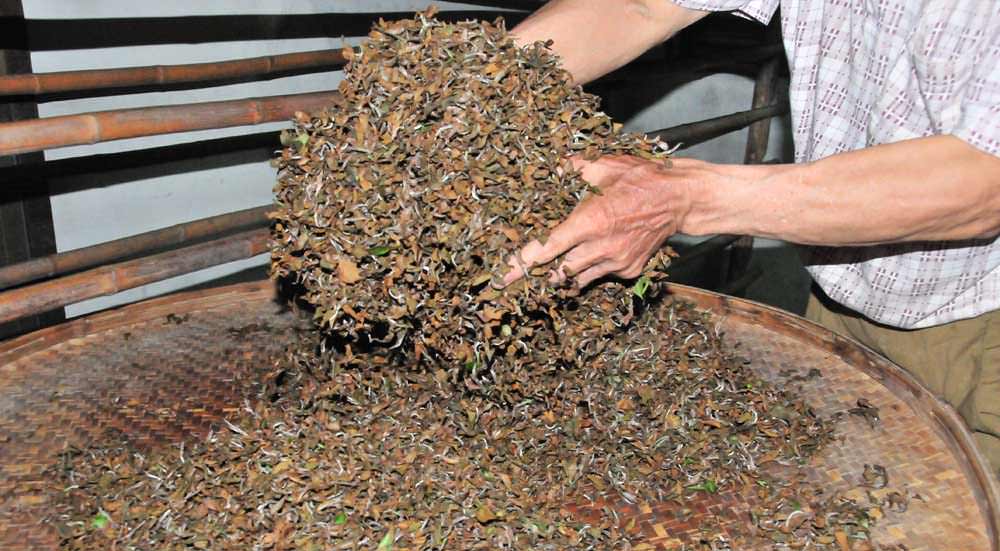
Chemical Changes (By Ruan Yi-ming, Extension Center, Tea Research and Extension Station, Council of Agriculture)
- Proteins break down into amino acids, serving as substrates for other chemical reactions, which are related to the formation of tea aroma, taste, and liquor color.
- Carbohydrates are consumed as energy to drive other biochemical reactions, producing components related to color, aroma, and flavor.
- Organic acid content increases, affecting the color, taste, and mouthfeel of the tea liquor.
- Polyphenol oxidase activity increases, promoting the tea fermentation process.
- Chlorophyll is decomposed and destroyed, affecting the color of the finished tea.
- Volatile components are produced, serving as one of the primary sources of tea aroma.
- Catechins undergo oxidative condensation to form theaflavins and thearubigins, which are related to the development of tea liquor color and taste.
The Fermentation Process in Oolong Tea Production
- After harvesting, outdoor sun withering is conducted to reduce moisture in the tea leaves, causing the semi-permeability of the cell membranes to break down. This allows components previously separated by the cell membranes to seep into the cytoplasm, contact one another, and trigger chemical changes in the tea leaves through enzymatic catalysis.
- Following sun withering, indoor withering takes place. The leaves are left to rest so fermentation continues, and tossing is used to fine-tune the optimal degree of fermentation, helping different teas achieve their ideal aroma and flavor. Teas that require heavier fermentation are tossed for longer periods.