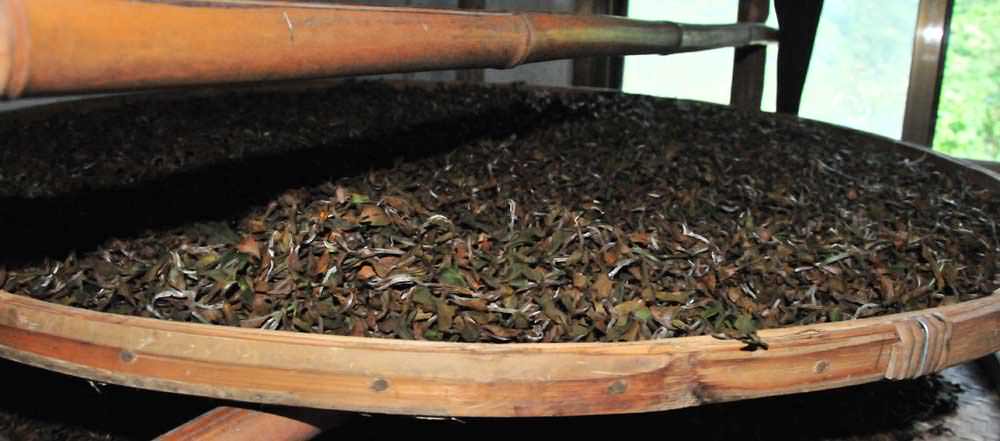
Tea Withering Process

Once tea leaves are harvested, they immediately enter the withering stage. The main purpose of withering is to reduce moisture, encourage fermentation, and trigger chemical changes in the leaves that enhance their aroma and flavor. The withering process is divided into outdoor (solar) withering and indoor withering.

Outdoor Withering: The freshly harvested tea leaves are spread out under the sun, using sunlight and warmth to reduce moisture within the leaves. This allows compounds previously separated by cell membranes to permeate into the cytoplasm and interact, initiating chemical changes. Insufficient solar withering leaves excess moisture, leading to incomplete fermentation and a bitter, astringent taste in the brewed tea.

Tea leaves withering process

While solar withering is the most common method, tea makers may also use withering machines when weather conditions are unfavorable or when dealing with a large volume of freshly picked tea leaves.

Indoor Withering: After solar withering is complete, the tea moves on to the indoor withering stage. The leaves are left to rest indoors, with the duration and tossing intensity carefully controlled depending on the tea variety being made. This creates varying degrees of fermentation, resulting in distinct aromas and flavors.

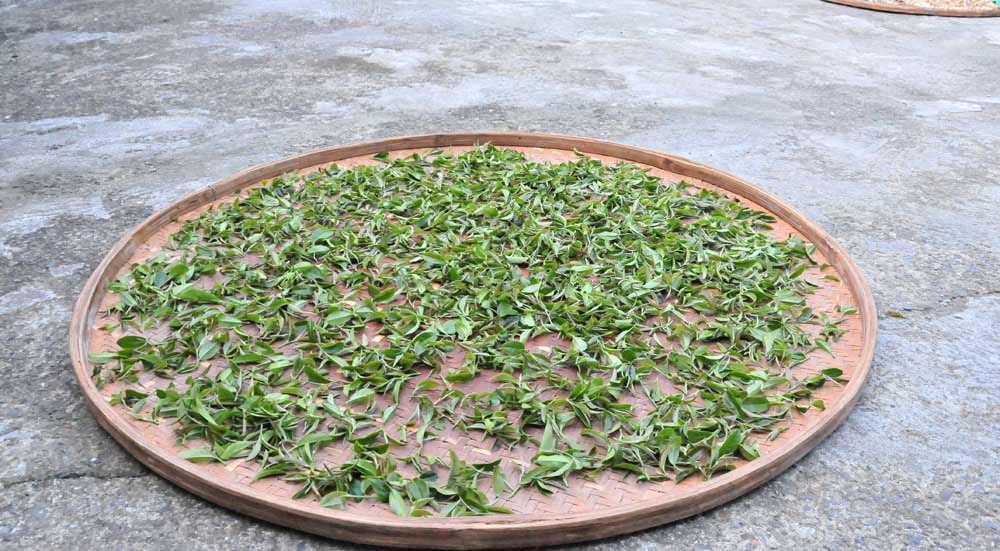
Tea leaves withering process

Following the withering process, the tea leaves move on to the fixation (kill-green) step.

Shopping Cart