
Produced in Duyun City, Guizhou, China, Duyun Maojian tea belongs to the green tea category and is ranked among China’s top ten famous teas. Duyun is frequently blanketed in mist and clouds, with winters free from severe cold and summers without intense heat, making the tea grown here distinctly different from that of other regions. As early as the Ming Dynasty, Duyun tea had already become an imperial tribute, and by the Qing Dynasty, it began to be exported overseas, a testament to its widespread popularity.
Origins and Characteristics of Duyun Maojian Tea
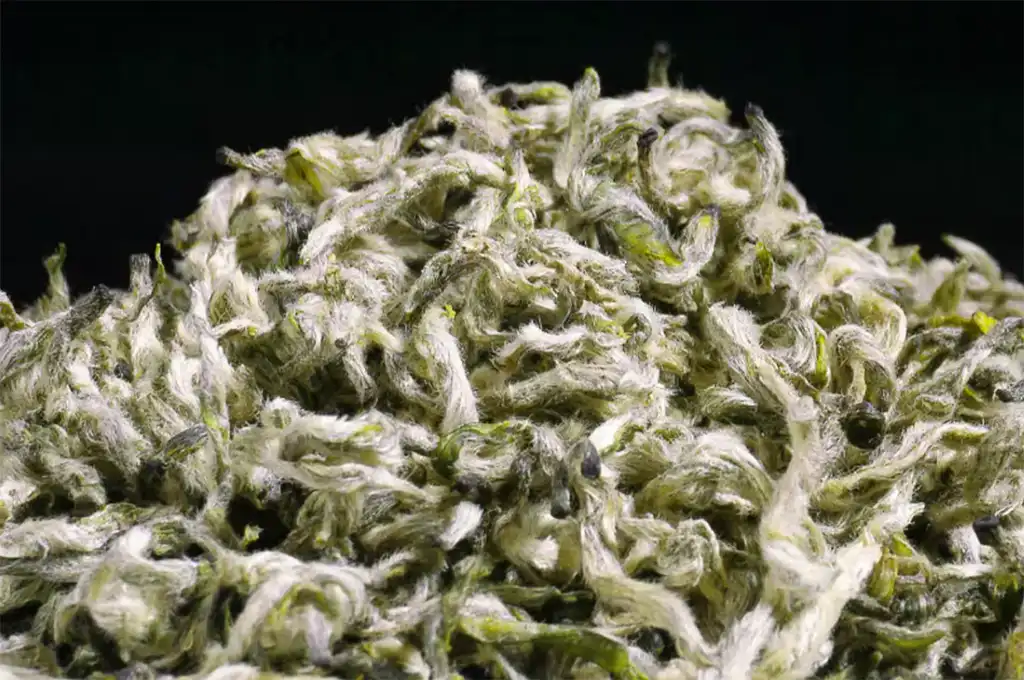
Duyun Maojian tea is also known as “White Maojian,” “Fine Maojian,” and “Fish-Hook Tea,” and was officially standardized as Duyun Maojian in the 1950s. Due to Duyun’s mild climate and acidic to slightly acidic soil containing iron and phosphates, its flavor profile is truly unique. It is characterized by plump buds with prominent white hairs, delivering a fresh and rich taste. Someone once described Duyun Maojian tea with this verse: “Snow-white buds exude fragrance in Duyun, rivaling Longjing and Biluochun. After sipping the refreshing floral notes, your mind and spirit are completely uplifted.” This gives a clear sense of its exceptional quality and flavor.
Production Process
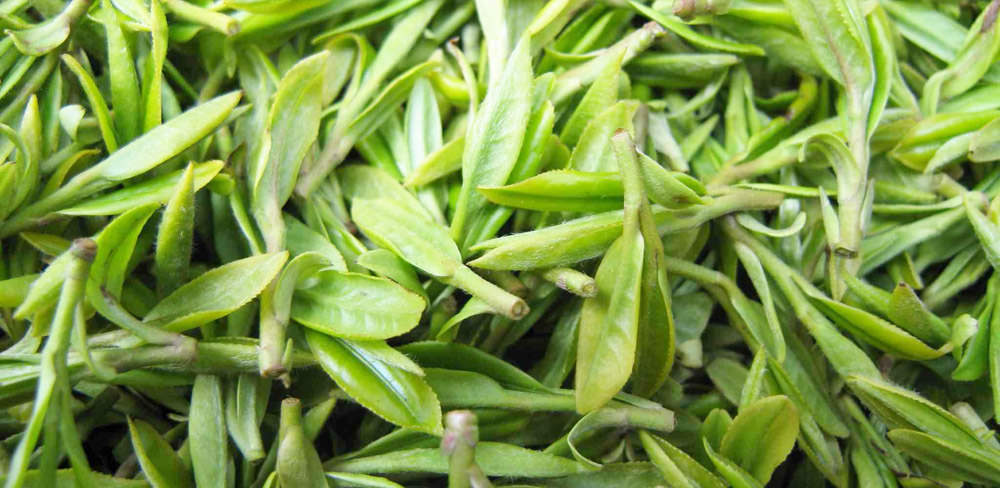
The finest Duyun Maojian tea is harvested around Qingming. Only a single bud and one leaf are picked, and the highest grade consists solely of tender buds. Harvesting is exceptionally challenging, requiring tens of thousands of tea buds to produce one kilogram. The harvested leaves are spread out to air, and any mature or damaged leaves are removed. They must rest for 2 hours before processing begins, which involves four main steps: fixing (shaqing), rolling, shaping and forming the pekoe (cuotuan tihao), and drying.
Traditionally, fixing is done by hand in a wok heated to 120°C, stirring continuously for about 3 minutes until the tea releases its aroma and softens, ready to be removed for rolling. During rolling, the temperature is maintained at 70°C as the leaves are shaped into tight strips. For shaping and forming the pekoe, the temperature is kept around 60°C; the tea is gathered and rolled into small clumps, then loosened and re-stirred. This process is repeated about 7 times until the white down (pekoe) stands upright and the moisture content drops to 30%, at which point drying begins. The drying process reduces the moisture content to 6%, completing the production.
How to Brew Duyun Maojian Tea
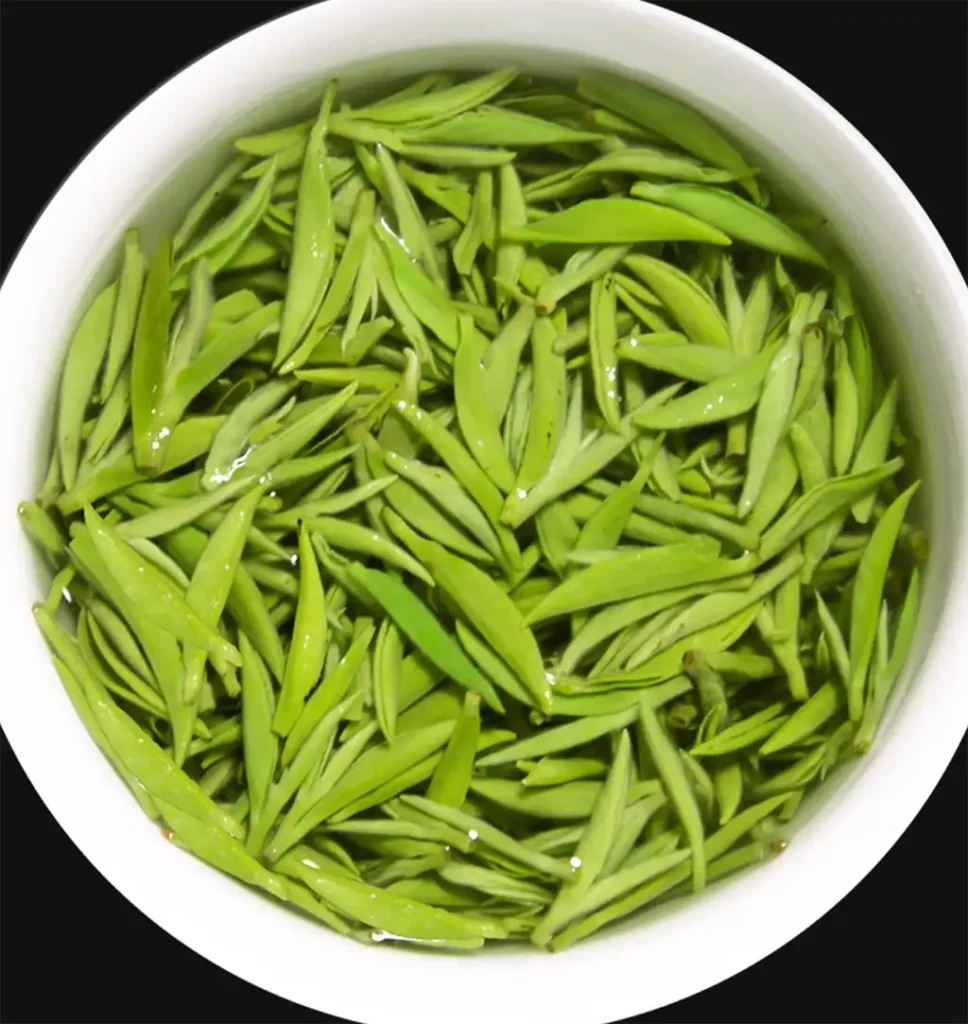
Duyun Maojian tea is a premium and meticulously crafted fine tea, and the brewing method requires careful attention. First, spring water or mineral water is essential; distilled water should be avoided. After bringing the water to a boil, let it sit for 5 minutes until the temperature drops to 80°C before brewing. Avoid using water that is too hot, as it can easily make the tea liquor bitter and astringent.
The ideal tea-to-water ratio is 1:50, meaning 2 g of Duyun Maojian tea for a 100 ml teapot. Transparent glassware is recommended. Steep for about 2 minutes, then add 1 minute for each subsequent steep, for a total of around 4 infusions.