
Jingting Greensnow, also known as Tinglvxue, is a green tea produced on Mount Jingting in the northern part of Xuanzhou City, Anhui Province. It gets its name from its green leaves and white trichomes that resemble snow. With a history spanning hundreds of years and renowned for its exceptional quality, it was designated as a tribute tea during the Qing Dynasty.
Mount Jingting has a long history of tea production, with records of tea harvesting and processing dating back as early as the 2nd century AD, and tribute tea production beginning in the 3rd century AD. Local teas include “Jingting Greensnow,” “Gaofeng Yunwu,” and “Shuidong Hengwen,” with “Jingting Greensnow” being the most popular. Jingting Greensnow has a history of hundreds of years, characterized by its sparrow-tongue shape, green leaves, and white trichomes. The Xuancheng County Gazetteer records: “Songluo tea can be found everywhere; its taste is bitter and light, yet it is widely used. Only Jingting Greensnow stands out as the finest quality.”
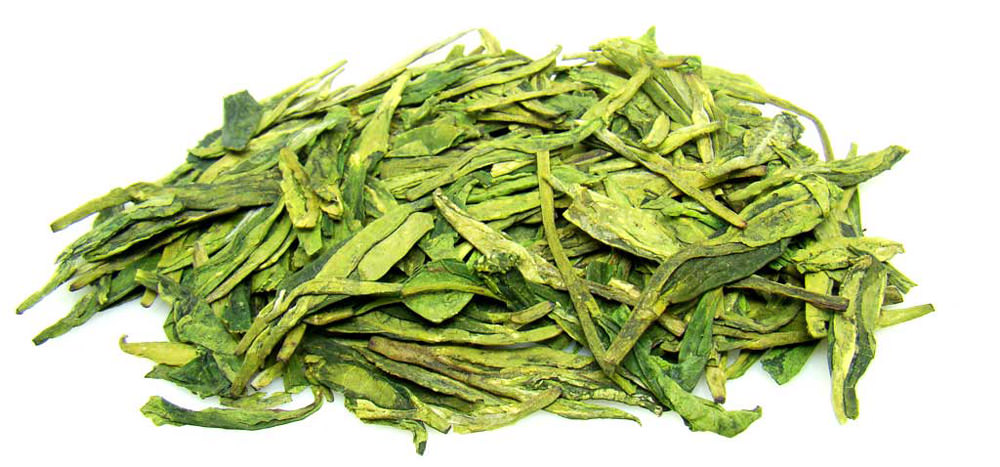
The quality characteristics of Jingting Greensnow are: shaped like a sparrow’s tongue, straight and plump, with robust tea leaves, covered entirely in white trichomes, and featuring an emerald green color. When brewed, the liquor is clear and bright with tumbling white trichomes dancing like snow-tea; the aroma is fresh and rich, reminiscent of green mist crowning a peak.
Production Process
Harvesting begins in the gardens between Qingming and Guyu, selectively picking a bud embraced by a single leaf. The manufacturing of Jingting Greensnow involves three main steps: fixation (shaqing), shaping, and drying.
The fixation pan temperature is required to be between 130–140°C. The leaves are toss-fried for about 2 minutes, followed by a combination of tossing and smothering. Once fixation is moderate, the leaves are removed from the pan and spread out to cool. The shaping pan temperature is around 60°C, utilizing techniques known as “dalong” (cupping) and “litiao” (straightening). Dalong involves pressing the four fingers together with the thumb to shape the fixed leaves in the palm without letting them slip out of the tiger’s claw, forming the embryonic sparrow-tongue shape. Litiao uses wrist and finger strength to repeatedly straighten the tea strips within the pan.
Drying is divided into initial drying (maohong) and final drying (zuhong). Initial drying uses four bamboo drying baskets, starting at a temperature of 110°C and decreasing sequentially. After removal from the heat, the leaves are cooled for about half an hour before moving on to final drying. Final drying uses indirect heat for low-temperature, prolonged drying at around 60°C. After drying thoroughly, the tea is left for two to three days, re-dried once more, and then canned and sealed.