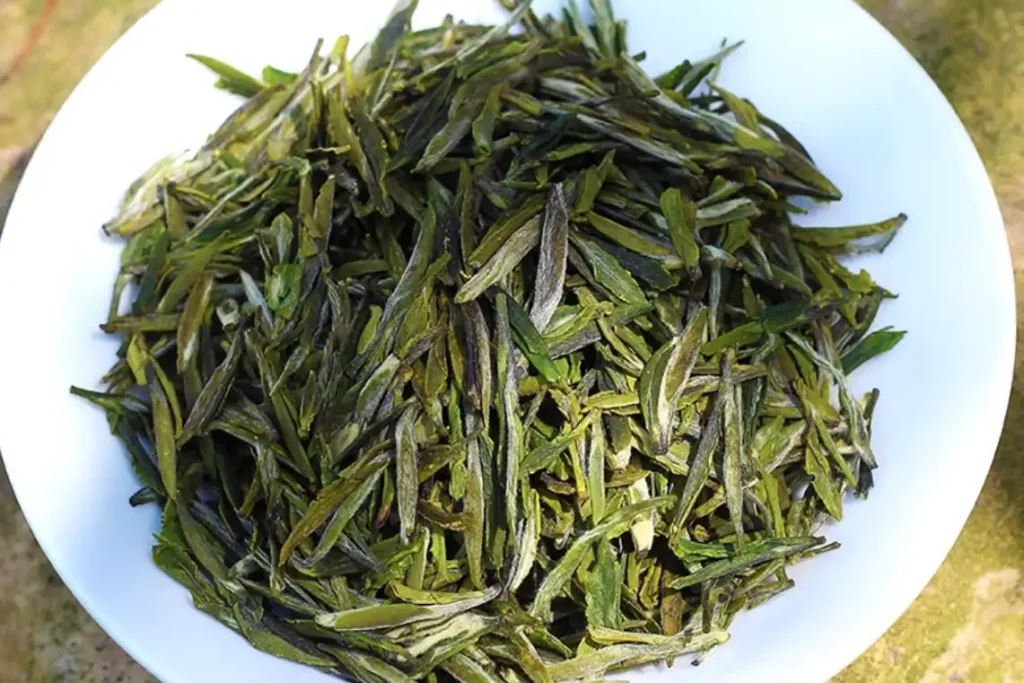
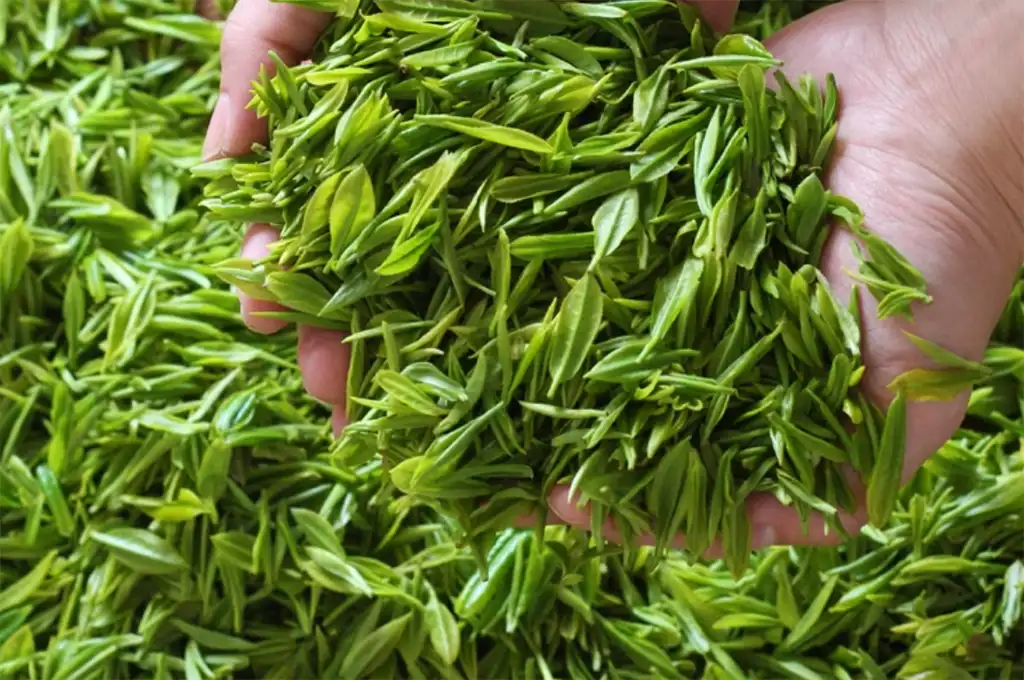
Xianrenzhang Tea (Cactus Tea), produced on Yuquan Mountain in Dangyang, Hubei, belongs to green tea. The name Xianrenzhang means it is shaped like an “immortal’s palm,” but it is not made from cactus plants. Its most distinctive feature is its beautiful appearance, resembling an open palm, which makes it quite unique.
Origins and Characteristics of Hubei Xianrenzhang Tea
Hubei is a major tea-producing region in China, and Yuquan Mountain in Dangyang boasts an excellent environment, home to the Yuquan Temple. Legend has it that during the Tang dynasty, a Zen master planted tea near Yuquan Temple. In the spring, he harvested tender leaves by the Yuquan Stream to craft a flat, palm-like tea with a clean, smooth aroma—this is the origin of Xianrenzhang Tea.
Yuquan Mountain features a mild climate, abundant rainfall, and fertile soil, producing exceptional tea leaves. Harvesting takes place from March to September. Thanks to its favorable climate, Xianrenzhang Tea has been highly favored since the Tang dynasty. Li Tiaoyuan of the Qing dynasty wrote in his book *Jingwa Zaji*: “Its quality ranks as high as Li Bai’s Xianrenzhang,” demonstrating its enduring popularity.
Production Method
The production process involves harvesting, fixing (killing-green), rolling, re-firing, and drying. Harvesting requires one bud and one leaf, with tea buds ideally 3 millimeters in length. After harvesting, the leaves undergo fixing with 100°C steam for about 1 minute. They are then cooled with a fan and shaped through panning. Shaping is divided into three steps: primary shaping, secondary shaping, and final forming. Primary shaping mainly uses shaking to scatter the leaves. Secondary shaping involves shaking the leaves apart to form a palm-like shape. Final forming uses the palm of the hand to flatten and straighten the leaves. Finally, the tea is dried.

The traditional method of making Cactus Tea is complex and difficult, so machine production is now widely used. However, tea produced using traditional methods still offers the highest quality.
Brewing Method
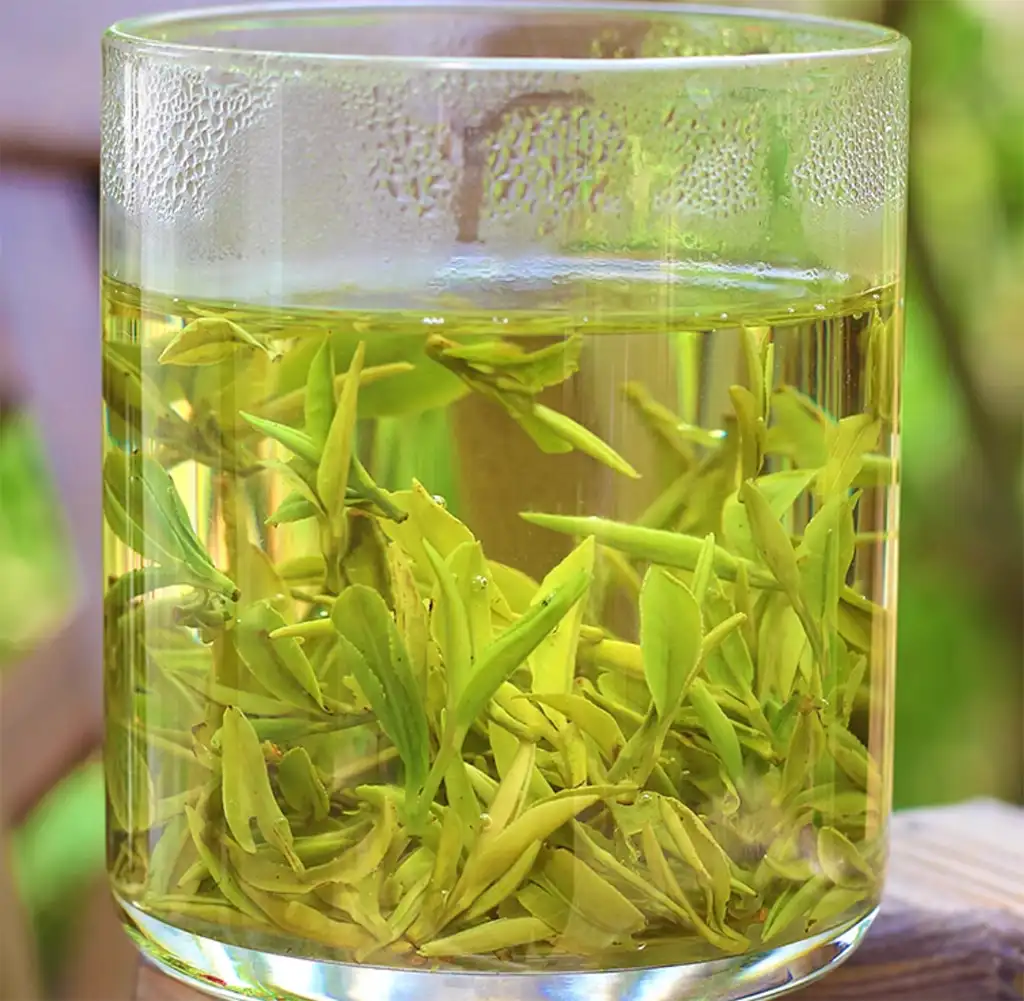
Use a glass or white porcelain cup without a lid to admire the shape and color of the leaves while preventing over-steeping. Before brewing, observe the dry tea leaves and appreciate their form and color. For a 150ml tea set, 3g of tea is ideal. Use spring water at 85°C to 90°C. Steep for about 1 minute before serving.
Cactus Tea can be steeped about three times. Its flavor profile is fresh and delicate, with a clean and smooth sweet aftertaste.