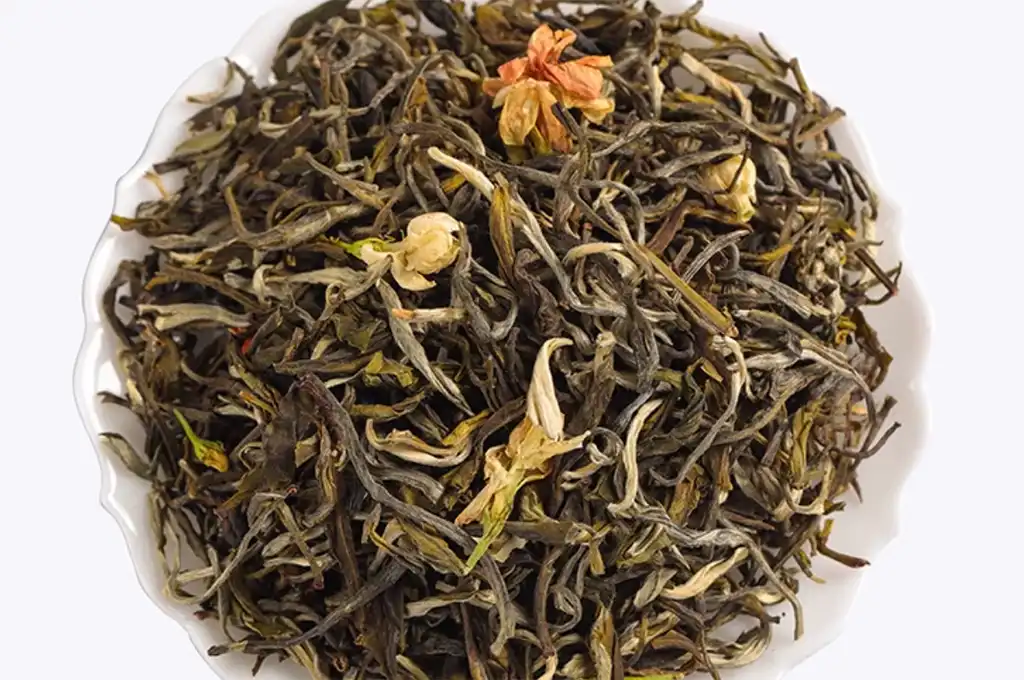
Is Xiangpian green tea? Traditionally, Xiangpian is indeed made with a green tea base, but over time, it has evolved to be crafted using oolong or black tea as well. For instance, Taiwan’s renowned scented Pouchong tea was once a major pillar of Taiwan’s tea exports.
Is Xiangpian green tea?
Originating from Fujian, China, Xiangpian was originally made by scenting green tea with jasmine flowers, which is why it is also known as jasmine green tea or jasmine Xiangpian. Tea artisans blend the tea leaves with the fragrance of jasmine to soften the astringency of green tea, infusing the leaves with a floral aroma and making them smoother to drink. Therefore, traditionally speaking, Xiangpian tea is indeed a type of processed green tea.
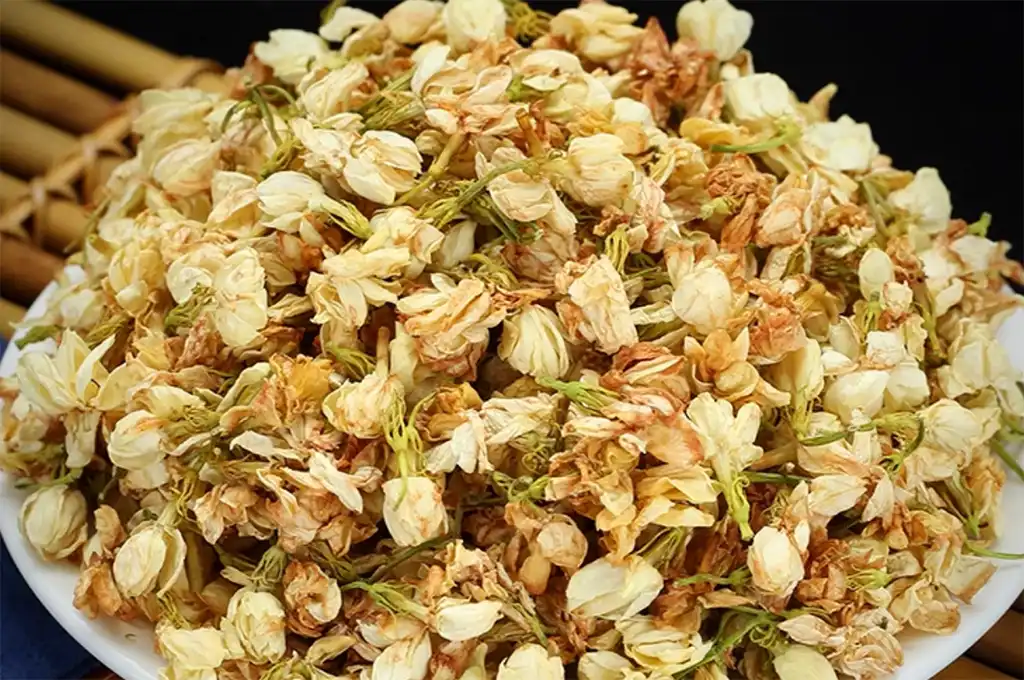
However, with its ongoing development, Xiangpian is no longer limited to green tea; oolong and even black tea can be processed and scented into Xiangpian. For example, in the early days, Taiwan’s Pouchong tea was exported in large quantities to Fuzhou to be made into “scented Pouchong tea.” Later, Wu Fu-lao, a native of Fujian, even opened a tea factory in Taipei specializing in the export of scented Pouchong tea, making it a popular export commodity in Taiwan at the time. (The picture below shows jasmine flowers)

To this day, alongside green and oolong tea, there are even black and white tea-based Xiangpian products. So, is Xiangpian tea green tea? The answer is not necessarily—it depends entirely on what kind of tea is used as the base.
Read More:
- What is Xiangpian tea? How is it different from regular herbal tea?
- Is Xiangpian tea a green tea?
- What are the benefits of Xiangpian tea? A complete guide
- Does Xiangpian tea contain caffeine?
- Is Xiangpian the same as green tea? What’s the difference?
- What is the difference between Xiangpian and jasmine tea? Are they the same?
- What is Osmanthus Pouchong tea?
- What is Osmanthus Oolong tea?