
The main production areas of Chinese white tea are concentrated in Fujian Province, accounting for over 80% of total production, with Fuding white tea being particularly popular. However, Yunnan white tea has also been gaining attention in recent years, with old tree white tea and moonlight white tea posing a strong challenge to Fuding white tea.
Tea Plant Varieties and Production Characteristics of Yunnan White Tea
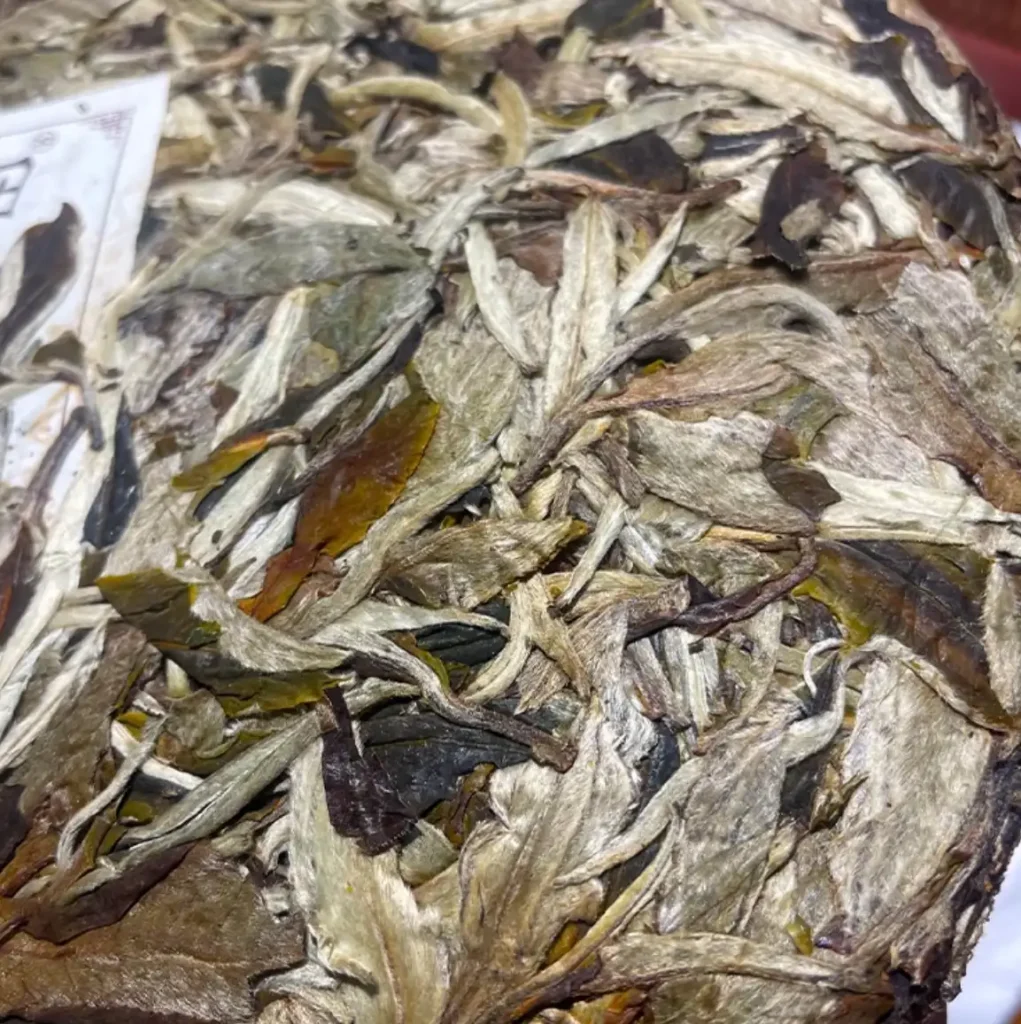
Common tea plant varieties used to make white tea in Yunnan include Jinggu Dabaicha, Xueya No. 100, and other multi-hair varieties, primarily cultivated in Jinggu County, Pu’er City. They are characterized by plump buds and leaves with prominent downy hairs.
Besides differing from Fujian in tea plant varieties, another characteristic of Yunnan white tea is the high proportion of compressed tea production, where white tea is pressed into tea cakes or bricks. Although Fujian white tea has also seen many compressed teas in recent years, loose tea remains dominant there. In contrast, a much higher percentage of Yunnan white tea is made into tea cakes.
Production Craft and Grades of Yunnan White Tea
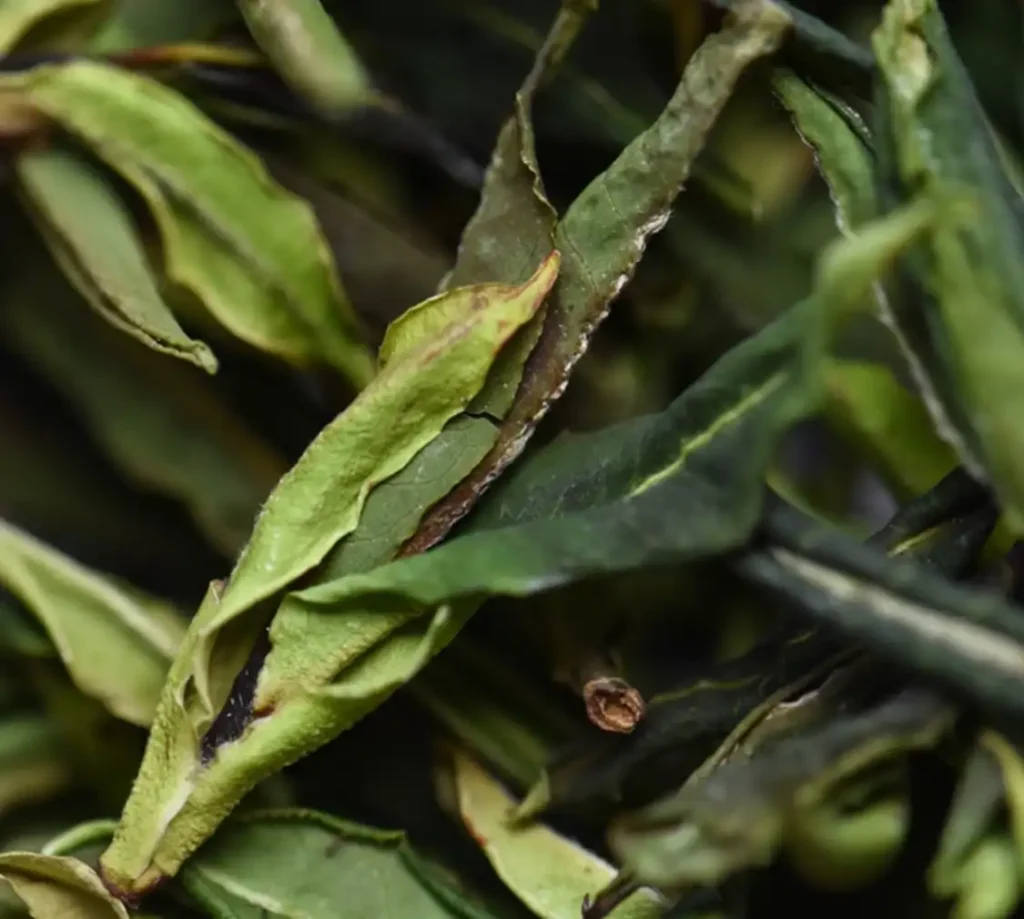
The main grades are categorized into single-bud tea (Silver Needle) and bud-and-leaf tea. Single-bud tea is made by plucking single buds during the sprouting of Yunnan large-leaf varieties such as Jinggu Dabai. Bud-and-leaf tea is processed primarily by plucking one bud with one leaf or one bud with two leaves.
The production process is identical to that of Fujian white tea, consisting of only two steps: withering and drying. Withering adopts traditional indoor natural withering, utilizing natural ventilation, temperature, and humidity to slowly reduce the moisture in the fresh leaves. The drying process uses indoor natural drying, resulting in a longer production cycle. Of course, low-temperature charcoal baking and more advanced mechanical drying are also utilized.
Comparison Between Yunnan White Tea and Fuding White Tea
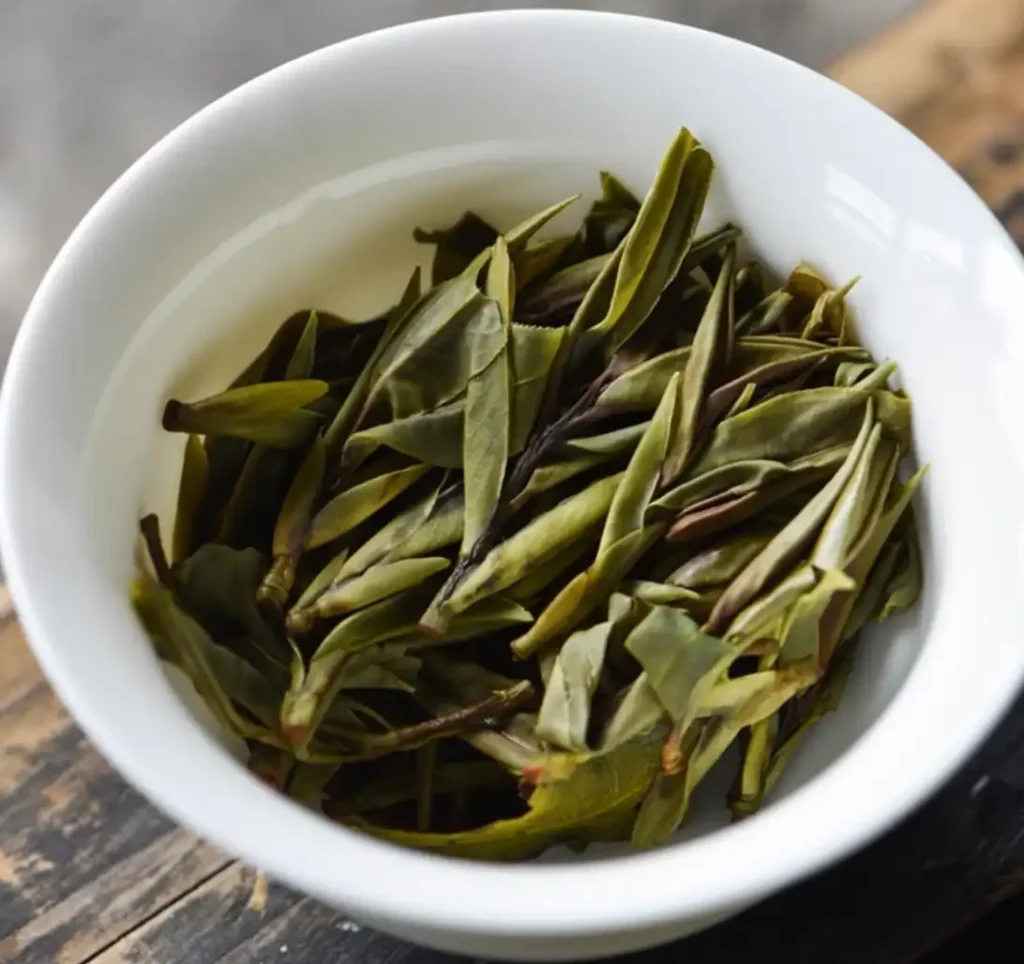
When it comes to quality, both Yunnan white tea and Fuding white tea have their own advantages. Due to varietal differences, at the same level of tenderness, the buds or bud-and-leaf strips of Yunnan white tea are thicker and sturdier than those of Fuding white tea, with longer and smoother downy hairs. In contrast, Fuding white tea has relatively denser white hairs that are shorter. Overall, Yunnan white tea buds appear thicker and more visually appealing.
As for the dry tea color, Fuding white tea mainly exhibits a grayish-green or olive-green hue, while Yunnan white tea has a deeper, dark greenish-black leaf color. In terms of aroma, Yunnan white tea is dominated by pekoe and sweet notes, notably featuring a unique ripe fruit fragrance; Fuding white tea leans towards pekoe and floral notes. On the palate, Yunnan white tea is mostly made from large-leaf arbor trees; due to altitude and varietal factors, the extracted flavor is relatively mild, but the aroma is soft and the tea liquor is sweet.