
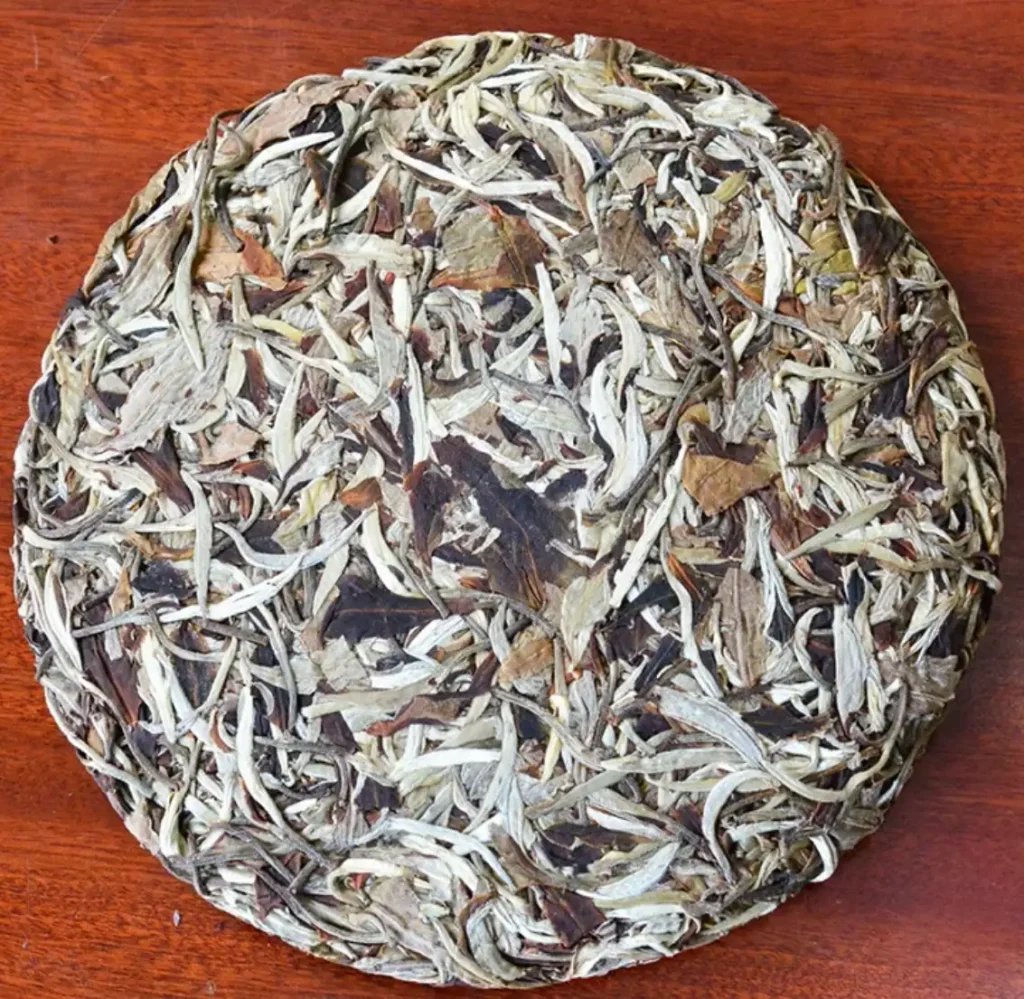
Yueguang White Tea, also called Moonlight Beauty Tea or Moonlight Tea, is most distinct for its drying process, which avoids direct sunlight. Instead, the leaves are wither-dried indoors or spread out to dry naturally under the moonlight at night, hence the name Yueguang White Tea (Moonlight White Tea). Many believe that Yueguang White surpasses Fuding White Tea in quality.
Origin of Moonlight White Tea
The main production area of Moonlight White Tea is located in Jinggu Town, Pu’er City, Yunnan Province. Known for its exceptional natural environment and superb ancient tea tree resources, Jinggu Town produces high-quality Pu’er and white teas, providing fantastic raw materials for making Moonlight White Tea. The main tea varieties are Yunnan large-leaf and Jinggu large-white, renowned for their plump buds and leaves with prominent white hairs.
Origin of the Name Moonlight White Tea
Moonlight White is a tea product that only emerged over the past decade or so. Local tea makers in Pu’er keep its detailed production process strictly confidential, and outside knowledge of its origins mostly comes from rural legends.
- Legend 1: Moonlight White Tea gets its name because the leaves are harvested at night and naturally air-dried under the moonlight.
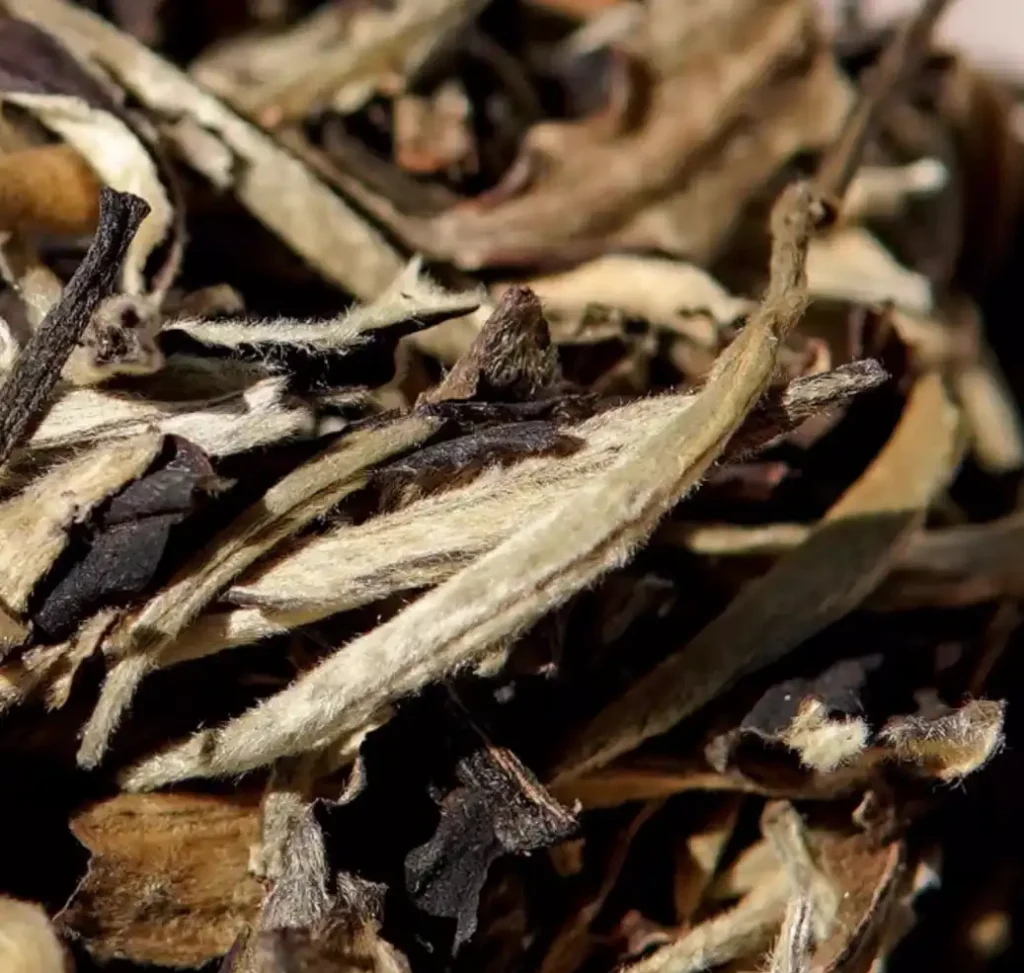
- Legend 2: It must be harvested under the moonlight and air-dried within a day. The upper side of the leaf turns black while the underside and bud core remain white—a contrast of black and white reminiscent of the moon in the night sky, hence it is also called Moonlight Beauty White Tea.
Regardless of which legend you hear, personally, I find their credibility extremely low. “Tea leaves harvested in the moonlight” and “relying on moonlight to dry the moisture down below 6% within a day” simply defy logic. It is best to just take them as stories.
Which tastes better: Moonlight White Tea or Fuding White Tea?
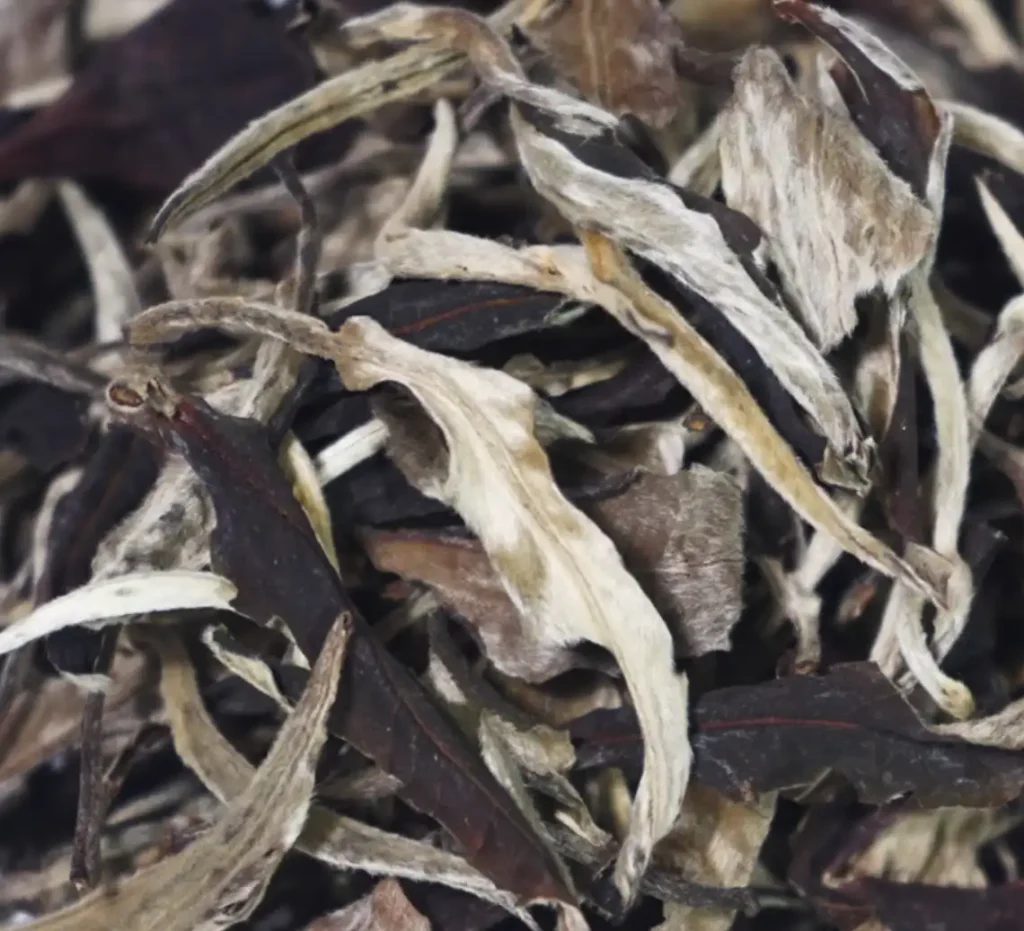
The following represents personal views only. Having sampled Fuding White Tea (Baimudan) and Moonlight White Tea of the same raw material grade, Fuding White Tea features shorter, smaller buds with more and finer downy hairs, delivering a robust hair-like aroma (“hao wei”) when brewed. In contrast, Moonlight White has coarser, sturdier, smoother, and fewer downy hairs, with much larger leaves; however, its hair-like aroma is less distinct, and the flavor is somewhat lighter than Fuding White. Fresh Fuding White Tea tastes better, but as for which aged tea tastes better between aged Moonlight White and aged Fuding White, we will have to wait until we get the chance to taste them.