
Pu-erh tea is divided into raw (sheng) and ripe (shou) tea. Ripe tea can be sold and brewed right after pile-fermentation, whereas raw tea requires storage. Among high-priced Pu-erh teas on the market, aged raw Pu-erh is the most popular. Therefore, to distinguish the quality, grades, and goodness of Pu-erh tea, one must first understand the production and storage characteristics of raw Pu-erh tea.
Raw vs. Ripe Pu-erh Tea
Raw Pu-erh tea refers to sun-dried green tea leaves pressed into cakes or bricks, which then undergo post-fermentation during storage. What distinguishes it from ripe tea is that raw tea does not go through pile-fermentation. Because raw Pu-erh is difficult to produce and requires time to mature, its quality surpasses that of ripe tea, making it the most valuable type of Pu-erh tea on the market.
To tell good quality Pu-erh tea apart, the first step is to differentiate between raw and ripe tea. You can find the answer by looking at the aroma, liquor color, and infused leaf base. Because ripe tea undergoes pile-fermentation, its aroma carries a distinct “ripe” note. This note can also be found in dry-stored Pu-erh aged for under 5 years, but dry-stored Pu-erh will develop a deep agarwood-like aroma after 10 years, whereas ripe tea retains that ripe note indefinitely.
Regarding the liquor color, raw Pu-erh mostly ranges from chestnut red, while ripe Pu-erh ranges from dark chestnut to deep black. As for the leaf base, raw Pu-erh exhibits chestnut to deep chestnut tones with fresh leaf strips; even after 10 years, the leaves still retain their vitality. In contrast, the leaf base of ripe Pu-erh is mostly dark black, with dry, thin, mature, hard, and lifeless strips that appear rather fragmented.
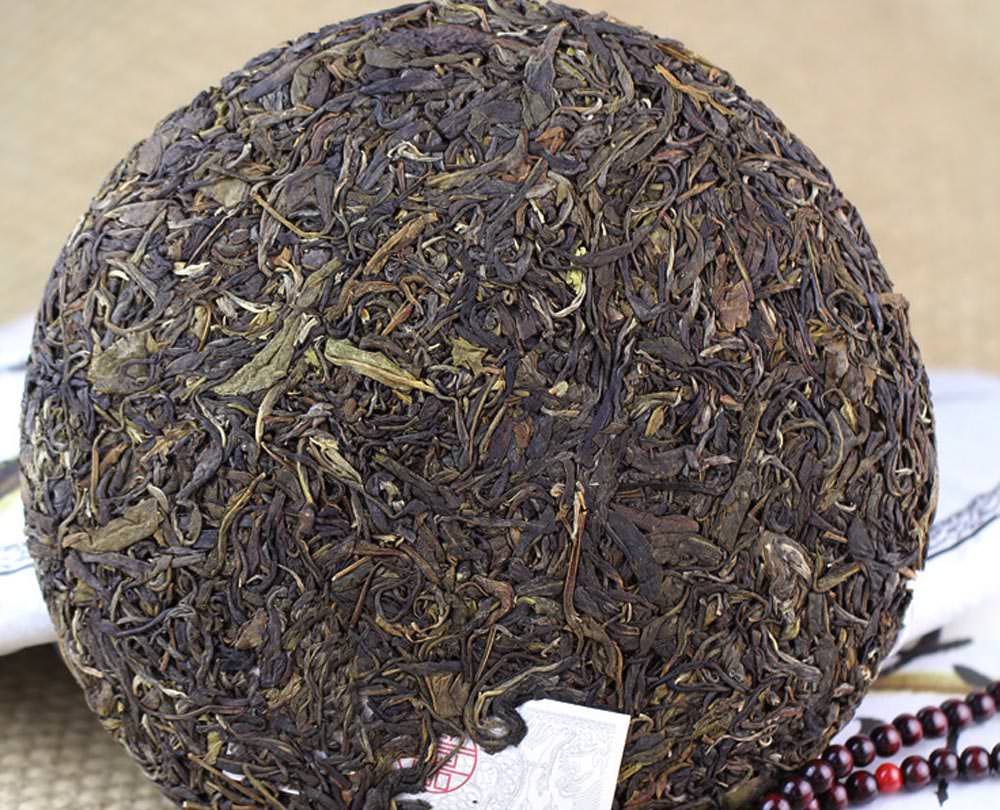
▲ Raw Pu-erh tea.
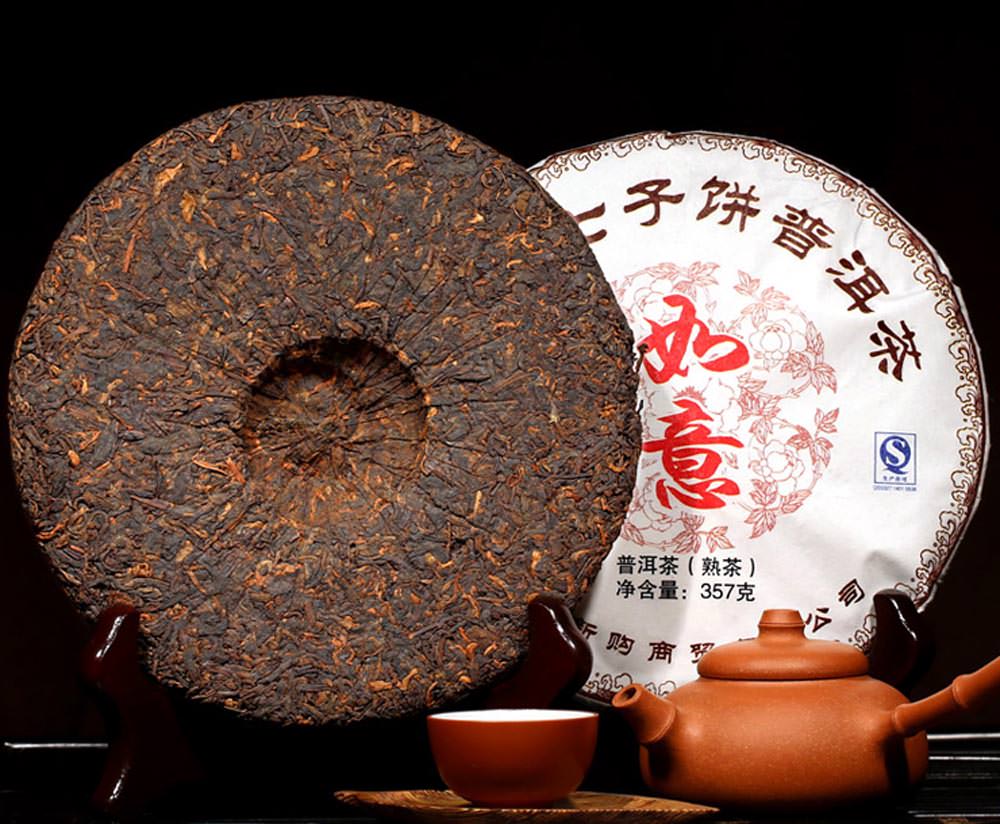
▲ Ripe Pu-erh tea.
The Difference Between Dry Storage and Wet Storage
Pu-erh tea requires storage to allow the leaves to naturally ferment and age. Storage methods are divided into dry storage and wet storage, which refer to the humidity level of the storage environment. Traditional storage is dry, but warehouses with higher humidity result in faster aging and fermentation. Generally speaking, dry-stored Pu-erh tea is of better quality, but it is also more expensive.
How to Distinguish Dry-Stored from Wet-Stored Pu-erh
Wet-stored Pu-erh teas are mostly younger, while dry-stored ones are usually older. When consumed, aged dry-stored Pu-erh tea features mellow, gentle, aromatic, sweet, and exquisite liquor characteristics. Wet-stored teas of the same age typically feature a darker liquor, a muffled flavor, and a floating sensation when tasted. The brewed leaves tend to lack luster and cleanliness. Furthermore, there is a distinct difference in aroma when comparing dry-stored tea to wet-stored tea.
Judging Quality Through Brewing and Appearance
The grade and quality of Pu-erh tea can also be discerned from the appearance of the leaves. Whether it is tea cakes, Tuo cha, or brick tea, neatly crafted items with intact leaf strips are considered top grade. If the strip shapes and leaf forms are indistinguishable, it is a secondary grade. Additionally, looking at the color, the older the raw tea, the closer its color usually gets to pork liver. Looking at the tea liquor, a good brew should be bright and glossy. If the liquor is dark, murky, or lifeless, the quality may be poor. Finally, you can smell the tea: good tea should have an aged aroma, a sweet and refreshing taste on the palate, and no moldy odors. This is how you identify good tea.
To summarize the criteria for distinguishing good and bad Pu-erh tea: 1. Aged raw tea is better than ripe tea. 2. Aged dry-stored tea beats aged wet-stored tea. 3. Neat and uniform shapes surpass fragmented ones. 4. Dark red tea color is superior to grayish-blue. 5. Good tea must carry an aged aroma rather than a moldy smell. These are the key points for identifying Pu-erh tea grades and quality.
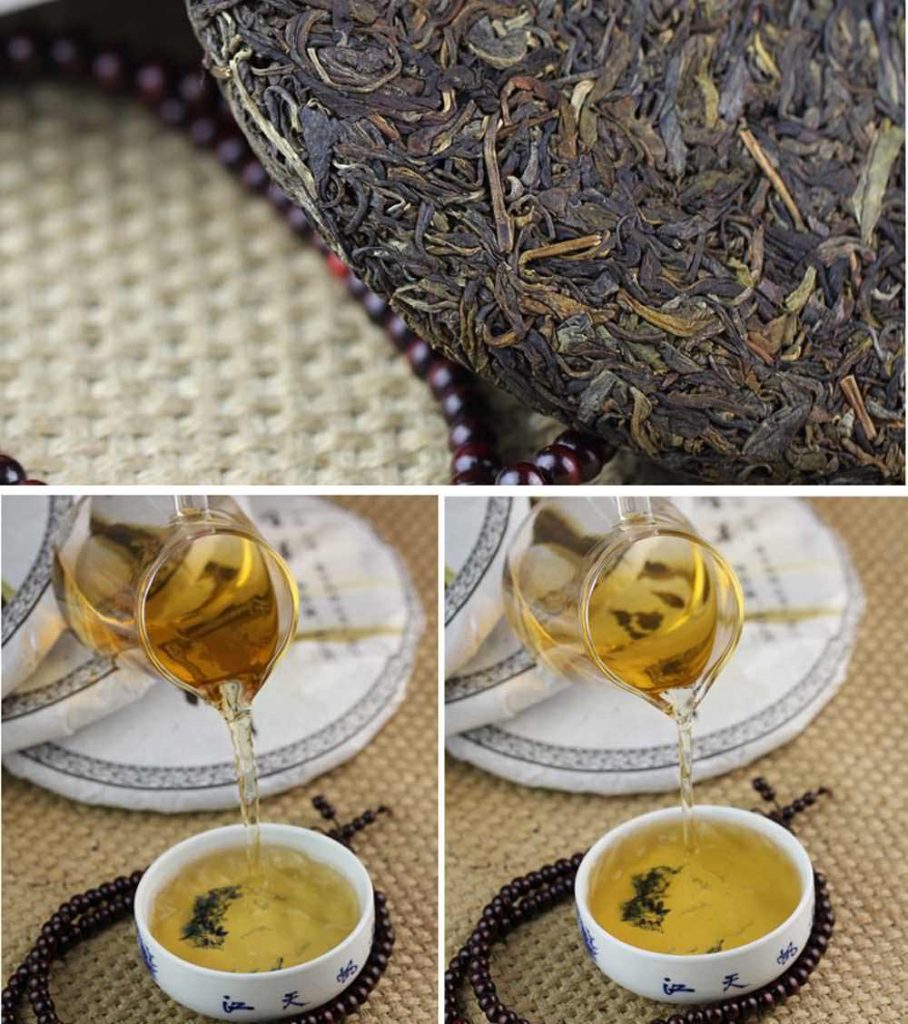
▲ Aged, raw, dry-stored Pu-erh tea offers the best quality.
Currently, aged dry-stored raw Pu-erh tea commands the highest market prices. Tea sold after 3 to 5 years costs around 300 RMB per 357 g. Tea sold after 5 years is priced around 400 to 500 RMB. For tea aged 10 years or more, a 357 g cake of Pu-erh fetches over 1,500 RMB on the market.