
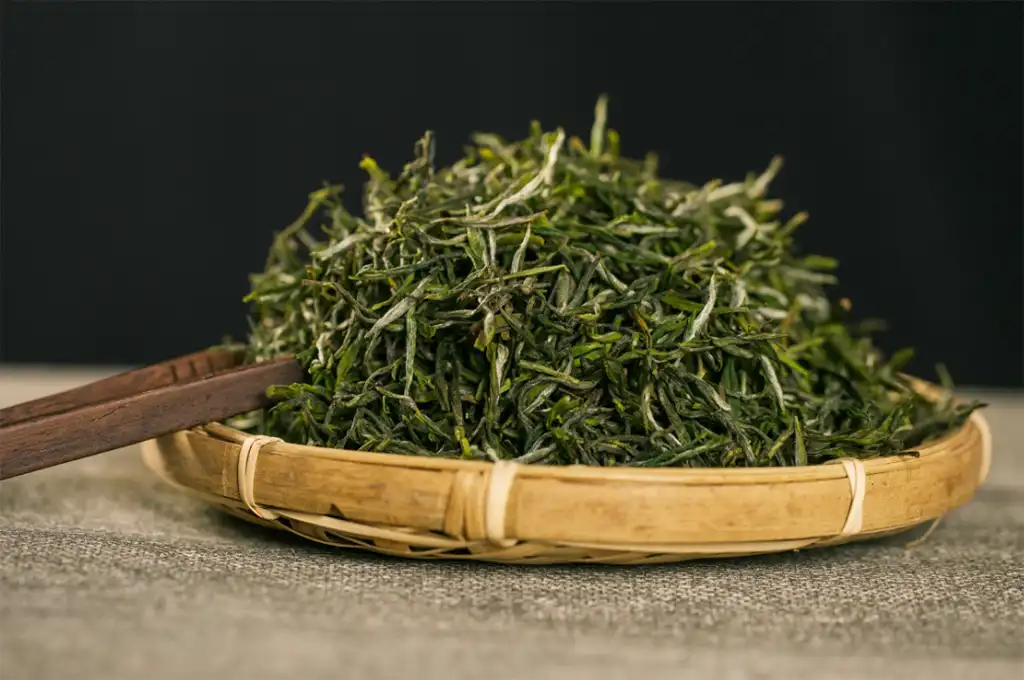
Lushan Cloud Mist Tea, produced in Mount Lushan, Jiangxi Province, is a green tea. Because the area experiences heavy fog for 195 days a year, it has been called “Lushan Cloud Mist Tea” since the Ming Dynasty. With a history spanning over 300 years, it is one of China’s renowned green teas.
Origin and Flavor Characteristics of Lushan Cloud Mist Tea
Tea has been cultivated in Mount Lushan since the Han Dynasty, known for its exceptional quality. By the Song Dynasty, it was listed as a tribute tea. In the Ming Dynasty, it officially gained the name Lushan Cloud Mist Tea. Nestled near Poyang Lake to the south and the Yangtze River to the north, the Lushan basin is rich in moisture and frequent mists, averaging 195 foggy days a year. Grown in this humid environment, the tea leaves possess a texture distinct from those of any other region.
Compared to other green teas, Cloud Mist Tea stands out for its mellow aroma and sweet, smooth aftertaste, often described as having “a subtle, delicate fragrance comparable to orchids.” Combined with its long growing season, the tea leaves are thick and rich in trichomes, which is the defining characteristic of Lushan Cloud Mist Tea.
Production Process
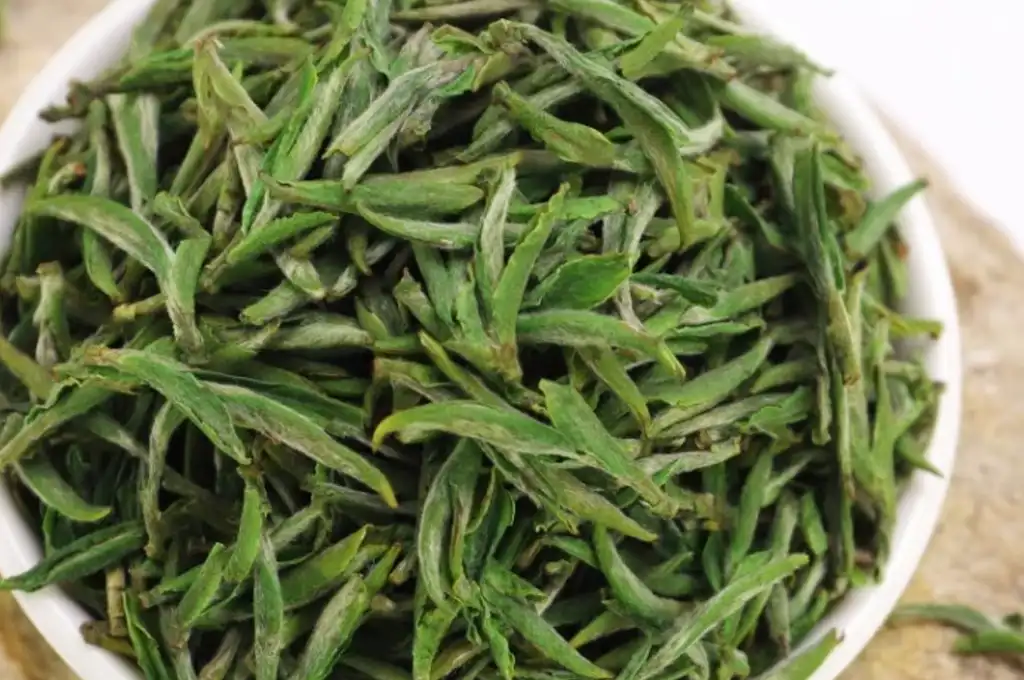
Cloud Mist Tea is known for its “six perfections”: thick and sturdy strands, lush green color with abundant trichomes, bright liquor, tender and uniform leaves, lingering refreshing aroma, and a mellow, sweet taste. Achieving these qualities requires an intricate production process. The finest Cloud Mist Tea is harvested between April and May, ideally before the Qingming Festival. The production involves harvesting, fixation (shaqing), shaking out, rolling, secondary pan-firing, strip shaping, twisting, sorting, developing trichomes, and drying. The craftsmanship is exceptionally detailed.
Harvesting follows the standard of one bud and one leaf, while purple buds, diseased leaves, and rain-drenched leaves are strictly avoided. After harvesting, the leaves are withered for 4 hours before undergoing fixation. The fixation pan is heated to 150°C, and traditional methods require hand-tossing and stirring until the raw grassy scent dissipates, the aroma emerges, and the moisture content is reduced to 40%.
After fixation, the tea leaves are placed on a bamboo tray and shaken out by hand over a dozen times to enhance the fresh, crisp aroma and purity. Next comes the rolling process. Traditional rolling requires hand-rolling the leaves while firing them into needle-like shapes. Afterward, the tea undergoes initial drying in a wok to reduce the moisture level to 35%, followed by strip shaping, trichome development, and final drying.
Brewing Guide
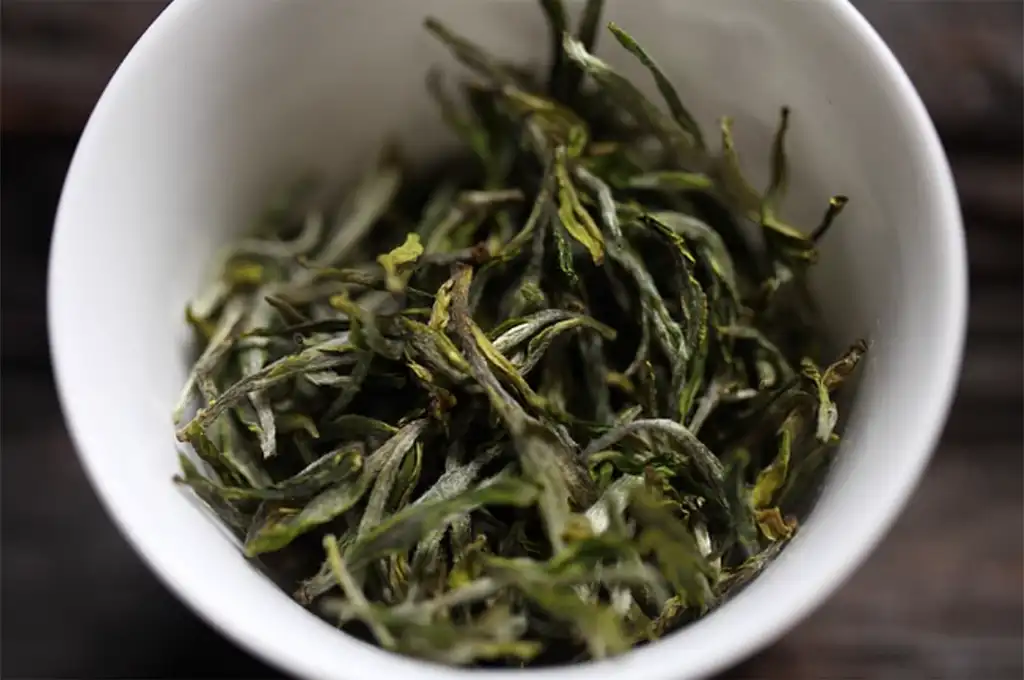
Brew with spring water or mineral water. Transparent glass teapots or tea bowls are recommended. Use water at around 80–85°C to prevent high temperatures from destroying the beneficial compounds and nutrients in the tea. Steep for about 1 minute per brew, and it can be steeped approximately 4 times.